











Microsoft AI Tour Tel Aviv highlights shift from pilots to production as AI agents move into core business systems
At Expo Tel Aviv, Microsoft outlines how organizations are embedding AI into operations while balancing productivity gains with security and trust.
Thousands of executives and developers gathered at Expo Tel Aviv on Tuesday as Microsoft used its annual AI Tour in Israel to underline a shift it says is now reshaping enterprise technology: artificial intelligence moving from experimental pilots into the operational core of companies.
The Microsoft AI Tour Tel Aviv 2026 brought together technology leaders, startups, developers and corporate executives from across the Israeli economy for a day focused on how AI, particularly intelligent agents, is being embedded into day-to-day business processes, from customer service and cybersecurity to software development and financial management.

While previous years were defined by questions about what generative AI could do, the emphasis this year shifted toward implementation: how organizations can deploy AI systems responsibly, securely and at scale, and move beyond isolated proofs of concept toward measurable business impact.
Throughout the event, dedicated sessions focused on accelerating productivity, redesigning workflows, and building AI-based systems that integrate directly into organizational data and decision-making processes. Demonstrations at the event’s Connection Hub showcased practical applications, including information summarization, insight generation, software development support, risk detection, and the deployment of organizational agents connected to enterprise systems.
Michal Braverman-Blumenstyk, Corporate Vice President at Microsoft and Managing Director of its Israel R&D Center, said the scale of the coming transformation will be defined by AI agents working alongside employees.
“By 2028, more than 1.3 billion AI agents will be working alongside employees across organizations worldwide,” she said. “This collaboration between people and AI agents will fundamentally transform the way we work.”
But she warned that deployment at scale will depend not only on capability but also on governance and security.
“Intelligence alone will not be enough,” she said. “Organizations need to know that their AI agents operate securely, responsibly, and under the right governance. That is why our focus is on combining intelligence with trust.”
Avi Yoshai, CTO and Acting CEO of Microsoft Israel, said the industry is now entering a new phase in which AI is no longer peripheral.
“We are seeing a clear transition from using AI as a supporting tool to a reality in which organizations are beginning to build core processes around it,” Yoshai said. “The challenge is no longer purely technological, but how to generate genuine business impact and integrate AI into everyday work. More and more organizations in Israel and around the world are rethinking how work is carried out, and this is where AI can evolve from an interesting capability into a real growth engine.”
2 View gallery
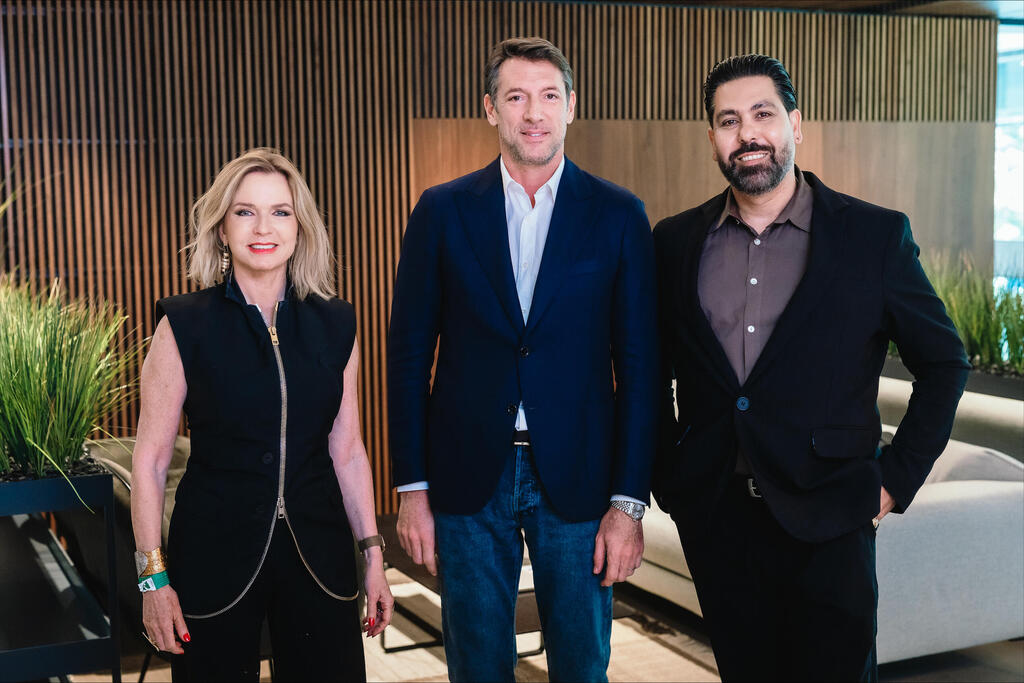
Michal Braverman-Blumenstyk (from left), Charles Calestroupat, and Avi Yoshai.
(Photo: Insight Event)
The event highlighted a broad cross-section of Israeli industry, with participants including NVIDIA, Bank Hapoalim, Amdocs, Upwind, The Phoenix, Wonderful, ZIM, Meitav, Seemplicity, EON, Varonis, Maccabi, Strauss and others. These companies presented use cases spanning cybersecurity, healthcare, logistics, financial services and enterprise operations.
One of the focal points was the rise of agentic systems in enterprise environments. Wonderful, described as one of the fastest-growing companies in the agentic AI space, detailed how it uses Microsoft Foundry to select models and design AI-driven processes aimed at solving both technical and business challenges.
Cybersecurity also featured prominently, with Microsoft hosting a dedicated CISO Club session that brought together senior security executives from leading Israeli organizations. Discussions focused on how companies can build trust, accountability and resilience as AI systems become embedded in critical infrastructure.



