








"The agent world is changing all the rules of the cyber game"
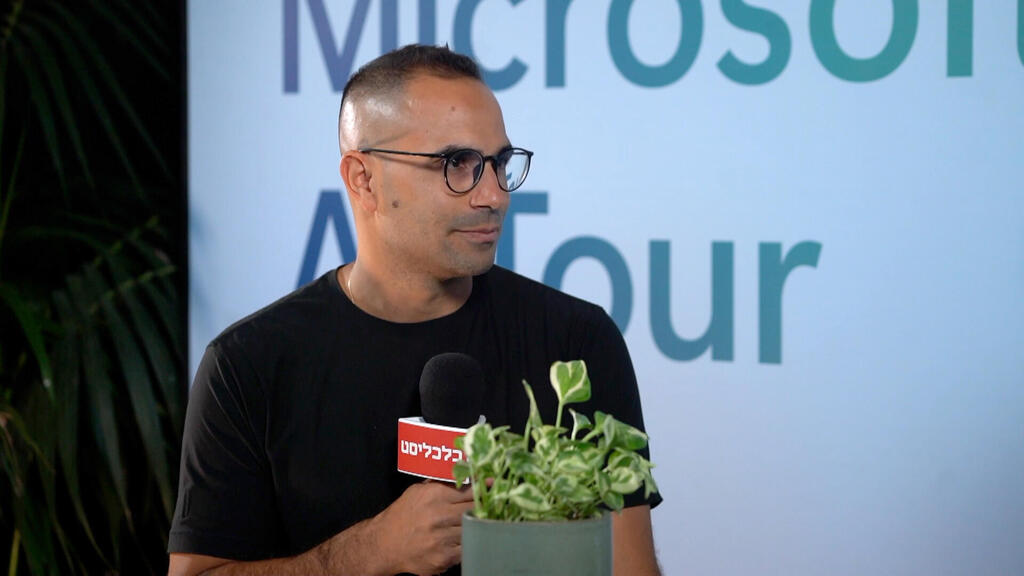
Amiram Shachar, founder and CEO of Upwind, said at the Microsoft AI Tour Tel Aviv 2026 conference that AI agents are changing the balance of power between attackers and defenders: "The physics of cybersecurity are changing." On Wiz’s exit: "An amazing deal, which creates an opportunity for all the other players to stand out."
"The agent world is changing all the rules of the game, and all the cybersecurity playbooks need to be rewritten," said Amiram Shachar, founder and CEO of Upwind, in a conversation with Calcalist reporter Omer Kabir at the Microsoft AI Tour Tel Aviv 2026 event.
It's impossible not to address the elephant in the room: You're a cyber company, and one of your competitors, Wiz, was recently acquired by Google in a landmark deal. How does the acquisition affect you and the market?
"It's an amazing deal, and kudos to them. I think it sets a very high ceiling for what an acquisition can be and what the cybersecurity market means within the broader technology ecosystem and the cloud giants. We understand that this is a highly strategic field that is only growing. For us, it's a huge development, for Upwind, for Israel, and for the entire cybersecurity industry."
According to him, the acquisition of a major player can create opportunities for other companies in the sector. "When companies are acquired, it creates an opportunity for all the other players to stand out, move faster and innovate much more quickly. We really like this higher ceiling and the opportunity it gives us to step up and build even more."
Let's talk about AI and cybersecurity. When Anthropic's Mythos, a powerful model for identifying cyber vulnerabilities, was released, there were concerns that it could wipe out cybersecurity companies like yours. If there's a model that finds security vulnerabilities and fixes them, who needs you?
"AI is changing the physics of cybersecurity. The pace is changing completely. If we used to see a major breach every few years, today we're witnessing major breaches every week or two."
According to him, the accelerating pace of vulnerability discovery actually strengthens the need for advanced security products. "In a world where physics is changing, security products need to become much better. If vulnerabilities can be found at a much higher rate, I can no longer rely on people alone to deal with them. I need much better products, and I need better AI to do that. This creates a huge opportunity for cybersecurity companies."
But if Mythos finds the vulnerabilities for me, what do you provide? Why do I need you?
"When vulnerabilities exist, a security product needs to do two main things. First, it needs to understand your exposure. Second, it needs to understand your threats. Exposure means analyzing your entire environment. That's not something a single developer, DevOps engineer or security professional can fully understand. It's an extremely complex challenge for a security product to solve.
"The second layer is real-time threat detection. How do I know whether someone is actually using Mythos in my environment and has successfully exploited one of my vulnerabilities? Detecting malicious activity in real time is where a security product becomes the last line of defense protecting your organization."
According to Shachar, collaborating with Microsoft helps Upwind make these capabilities more accessible to customers. "Partnering with Microsoft allows us to provide customers with a stronger layer of defense against threats in the AI era without sacrificing speed or innovation," he said. "The goal is to enable customers to continue adopting cloud and AI technologies with confidence, giving them more control, greater visibility and a stronger ability to manage risks in real time."
Shachar added that, unlike in some other professions where AI may replace people, cybersecurity presents a very different picture. "There are professions whose fate may be sealed by AI, such as drivers or technical support, because we are moving toward full autonomy. But in cybersecurity, it's exactly the opposite. As attackers become more capable with AI, we as defenders will have to become much sharper and use AI to protect ourselves, which is much harder than using AI to attack."
Don't you see a future where agentic AI becomes so powerful and sophisticated that it replaces what you do?
"It could very well happen. But ultimately, where technology meets humans, experience still matters. The more powerful the models become, the more intelligently we as humans will be able to use them and direct them for the benefit of humanity."



