









HR The Next Leap
BioCatch: “When a company trusts its people in a crisis the people tend to prove that trust right”
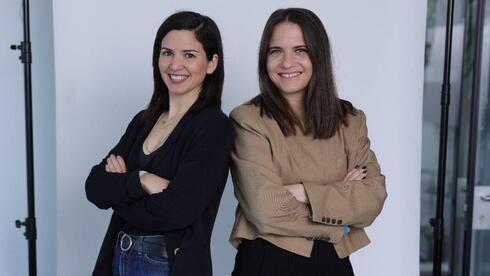
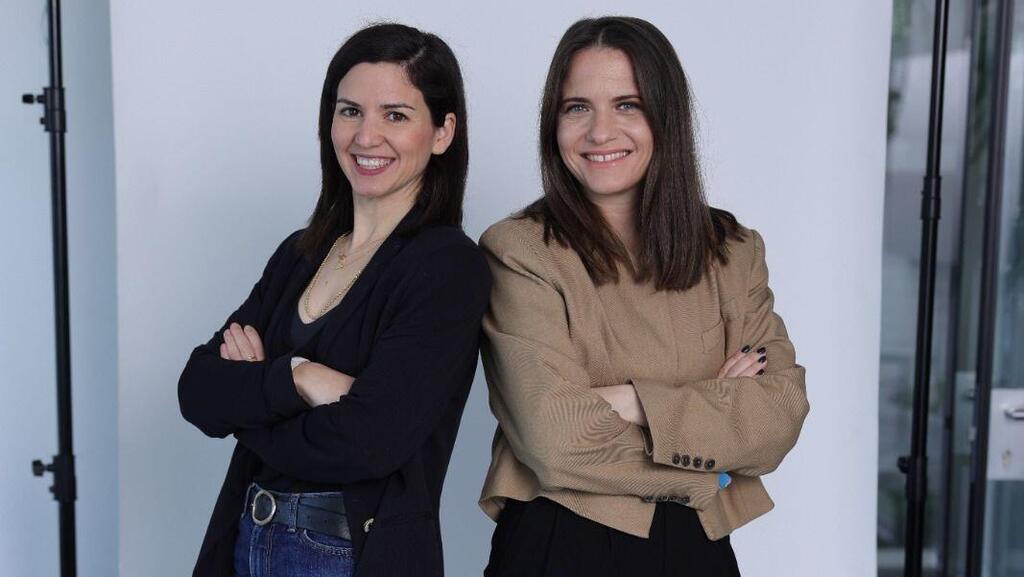
Noa Mindlin and Anna Nuriel, Co-VPs of HR at BioCatch, discuss how AI is complicating recruitment with identical applications and how burnout today has a different "texture" than it did a few years ago, as part of CTech’s HR: The Next Leap series.
“When a company trusts its people in a crisis, the people tend to prove that trust right,” say Noa Mindlin and Anna Nuriel, who co-lead HR as Vice Presidents at BioCatch, a behavioral biometrics and financial crime prevention company. Over the past few years, as the country's high-tech sector has had to hold its ground against the ongoing security crisis in Israel, the directive from company leadership was: “your safety and your family's safety come first. Work is second.” In their experience, “when people felt genuinely seen as human beings rather than just as resources, they didn't disengage, they showed up even more.”
From active and looming war threats, to AI rapidly and constantly redefining what it means to be productive, running a company in Startup Nation brings with it its own category of challenges and rewards. HR: The Next Leap takes a glimpse into the heart of Startup Nation via the HR professionals shaping its culture. We survey the executives whose jobs are more demanding and more vital than ever, as they heed the future-proofing of their workforce, while simultaneously ensuring business continuity and employee wellbeing during relentlessly unprecedented times.
Meanwhile, when it comes to the specific “brain drain” fear across Startup Nation as a result of the security situation, “we think the narrative of mass exodus is somewhat overstated,” Mindlin and Nuriel continue. “Relocation requests are up, we won't pretend otherwise,” they say, contending that “what we're mostly seeing is people stress-testing their options. They want to know the door exists, not necessarily that they'll walk through it.”
You can read the entire interview below.
Company Name: BioCatch
Sector: Fraud and financial crime prevention
Founders: Avi Turgemen and Benny Rosenbaum
Year of Founding: 2011
Investment stage: Late-Stage Private Equity
Total investment to date: Global PE firm Permira completed an acquisition of a majority stake in the company in 2024 at a $1.3 billion valuation
Investors: Permira, alongside Sapphire Ventures, Macquarie Capital, Maverick Ventures, Blumberg Capital, American Express Ventures, OurCrowd, and strategic investors the company including Barclays, Citi, HSBC, and NAB
Current number of employees: 463
Open positions: 17
Website: www.biocatch.com
Social Media: LinkedIn
As of March 2026, the market officially shifted into an 'employer's market'. How have your screening criteria changed, and do candidates - including senior-level ones - still hold any leverage in negotiating salaries and terms?
While the market has shifted, we never looked at hiring as a power battle. During the candidate-driven market, we refused to hire at all costs, and the same logic applies now. Strong professionals still know their worth and continue to have options, especially in highly specialized fields like R&D, where finding the right candidate remains genuinely challenging.
The roles we are hiring for require deep expertise and experience, and at the senior level, strong candidates still come to the table with high expectations and often multiple processes running in parallel. Our goals are ambitious, expectations are higher in the AI era, and identifying the exact right fit remains the real work.
What has changed is the volume. We are receiving significantly more applications per role than before. But more CVs do not automatically mean more suitable candidates. One trend we are noticing is that AI tools are making it easier for candidates to tailor their applications. While that sounds helpful, in practice it creates a wave of CVs that often look very similar to one another, making it harder to identify the candidate’s authentic voice and what truly sets them apart.
So yes, the pool is wider, but the challenge of finding the right person for the role remains very much the same.
How have/are you managing operational continuity and recruitment while the economy navigates the emergency state triggered by the conflict with Iran? With the threat of escalation looming at any moment, how are you and have you been handling everything from interviews interrupted by sirens to managing teams thinned by massive, ongoing reserve duty?
From the very first moment, our CEO set the tone clearly and without hesitation: your safety and your family's safety come first. Work is second. That wasn't a message buried in an all-hands, it was the immediate, unambiguous position of the company, and it shaped everything that followed. What happened next is the part we find most meaningful. When people felt genuinely seen as human beings rather than just as resources, they didn't disengage, they showed up even more. Teams found ways to cover for one another, priorities were managed without being mandated, and people did their best to complete their tasks and commitments. The result was that we saw no meaningful change in delivery. Recruitment continued as planned, quarterly goals were met, and execution held. We think that outcome says something important: when a company trusts its people in a crisis, the people tend to prove that trust right.
Beyond the role of empowering employees, which roles has AI eliminated over the past year, what percentage of your workforce was reskilled to avoid being phased out, and how has this impacted entry-level hiring?
We never over-hired during the hyper-growth years, so our lean structure is a better baseline for the AI era. We're using AI to power our future growth while keeping our headcount stable.
For our technical teams, adoption has been largely natural. Most engineers have integrated AI into how they work; for some, it has shifted the nature of their role entirely. Our automation team is a good example — it evolved organically into an AI engineering capability. The skills were transferred, and the function became more strategic. The non-technical teams are being supported through the necessary mindset shift, which simply takes time. We have learned that resistance drops the more people actually use the technology.
Against the backdrop of the unstable security and political climate, are you seeing an increase in relocation requests or 'quiet quitting' by top-tier talent moving abroad, and what is the most proactive step you are taking to retain them in Israel?
Relocation requests are up, we won't pretend otherwise. But we think the narrative of mass exodus is somewhat overstated. What we're mostly seeing is people stress-testing their options. They want to know the door exists, not necessarily that they'll walk through it. In most cases, when we look closely at someone considering a move, the security situation is accelerating a decision they were already quietly weighing, not creating it from scratch.
In an era where stability has replaced flashy perks, how are you addressing the deep mental burnout of employees torn between the professional and security fronts, and what is the most critical benefit you offer today in place of the bonuses that have vanished?
Burnout today has a very different texture than it did a few years ago. It is no longer just about workload. It is a cognitive and emotional load. People are navigating demanding professional environments while simultaneously processing an ongoing security reality and the relentless pace of AI-driven change. The feeling that the ground is constantly shifting, both outside and inside the tech industry, is genuinely exhausting.
We make sure practical support systems are in place, including psychological treatment for employees and their families, alongside dedicated benefits for employees serving in reserve duty. But what matters most is something much harder to package as a perk: creating an environment where people feel safe enough to say “I’m not okay right now” and know they will truly be heard.
At BioCatch, managers play a critical role in creating that sense of trust and psychological safety. The data reflects it. Over the past year, attrition stood at just 5%, and 92% of employees in our latest engagement survey said their manager genuinely cares about their wellbeing.
In a period like this, stability, empathy, and feeling seen matter far more than flashy perks. Those are the things people remember and rely on when the pressure becomes real.



