










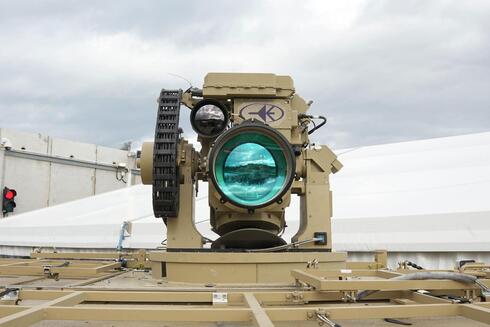
Iron Beam appears in action in major Israel-U.S. drone defense exercise
Rafael released footage of its laser technology during Black Sands, where Israeli and American military organizations evaluated around 20 systems against unmanned aircraft threats.
Rafael’s Iron Beam laser interception system was among the technologies evaluated during the Black Sands counter-drone trials held in Israel, with newly released footage showing the system in action.
The exercise, conducted in Israel for the first time, brought together around 20 systems designed to detect and intercept unmanned aerial vehicles. It was jointly led by the Israel Ministry of Defense’s Directorate of Defense Research and Development (DDR&D), known as MAFAT, and U.S. defense organizations, including U.S. Central Command, Special Operations Command Central, the Office of Naval Research and Joint Interagency Task Force 401.
Rafael said the footage shows its laser technology operating during the trials, which were designed to assess the performance of different systems against drone threats in scenarios simulating operational conditions. The participation of Iron Beam is notable because the system is one of the most prominent efforts to introduce high-power lasers into air defense, offering a potential alternative to conventional interceptors that can cost tens of thousands of dollars per engagement.
The Black Sands campaign also involved the IDF Ground Forces and Israeli Air Force, alongside Israeli and American defense companies. The participating systems were evaluated against different types of UAV threats, with military end users from both countries involved in assessing their suitability for operational requirements.
The Ministry of Defense has not disclosed the identities of all the systems involved, the specific results of the evaluations or whether any of the technologies will move toward procurement or deployment. Nor has it provided a breakdown of the types of drones used.
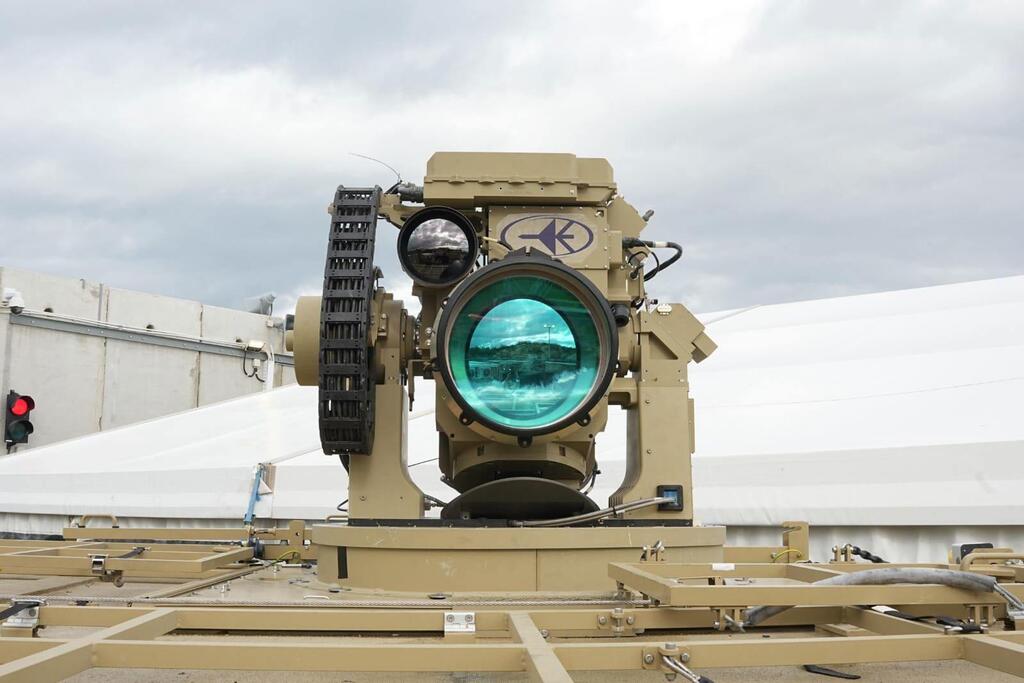
Iron Beam, developed by Rafael in cooperation with the Defense Ministry’s DDR&D, is designed to intercept rockets, mortars, aircraft and drones using a high-power laser. Elbit Systems is a key project partner, responsible for producing the laser source, while other Israeli companies have also contributed to the program.
The system was delivered to the IDF in December 2025 following a series of tests in which it successfully intercepted various aerial threats. The Defense Ministry described the delivery as a major milestone in the development of high-power laser interception and said Iron Beam would become another layer in Israel’s multi-tiered air defense network, complementing Iron Dome, David’s Sling and Arrow.
But the transition from delivery to operational deployment has proved more complicated. CTech reported in August that, more than eight months after the handover, Iron Beam had yet to enter operational service. Rafael said at the time that the system had not completed the necessary integration process.
The appearance of Iron Beam in the Black Sands footage provides a new indication of the system being exercised in a wider counter-drone environment. It does not, by itself, establish that the system has completed its integration into the IDF's operational air defense network or that it has been used to intercept drones in combat.
The trials come as militaries increasingly struggle to counter relatively inexpensive drones that can be difficult to detect and destroy. Israel has faced repeated attacks involving explosive-laden UAVs, including threats from Hezbollah in Lebanon. The spread of fiber-optic-controlled drones has added another challenge because these systems are resistant to conventional electronic warfare measures.
The appeal of laser-based interception lies partly in its potential economics. Unlike missile-based systems, which require a new interceptor for each engagement, a laser can engage targets using electricity, potentially reducing the marginal cost of each interception to a fraction of the price of a missile. The technology also offers the possibility of engaging multiple threats without relying on a finite stock of interceptor missiles.
However, laser systems have their own constraints, including range, power requirements and performance in adverse weather conditions. They are therefore expected to complement rather than replace existing air defense systems.



