









Nikesh Arora: “I’m not firing” Palo Alto’s 6,000 engineers. Other jobs are “fair game”
Palo Alto Networks' CEO says its engineering headcount will be protected even as AI boosts productivity, while other functions are more vulnerable.
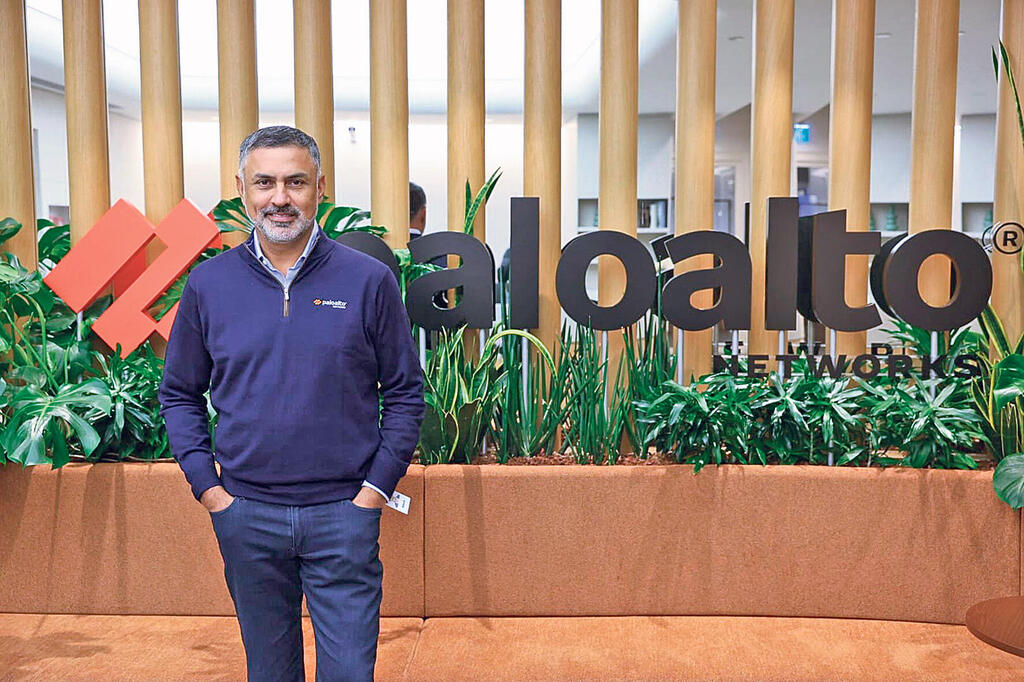
Palo Alto Networks CEO Nikesh Arora says the company will not reduce its engineering workforce even as artificial intelligence makes employees more productive, but warned that other functions could face cuts.
Speaking at a recent ICONIQ Frontier fireside chat with ICONIQ’s Divesh Makan, Arora said Palo Alto has about 6,000 engineers and that he would not cut their numbers even if AI made them twice as productive.
“I have 6,000 engineers,” Arora said. “Even if they get twice as effective and efficient, I’m not firing any one of them.”
His reasoning is that greater productivity will allow Palo Alto to develop more products and move faster than its competitors.
“My competition is going to be innovating faster. I want to do more things,” he said. “I’ve never met an engineering team that doesn’t have a product roadmap ... and they still don’t get it done. So I have enough backlog. I’m not reducing my technical organization.”
Arora added that the company may need “different kinds of people who understand AI,” but said it would not reduce its technical workforce.
Then he drew a clear distinction between engineering and other parts of the company.
“But all other functions, they’re fair game,” he said.
Arora did not say which functions could face cuts or indicate that another round of layoffs was planned. His comments were made during a fireside chat rather than an earnings call or formal company announcement.
At the same event, Arora also described how Palo Alto approaches new technology categories and startups. He said that when a new category emerges, dozens of startups can be funded to pursue similar ideas. Rather than trying to develop every solution internally, Palo Alto can watch the market and acquire companies that prove they have the strongest products.
“I still have internal efforts, but remember I’m one of 41 efforts,” Arora said. “You have to have humility to believe that I will not get it right. More than likely I won’t get it right nine out of 10 times. But somebody will.”
He said Palo Alto has an advantage because of its financial resources and market value.
“I have something they don’t. I have cash. I have market cap. So I can go buy them and bring them, make them my team. That’s how we do it,” he said.
Arora said Palo Alto is currently watching the growing market for agentic security, which focuses on protecting and managing autonomous AI agents operating inside companies. He said about 40 companies are being funded in the category, including a number of Israeli startups.
He said large companies often underestimate what startups can accomplish with a different approach.
"I haven't seen a problem that 50 engineers and $10 million can't solve in a large company. I don't know why we just don't give them 50 engineers. Actually, we do, a lot of times, and many times they don't solve the problem, because the 50 working outside are much smarter, much more dedicated, much more resourceful in attacking problems from first principles," he said.
He also argued that AI is changing the economics of cybersecurity by allowing attackers to identify and exploit vulnerabilities much faster. According to Arora, enterprises currently take an average of about four days to identify and resolve an unknown security threat, while AI can potentially chain vulnerabilities together and launch an attack in about 12 minutes.
“The problem is the average time that AI is now showing us that they can concatenate vulnerabilities and attack someone is 12 minutes,” he said. “So we have a bit of a gap between 12 minutes and four days.”



