










Mind the Tech London 2025
AI agents are going to revolutionize e-commerce, but what about the fraud?
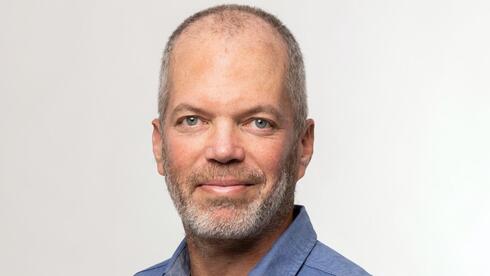
Chris North of L Catterton, and Michael Reitblat, CEO and co-founder of Forter, which has a leading platform for preventing online fraud, were speaking at the Mind the Tech London conference.
Sophie Shulman with Michael Reitblat and Chris North at Mind the Tech London 2025
( Shalev Shalem)


The next big thing in e-commerce, like much of the technology industry, is AI agents, which many believe will change the world. This view is shared by Chris North of L Catterton and Michael Reitblat, CEO and co-founder of Forter, who spoke with Calcalist’s Sophie Shulman at the Mind the Tech London 2025 conference, organized by Calcalist and Bank Leumi.
Shulman: We’re here to talk about the earthquake AI is creating in commerce. Chris, you were named by The Guardian as one of the most powerful people in retail, and you’re now a managing partner at L Catterton. Michael, you’re the founder of unicorn company Forter, which has built a leading online fraud prevention platform. Chris, I understand you invested in Forter. What led you to make this investment, and what do you envision for the company’s future?
Chris North: “We're the largest consumer investor, and we've developed a thesis for investing in software companies. We look for the best companies that serve the e-commerce industry, companies with leadership and market share. Forter is a great example of that. There aren’t many companies that build such a strong system of trust. In a world where people are impersonating others from across the globe, you look for a company with a proven, long-term track record.”
Shulman: Michael, you know the world of fraudsters very well. How do you deal with AI agents and the new fraud threats they pose?
Michael Reitblat: “There are already a significant number of fraud attacks carried out by AI agents. We recently acquired a company that knows how to stop these kinds of agents. There’s a lot of talk about AI agents today, and I strongly believe in their importance. In just three months, we saw an 89% increase in attacks by AI agents, but with very low success rates. Once the buyer is anonymous, they fail. We even saw a simulation of such an agent created by OpenAI, which we tested.”
Shulman: Who are these agents, and what do they actually do?
Reitblat: “They can buy plane tickets or make restaurant reservations, but most of their activity is figuring out which flights are worth booking. The most successful agents are surprisingly in fast food delivery. In that sector, their success rate was four times higher than in all other areas.”
North: “We’re only at the beginning. Today, only about 3% of commerce is touched by artificial intelligence across all layers. This is still a very unstable and uncertain time.”
Shulman: Looking five years ahead, how will AI agents change the world of e-commerce?
North: “We are entering a phase of massive disruption and opportunity. Every major e-commerce player sees this as a chance for big brands, which is why it’s so important to enter this space. Amazon has its products, but AI agents give us the ability to find the right product beyond Amazon’s closed system. We tested search results outside Amazon, since it doesn’t allow external search. The biggest threat to the industry today is monetization and optimization. If a leading company creates added value, that will be the key differentiator.”
Reitblat: “The best product will always win, and the same applies in the LLM world. But the changes will be much faster than in the 1990s. At the end of June, most agents were using Perplexity, and now they’ve all moved to OpenAI. I assume they’ll soon move again, it all depends on who innovates the fastest.”
Shulman: Chris, as an investor, do you prefer to invest in commerce infrastructure or brands?
North: “We are the largest investor in the most advanced and important brands. I’m very excited about the way AI agents are entering commerce, and I see huge potential. But realizing that potential will require a truly significant opportunity.”
Shulman: Michael, how does Forter plan to embrace this technology?
Reitblat: “Our infrastructure is fully automated, and it’s more ready than ever for this new era. Most fraud attempts are moving into the world of AI, but their success rate remains very low. For example, fake AI-generated bank credentials almost never succeed. Only a company that has worked with two billion people can understand how to handle the arrival of AI agents.”



