









“You’d be better off showing up without a ring”: Women founders confront bias in Israel’s cyber industry
Women building cybersecurity companies say they face assumptions about their technical abilities, leadership potential and commitment to their careers. The imbalance is stark at the top, where women account for just 5.1% of CEOs at private Israeli cyber companies.
“It’s not easy being gay in the cyber world, but it’s even harder to be a woman.” The statement, recently made by Wiz CEO Assaf Rappaport in an interview with Roni Kuban, highlights one of the Israeli cybersecurity industry’s most striking contradictions. The sector prides itself on innovation, breaking conventions and moving at breakneck speed, yet career advancement often depends on a path that runs through the military’s technological units, where professional networks are forged within a predominantly male culture. Women are present, leading teams, developing technologies and founding companies, but their numbers dwindle the higher up the corporate ladder one looks.
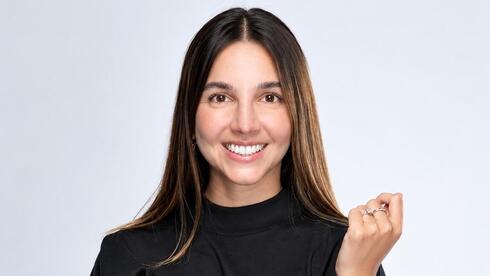
Shahar Bahat, 30, CEO and co-founder of Pluto Security, knows these unwritten rules firsthand. She spent five years in Unit 8200 in technical and research roles, then worked at two startups and Microsoft, where she established the company’s AI security division. A year ago, she co-founded Pluto Security with two partners. The company now employs 50 people, with its research and development and operations based in Israel and its sales and marketing teams in the United States.
“Assaf is right. People are trying to address the challenge, but the difficulty remains. There are more female entrepreneurs today than there were three years ago, but the numbers are still far from sufficient,” Bahat said.
The problem begins early, she added, including within Unit 8200. “It’s tough being a woman. People often assume you’re the secretary or an intelligence analyst, rather than the person capable of solving the problem.”
That dynamic creates a pattern of behavior in which women feel they must constantly prove themselves, command the room and project strength just to be taken seriously. Yet when a woman displays strength, it can be interpreted as aggression, a reaction that is not typically triggered when a man behaves the same way.
“There are so many nuances a woman has to navigate. It’s incredibly complex,” she said.
Even after leaving the military, Bahat said, the situation does not change entirely. “It’s very much the same, from basic terms like salary to opportunities for advancement. People say, ‘You’re so young,’ but that’s only because I’ve advanced quickly in my career by doing good work. A man at my level wouldn’t be perceived as young simply because he’s a man.”
She said she had encountered these assumptions while managing research and development teams, leading product strategy and interacting with senior executives.
The challenges have continued since she became an entrepreneur. Bahat said the small number of female founders is offset, to some extent, by a strong support network among those who have made it into the field.
“There are female entrepreneurs you could count on the fingers of one hand, but they are incredible, and they are deeply committed to seeing more women join their ranks. Each of them has done so much for me. It’s a powerful support system.”
Bahat also sees advantages in being an outlier. “I stand out in this landscape, and I use that to my advantage. I’m memorable, and I bring distinct, meaningful qualities to the table.”
But the practical implications can be more complicated, particularly when raising capital. Bahat said she had encountered a lingering stereotype that women are too sensitive to make difficult, rational decisions in business.
“I’ve been asked more than once, ‘What if you decide to get pregnant?’ or ‘What about children?’ Before I began fundraising, someone even advised me, ‘You’d be better off showing up without a ring.’ These kinds of comments still exist in the industry. It’s not the norm, but it’s definitely there.”
At the same time, she said, many people in the industry are actively trying to promote women. She pointed to entrepreneurs and executives including Eynat Guez, Yasmin Lukatz and Merav Bahat, as well as male colleagues who have offered support.
“There are distinct advantages to being an outlier. Wherever I go, people remember me because I’m the only woman in the room. People often assume, before even speaking to me, that I’m not the CEO or that I lack a technical background. When I engage in an impressive, high-level discussion, the element of surprise works in my favor.”
She added that women who reach leadership positions can help create opportunities for others. Women account for 40% of Pluto Security’s workforce, she said, not because of a quota but because the company has recruited talented people.
Bahat welcomed Rappaport’s decision to raise the issue publicly. “I have great respect for Assaf Rappaport. He brings important issues to the forefront. I also really appreciated the women he chose to highlight, women to whom he has given a platform throughout his career at Wiz. I’m not one to play the victim. I want to emphasize that there are amazing women who deserve to be given their rightful place.”
She believes the industry is changing, although progress remains uneven. Her own investor, Rona Segev from TLV Partners, has helped create a more welcoming environment, she said, and she has seen more women founding cybersecurity companies in recent years.
“In the last two years, five female-founded startups have emerged, already more than we’ve seen previously in the cyber sector, and I’m happy to see that number growing,” Bahat said.
She has also tried to pass on the support she received. After writing about the issue on LinkedIn, she began receiving messages from women seeking advice on building teams.
“We are unequivocally moving in a positive direction, a path that the vast majority of people in Israel support and are striving toward,” she said. “That said, I believe the foundation for this needs to be laid much earlier. We must invest in the military and in education.”
Bahat recalled an incident at a previous employer that illustrated how gender stereotypes can shape professional relationships. A vice president of sales refused to work with her, claiming she was “too sensitive” and “not schematic enough,” and that she cared more about people’s feelings than results.
“I told the CEO that if I were a man, he would never have said such a thing. I added that while he was free to choose not to work with me, I would continue working with him.”
The CEO and the rest of the team challenged the vice president’s behavior and made clear that it would not be tolerated, she said.
By then, Bahat had established herself professionally and knew how to stand her ground. Still, the incident surprised her. “I thought to myself, ‘I can’t believe this happened. I’m going to change his perspective.’ And I did.”
The numbers behind the gap
The gender imbalance in fields that feed into cybersecurity begins as early as high school. According to a 2026 report by the Israel Innovation Authority, women accounted for just 34.5% of students who took the five-unit matriculation exam in computer science in 2024.
The gap persists in the labor market and widens at senior levels. Data published by the authority in 2025 showed that women made up 26.3% of non-managerial employees at private-sector cybersecurity companies in Israel, but only 15.5% of senior executives. Among cybersecurity companies founded between 2013 and 2024 and included in the authority’s analysis, women accounted for just 5.1% of CEOs whose gender was known.
Inbal Argov, 34, vice president of product strategy at Mate, entered cybersecurity by a different route. In 2016, she was included in Forbes’ “30 Under 30” list for an AI product she developed to support security decision-making. At Microsoft, she managed AI agents in cybersecurity before joining Mate, which develops agents that investigate cyber incidents and help organizations move toward agent-based security systems.
“I didn’t come from the ‘Unit 8200 club,’ and I made the career transition relatively late,” Argov said. She spent years in the military in entirely different fields, and felt like an outsider when she left and tried to enter the technology industry.
At the Technion, she developed an interest in cybersecurity without initially realizing it was a viable market. She studied computer science and was mentored by prominent figures in the field, including Amichai Shulman, the founder of Imperva, who supervised her project.
“I had no idea there was money to be made in this. It was purely out of genuine interest, and I got into it relatively late,” she said.
Argov believes that being in the minority makes any environment more challenging, but she is wary of framing cybersecurity as a closed club in ways that might discourage women from entering it.
“Any place where there are fewer of you, and where the perception is that it is difficult, is a more challenging place. After articles saying that it’s difficult to be a woman in cyber, women can mistakenly hear that they shouldn’t enter. That puts them in the mindset of, ‘I’m an underdog. I need to do more.’”
There can also be advantages, she said, including a strong drive to succeed. At Mate, she sees women leading across sales, research and marketing, and believes that being underrepresented can motivate them to stand out.
“What we all have in common is that we don’t look at it as a closed men’s club. If women read messages about a ‘men’s club’ or an ‘8200 club’ and believe them, they’re less likely to join.”
She recalled seeing repeated references to closed networks and people hiring friends from the same circles. Having grown up outside those environments, she sometimes wondered whether she belonged.
“I’ve seen these messages about a closed club and a friend bringing a friend, and I said to myself, ‘I didn’t grow up in these places. I don’t belong.’ That is an obstacle in itself.”
Women remain underrepresented in senior command and management positions, both in military units and across the technology industry, she said. At Microsoft, she encountered many women, but their numbers dwindled as she advanced from team management to more senior leadership roles.
Argov finds it difficult to identify a fundamental difference between cybersecurity and the broader technology sector, beyond the intensity of the business.
“Cyber is the edge of high-tech. Everything is about speed, more money and higher stakes,” she said.
Her own experience has included encouraging examples. Argov said that at Mate, as well as during her time at Microsoft, she encountered people who valued women’s contributions. She recalled a recent deal with a senior executive at a financial company who praised both the product and the women who led the sales and research work.
“She said, ‘The product is really good, but my favorite thing about the process was that the saleswoman and the research woman who led it were women. That’s rare,’” she said.
Asked what she finds most difficult about being a woman in cybersecurity, Argov returned to the question of representation.
“Not seeing anyone else like you in the room. If we don’t see more women founding companies, and we don’t have an example of how to do it, then we will want to do it less.”
The gap can persist even after women enter the industry. Argov said research suggests that women are less likely to ask for salary increases and promotions, in part because they become accustomed to being underrepresented.
She also recalled the kind of interactions Rappaport described in his interview, in which a woman dealing with a client from a traditional organization may find herself having to assert her authority even when she outranks the men around her.
“You suddenly feel like you’ve gone back ten years. You’re talking to the man next to you, even though you’re three ranks higher than him, and you have to keep playing the game,” she said.
Argov believes that the pipeline into cybersecurity begins long before the first job interview.
“It starts in Unit 8200, and in fact even earlier, in high school. I was one of only three girls in my high school computer science track, because studying computer science back then wasn’t considered cool,” she said.
She sees signs of change in schools and in the military, but believes the current generation of women in technology has a particular responsibility to turn progress into more female-founded companies.
“Our generation is the one currently shaping the industry. We are the ones who should be founding companies, yet not enough of us are doing so. We hold key positions, but we don’t see enough other women around us. Things have changed in high schools, and they are shifting somewhat within the military as well. I hope this means that in seven years, we will see more female founders.”
The IDF Spokesperson’s Unit said the military is working to increase women’s representation in technology and cyber roles through excellence programs in middle and high schools, as well as dedicated preparatory programs.
Women accounted for approximately 33% of recruits assigned to cyber and cyber-defense roles in the 2025 enlistment cohort, the military said. Within the C4I and Cyber Defense Directorate, women hold more than 40% of senior command positions at the rank of colonel or above, most of them in operational and technological roles.
The military also reported an increase in the proportion of women completing courses at the School of Computer Professions, known as Basmach, within the directorate. Women accounted for 43% of graduates in 2024, rising to 46% in 2026.
Argov said her own sense of being an outsider has helped fuel her ambition, but also left her feeling that she must constantly prove herself.
“I have to explain, I have to win, I have to succeed. I’ve had an ‘underdog’ mindset my entire life,” she said.
She described moving between 12 homes before the age of 18, spending time abroad and growing up as an outsider in a kibbutz. Those experiences, she said, shaped her determination to prove herself in unfamiliar environments.
As a manager involved in recruitment, Argov believes that improving representation requires active effort rather than waiting for the balance to change naturally.
“Ninety-five percent of the applicants I receive are men. I have to actively seek out strong women. I can’t just hire the entire 5% who applied,” she said.
When Mate recruited her, the company broadened its search and actively sought candidates who might otherwise have been overlooked. Argov said she has followed a similar approach when building teams, consistently looking for women who are already leading within their organizations.
Argov also wants the public conversation about women in cybersecurity to focus on their work, rather than only on the obstacles they face.
“Assaf Rappaport said in the interview that it’s a shame there aren’t more conversations with women in the cybersecurity field. When I give interviews, I want to talk about the AI systems I’ve built and how they defend against attackers. It bothers me that the focus remains on the challenges,” she said.
“I’m participating in this piece, yet I know it might end up with a headline like ‘It’s hard to be a woman in cybersecurity.’ I don’t want women to fixate on the obstacles. I want them to focus on the goal, to see how cool the field is, to look at the incredible career Raaz Herzberg at Wiz has built, and to realize how exciting it is that women are developing AI. Let’s not talk only about the obstacles.”
Eden Katz, a veteran of a technological unit in the Israeli Navy, has worked in cybersecurity for more than 11 years. She is now a cyber researcher specializing in artificial intelligence at startup Alice and volunteers as the manager of Hackeriott, or “The Female Hackers,” a nonprofit established in 2022 by Gadi Evron and Dafna Yanin to help integrate women into the cybersecurity sector.
Data independently collected by Hackeriott from approximately 2,700 public LinkedIn profiles in Israel, covering roles such as information security analyst, security analyst, cybersecurity analyst, penetration tester and security researcher, indicates that women remain underrepresented across these positions. In entry-level analyst roles, the breakdown is roughly one-third women and two-thirds men. In advanced research roles, the share of women falls to 14%, compared with 86% for men.
“For many years, I was the only woman in the room,” Katz said. “Hackeriott was founded to examine the barriers preventing women from entering the cyber field and to provide support, primarily by increasing exposure and visibility.”



