









AI isn’t replacing these women. It is expanding what they can do
An interior designer, graphic designer and economist are using AI to build new services, automate their businesses and take on work that was previously out of reach.
After working as an interior designer for some time, Moran Reiter discovered that AI could significantly expand the range of services she offered her clients. A real estate developer building four villas in north Tel Aviv was undecided about which type of staircase to choose. Within three hours, she generated five precise visualizations based on his specifications, allowing him to make a decision. In another case, a real estate company approached her to create a promotional visualization video for one of its projects.
Reiter, 50, does not come from a technology background. She holds a degree in communications and, following a two-decade career in advertising, digital marketing and social media, transitioned into interior design. Over the past two years, she has taught herself to use AI tools to such an extent that, by her own account, they have become the key competitive advantage of her business.
"It completely transformed the business," she says. "There are plenty of interior designers out there, but I don't know of any others who integrate technology at this level."
Reiter's story is part of a broader transformation taking place in the labor market. Alongside the debate over which AI-related professions will emerge and which existing jobs will disappear, another process is underway: employees and small business owners without technological backgrounds are learning to use new AI tools not merely to optimize their existing work, but to build capabilities, products and services that they could not previously offer.
OECD data illustrates the trend. In a 2024 survey of more than 5,000 small and medium-sized enterprises (SMEs) across seven countries, 31% reported that they were already using generative AI. Among those users, 35% said the technology enabled them to perform tasks they could not previously handle, while a similar proportion said it allowed them to offer new products or services. Some 45% reported cost savings, while 26% said AI had increased revenue. One-third also reported a reduction in workload, and 14% said they had become less reliant on external suppliers and contractors.
Reiter's path into interior design began following a professional upheaval. After earning a bachelor's degree in communications, she worked at an advertising agency before moving to the client side, where she handled marketing and distribution for Warner Bros. Israel through the Globus Group. She later managed digital and social media marketing in the fashion sector for brands including GANT, G-Star and Carolina Lemke, followed by a digital marketing role at Intel Israel, where she remained until the company's massive wave of layoffs.
She subsequently managed marketing for a law firm.
"I hated every moment of it and considered quitting. But then October 7th happened, and I stayed on, paralyzed by a sense of paralysis."
"One day, I came home, put on some music, started dancing, and told myself that from then on, I would start making my dreams come true, so I signed up for interior design studies, something I had always loved doing but never pursued professionally."
She enrolled at Studio B6, where she met Lital. The two later became partners in Turn Left, a studio they founded in Herzliya. That was when another field entered the picture: AI.
Reiter's partner comes from the computing world and had spent time trying to get her interested in AI agents and other tools. The turning point came during a flight delay.
"My partner had told me two years ago that it was a magical world. While we were sitting in a terminal in Thailand, I started learning about it with him, and since then, I’ve dedicated two days a week to mastering it. At first, it was all Greek to me."
Today, she describes Claude Code almost as a third partner in the studio.
"I use it to develop every whim and dream I have. I don't know many women outside the tech industry running independent businesses who have leveraged this technology to such an extent."
"My competitive advantage in the business today is my use of technology. I built the website in two days with zero prior knowledge. Now, all our client project management runs through a smart, automated CRM system I developed myself, one that is custom-made for my business. These are things that, until a year ago, seemed like science fiction to me. I used to have to pay thousands of shekels plus a retainer for a system like Monday, which wasn't even tailored to my specific needs."
"Today, I can make any business dream a reality using Claude Code and local video-generation models, offering our clients a high level of certainty and precision, and it’s all thanks to the technology. I started with zero knowledge in this area."
Even a routine task such as preparing a price quote has changed.
"I trained Claude on all the quotes the studio had issued in the past; now, I simply type in 'new family, home design, four rooms, developer-standard apartment, price X,' and within minutes, I have a professionally formatted, up-to-date quote that includes details I hadn't even considered. The model has learned so much that it can suggest ideas I wouldn't have thought of myself. It’s a huge time-saver in my day-to-day work."
But the most significant shift lies in the new services she can offer compared with a year ago.
"By combining AutoCAD, which I use to create realistic, precise visualizations, with a specialized local model for video generation, I realized I could offer real estate companies a comprehensive package. It goes beyond just interior design and home styling for clients; it encompasses videos, banners, landing pages, and visualizations. It really opens up a whole new world of possibilities."
She says using these tools has saved her tens of thousands of shekels while also boosting revenue.
"My income has grown by about 30%, and I believe that figure will rise further over the next six months compared to a year ago."
Yet she emphasizes that technological capability does not sell itself.
"There’s a lot of marketing work involved on my part, too; I have to sell the service rather than expecting people to come knocking on my door."
She has already begun sharing what she has learned with other designers, including veterans trying to "get a handle on the chaos."
And what about the concern that the ability for anyone to generate designs and visualizations using AI will eventually render interior designers obsolete?
"A great many people have written off the design profession, arguing that anyone can simply tell ChatGPT or Gemini, 'Design a children's room for me.' While it is true that people now have easy ways to create designs for themselves, the fact that AI has flooded the landscape with so much beautiful imagery has actually led to an increase in demand for interior designers. People are more exposed to design concepts; they see what others have and decide, 'I want that too.' AI won't replace us, but it will completely transform the nature of the profession and the specific skills required; those who learn to work effectively with it will be the most sought-after professionals in the market of tomorrow."
A dream encounter
For Shiri Levi Madar, 39, from Moshav Yashresh, her encounter with AI began in an unexpected way, in a dream.
Levi Madar is a Visual Communication graduate of Shenkar who worked for years as a freelance designer and brand specialist, primarily for lifestyle, cosmetics and fashion companies.
"During my time at Shenkar, AI didn't exist, so it wasn't taught; we did everything through hard work. Before AI, I worked with graphic creation and design software like Photoshop, Illustrator, and Procreate, tools that require hours of manual work."
Her entry into the world of AI began about three and a half years ago.
"I had a dream about the whole AI revolution, and someone in the dream told me, 'You have to get into this and never stop learning it, it’s not just a trend!' I woke up with that phrase in my mind, told my husband, and he said, 'Follow the dream.' There were no courses available in Israel, so I found a course in Russian, translated it into English and Hebrew, and taught myself. I watched tutorials and subscribed to Russian Telegram channels that still send me interesting, up-to-date content to this day."
At the time, she says, many people still viewed the new tools as a passing fad.
"At first, to most people, it sounded like an NFT, just another fleeting trend, and the chatbot was making plenty of mistakes, too. But I, partly because I’d even dreamt about it, felt I shouldn't let the background noise distract me; I told myself, 'Go all the way with this, master it to the highest level you can.'"
What began as self-study gradually evolved into a business.
"I started teaching, and the demand was insane. I’d post a course date to my Stories, and it would fill up in less than an hour. People in the design world were incredibly curious about what this was all about. Sometimes, a teacher, a psychologist, or a chemist would show up, they just wanted to understand what everyone was raving about and see for themselves."
"My target audience is interior designers. I started posting work I’d created using AI, and they were blown away. These are things that usually cost them a fortune, sometimes 10,000 shekels just for static renderings, not even videos. Major Israeli companies like Aloni and HeziBank, as well as architecture firms, began reaching out to me for staff training, which eventually turned into regular sessions. I showed them methods that save both time and money."
These days, she is selective about the design projects she takes on, dedicating most of her time to developing courses for designers and content creators.
"This field changes rapidly; what I taught two months ago might already be outdated, so I’m constantly updating the courses. In addition to the in-person courses I hold across the country, I’ve launched a new digital membership club offering tutorials, mostly for women, where I upload six or seven new lessons every month."
"I’m constantly learning about tools from Russia and other parts of the world before they even reach Israel. This club is very important to me; it’s a steady source of income that I’d hate to give up."
Most of the design projects she chooses to undertake do not involve AI tools.
"I’ve worked on massive projects, like the one with Renuar and designer-influencer Oria Azran, or the Partner project where we created phone cases out of real denim. These are companies that partner with a prominent social media influencer to create a collection, and I handle all the graphic design. Those aren't AI projects, but aside from them, I’ve learned to integrate AI to make my life easier and better."
She says the shift has also been reflected in growth in both clients and revenue, "by at least 60%."
"I’ve transformed my profession. You have to pay attention to new developments rather than standing still. I don’t think AI will replace people to the point where they’re out of work; rather, people will have to adapt, whether they do it willingly or are forced to. I made the change willingly. People tend to view this as just a side issue, but without knowledge of AI, it will be very difficult to find a job in any field. My focus is on the design, architecture, and content creation sectors; lawyers and accountants have their own AI tools tailored to their specific fields."
"There was a time when everything had to be done manually."
Yuval Liani, 33, is an economist and financial content creator. She owns Yuvalina Finance and runs a social media community. She holds a degree in economics, has studied business consulting and tax planning, and is currently obtaining a capital market portfolio management license.
"The goal is to make financial tools and content accessible to businesses and families, enabling better money management, smarter investing, and sound financial practices."
"AI has changed my life. I went from needing to employ staff, including an office manager and customer service personnel, to working with just one employee today. You can't do without at least one human employee in the business, but I’ve shifted the rest of the workload to automation: chats, customer service bots, CRM systems, collections, finance and tracking, marketing, emails, campaigns, and content creation. It’s all handled by AI agents like ChatGPT, Claude, Nano Banana, and others."
Liani, too, did not learn these tools through a formal technology program. Instead, she picked them up through Google, YouTube and the chat interface itself. Her client list includes Menora Mivtachim, Meitav Dash, IBI and Bank Hapoalim.
"In the past, you had to do everything yourself; today, a simple command gets the job done instantly, resulting in significant cost savings. This leaves a larger profit margin, allowing for a higher salary or more free time to develop other projects. I can't say for certain that it increased revenue, but it definitely cuts expenses by over 50%, which means it has boosted profits."
For Liani, the difference between this way of working and the methods she used early in her career is "light-years apart."
"I hold a degree in economics and used to work as a corporate analyst. I would spend hours on Excel spreadsheets, straining my eyes just to fill in data cells, tasks that wouldn't happen today thanks to AI. It leaves so much more room for creativity. I’m a strong believer in academia and formal education; I think you need to take the knowledge you’ve acquired and layer creative thinking onto it, rather than focusing solely on the technical execution that used to be the main priority."
"You could say that AI has changed all our lives, enabling the average person to expand their capabilities, make better use of their time, and boost their productivity. Ultimately, however, real human intelligence is still needed to drive these tools; when the two are combined, businesses can achieve significant growth. I’m not worried about AI replacing humanity. It will replace anyone who fails to keep pace, specifically, those who don't move fast enough to creatively integrate AI into their work."
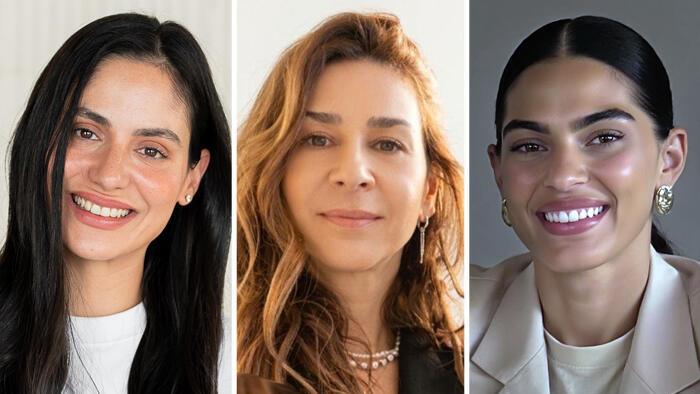
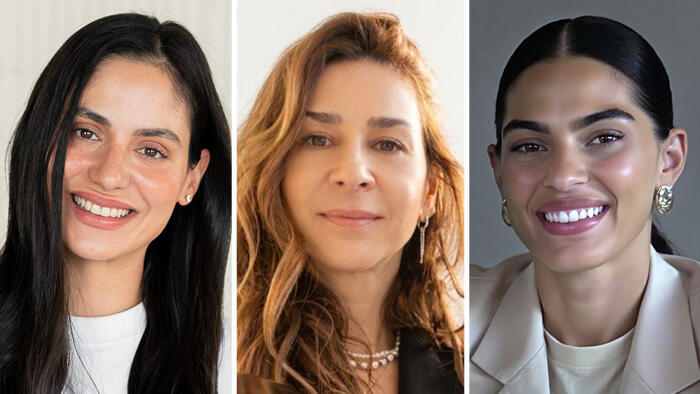
For all three women, AI did not replace the professional expertise they already possessed. Instead, it empowered them to do things that were previously impossible, from developing new services and bringing tasks in-house that were once outsourced to transforming how their businesses are managed.
They did not abandon their professions for careers in technology. Instead, they integrated technology into the fields they already knew, effectively redefining the boundaries of their work.



