










From the Six Million Dollar Man to the $1,000 exoskeleton
At CES, wearable robotics finally go mainstream, but the bionic dream is still catching up with reality.
In the 1970s, the opening of the television series The Six Million Dollar Man promised viewers: “We have the technology.” Colonel Steve Austin, mortally wounded, was rebuilt as a bionic man, better, stronger, faster. The price tag was fantastical: $6 million.
This week in Las Vegas, it turns out inflation has worked in reverse. The technology is here, and it costs less than an electric bike.
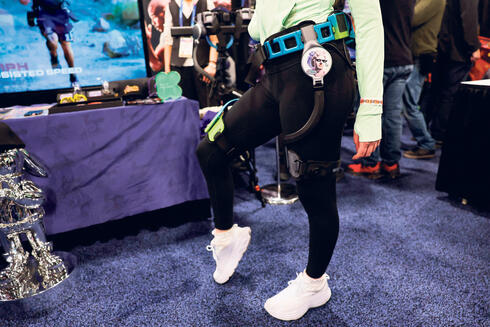
The halls of CES this year were filled with visitors wandering the show floor strapped in, tethered, and connected to strange machines wrapped around their lower bodies. This is the year consumer exoskeletons broke through. But before we toss away our walking sticks and start running at 60 miles an hour, a tour of the booths reveals a more complex picture: the future looks promising, but the present still feels distinctly mechanical.
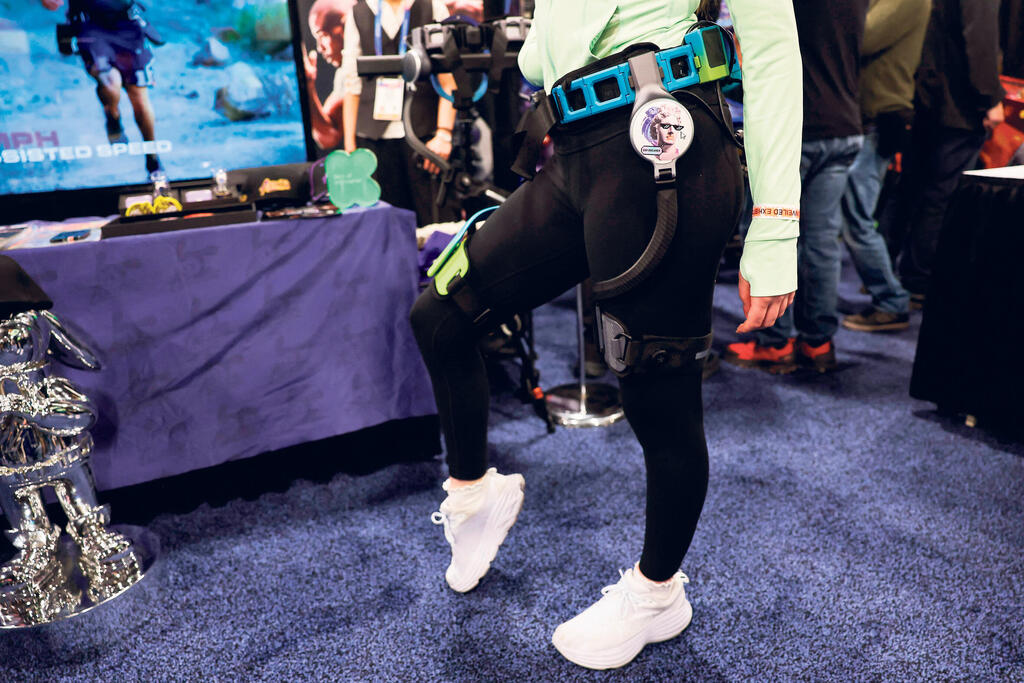
Several companies stand out at this year’s exhibition, each trying to convince visitors that it is the “iPhone” of this emerging industry. Hypershell, for example, introduced its new X and Pro models aimed at extreme enthusiasts. The device, which sells for roughly $600 to $1,000, is worn like a belt with motors on either side and promises to “offset” about 30 kilograms of body weight.
At the other end of the spectrum, South Korea’s WIRobotics is presenting a very different approach with the WIM. Weighing about 1.4 kilograms, modestly designed, and priced at around $2,300, it is not meant to send users leaping off buildings. Instead, it promises to allow adults to walk about 20% faster with less effort.
In the modular innovation category, Ascentiz presents an intriguing concept it calls “Bionic Lego”: the ability to swap modules between the hip and knee as needed. Pricing has not yet been finalized, but estimates point to either a subscription model or modular purchases totaling around $1,500. Completing the picture are Sumbu and Dephy. Sumbu is targeting the affordable urban niche with its Exo-S3, priced under $1,000, while the American company Dephy is showcasing the Exo-Boot, a smart boot focused on the ankle that provides a “push” with each step, using technology that looks as if it came straight from a military laboratory.
On paper, the promise is intoxicating. Who wouldn’t want to go farther and feel less tired? But even a brief hands-on trial with some of the products suggests that the bionic vision remains in its infancy.
The main challenge is synchronization. For an exoskeleton to feel like a natural extension of the body, its AI must predict movement within milliseconds. In several demonstrations, the device felt as though it was “chasing” the leg rather than moving with it. The resulting lag makes walking feel robotic and awkward.
Comfort is another unresolved issue. Despite the use of lightweight materials such as magnesium and carbon fiber, the user is constantly aware of being connected to a machine. The whir of the motors, the friction of the straps, and the extra weight, especially once the battery runs out and the system becomes dead load, underscore the sense that this is still a transitional technology.
Yet for Israelis, it is hard to ignore the enormous potential of these systems in the military sphere. The same technology that allows a backpacker in Nevada to climb a mountain with a heavy pack is precisely what IDF soldiers and reservists would welcome in the field.



