









Mobileye founder Amnon Shashua steps down as CEO after 27 years
The architect of one of Israel's biggest technology success stories hands over day-to-day leadership as the company bets on AI, robotaxis and humanoid robotics.
Mobileye founder Prof. Amnon Shashua announced on Thursday that he is stepping down as CEO after 27 years at the helm of the autonomous driving company.
“For nearly three decades, Mobileye has been my life’s work,” said Prof. Shashua. “As the company continues to grow and mature, I believe this is the right moment to establish the leadership structure that will be best suited for Mobileye’s next chapter. I remain deeply committed to Mobileye’s success and am excited about the opportunities ahead, particularly in advanced AI, autonomous systems, and humanoid robotics. I look forward to supporting the Board and leadership team throughout the transition process and continuing to contribute to the areas where I can have the greatest long-term impact.”
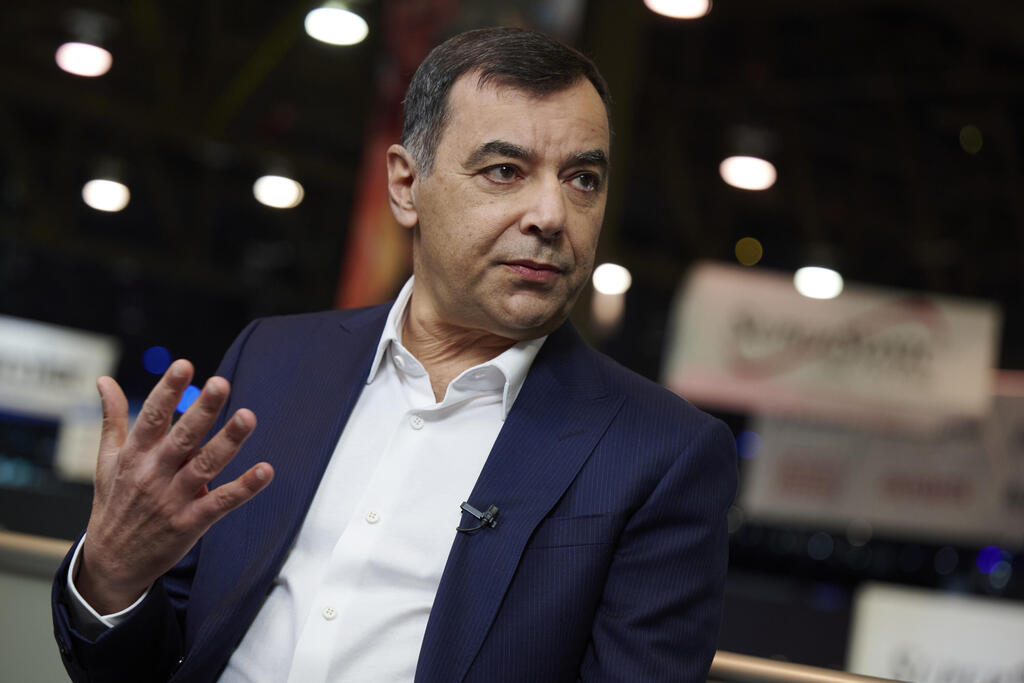
Shashua founded Mobileye in 1999 and transformed it into one of Israel's most successful technology companies. Under his leadership, Mobileye completed what was then the largest Israeli initial public offering in 2014 before being acquired by Intel for $15.3 billion in 2017. Intel later relisted the company on the Nasdaq in 2022 and currently owns approximately 77% of its shares.
Widely regarded as one of the world's leading experts in artificial intelligence and computer vision, Shashua has made major contributions to fields including autonomous driving, robotics, machine learning, large language models and augmented reality. He has held the Sachs Chair in Computer Science at the Hebrew University of Jerusalem since 2007.
His work has earned broad international recognition, including election to the U.S. National Academy of Engineering (2026), inclusion in the TIME100 AI list of the world’s most influential people in artificial intelligence (2025), the Israel Prize for Lifetime Achievement (2023), the Automotive Hall of Fame’s Mobility Innovator Award (2022), and the Dan David Prize in Artificial Intelligence (2020).
Mobileye Chairman Saprodu Yeboah Amenkwaa praised Shashua's leadership.
“On behalf of the Board, I want to express our deep appreciation to Amnon for his extraordinary leadership as Mobileye’s founder and CEO,” said Safroadu Yeboah-Amankwah, Chairman of Mobileye’s Board of Directors. “A true technology leader and innovator, Amnon has helped shape not just Mobileye but has also played a defining role in the evolution of the modern driver-assistance and autonomous-driving industry. He’s one of the great technologists in the areas of ADAS, AI, and robotics and has kept us on the technological edge. We are grateful for Amnon’s continued commitment to the company as we ensure a seamless transition.”
Yeboah-Amankwah continued, “We are confident in Mobileye’s strategy, leadership team, technology platform, customer relationships, and long-term opportunities. As we take the next step in succession planning, we are focused on selecting the right leader who will help us deliver our next phase of growth.”
David Zinsner, Intel's chief financial officer, also thanked Shashua for building Mobileye into an industry leader.
“We at Intel thank Amnon for his leadership, dedication and commitment to building Mobileye into an industry leader,” said David Zinsner, Intel's Executive Vice President and Chief Financial Officer. “We continue to be bullish on Mobileye and its trajectory and look forward to working with the new CEO and leadership team on the next chapter in Mobileye's success story.”
The board said the leadership transition is intended to ensure continuity while positioning the company for its next phase of growth. Following the appointment of a new CEO, Shashua has been nominated to become chairman of the board, where he will focus primarily on long-term technology strategy and innovation, including the company's growing humanoid robotics initiatives.
The announcement came alongside Mobileye's second-quarter results, which showed stable revenue, significantly stronger profitability and an improved outlook for the year.
Revenue totaled $508 million, roughly unchanged from the same quarter last year but above analysts' expectations of $482.2 million.
The company reported a GAAP loss of 3 cents per share, while adjusted (Non-GAAP) earnings reached 19 cents per share, well ahead of analysts' expectations of 6 cents.
Following the results, Mobileye raised its full-year 2026 guidance. The company increased the midpoint of its revenue forecast by $20 million and now expects revenue of $1.97 billion to $2.02 billion, representing annual growth of approximately 4% to 7%.
Mobileye also raised the midpoint of its adjusted operating profit forecast while lowering its projected operating loss, primarily due to an R&D incentive recognized under recently enacted Israeli legislation that is expected to generate an annual Non-GAAP benefit of $180 million to $200 million.
The company generated $210 million in operating cash flow during the first half of the year and ended the quarter with $1.4 billion in cash, cash equivalents, marketable securities and deposits.
Shashua said Mobileye's core business continues to show strong momentum ahead of several advanced product launches planned for late 2026 and throughout 2027. He said the company is well positioned to translate years of heavy research and development investment into revenue growth across advanced driver assistance systems, autonomous driving, robotaxi services and humanoid robotics.
Mobileye also reported progress in its commercial robotaxi partnership with Volkswagen's MOIA, which has begun public testing in Hamburg. The company said it is also expanding its mobility-as-a-service activities and deepening its collaboration with Moovit.



