










Mobileye enters robotaxi race with independent service plan
Shashua moves beyond partnerships to compete directly with Waymo, Tesla, and Amazon.
Israeli company Mobileye’s collaborations in the field of autonomous taxis are progressing more slowly than expected, and Amnon Shashua has decided to take matters into his own hands. The veteran Israeli autonomous vehicle player announced the establishment of an independent robotaxi operation, a move that will put it in direct competition with giants in the field such as Google’s Waymo, Tesla, and Amazon.
Until now, Mobileye has operated in this market by supplying technology to other manufacturers, led by Volkswagen. The new initiative is expected to launch in an unnamed city in the United States in 2027, after multiple delays. In addition, in early 2025 Mobileye announced a joint venture with ride-hailing company Lyft and Japanese conglomerate Marubeni, which also manages vehicle fleets. The three companies’ robotaxi service was initially expected to launch in Dallas in 2026, but this has not yet happened, and it appears Mobileye is no longer relying on this venture.
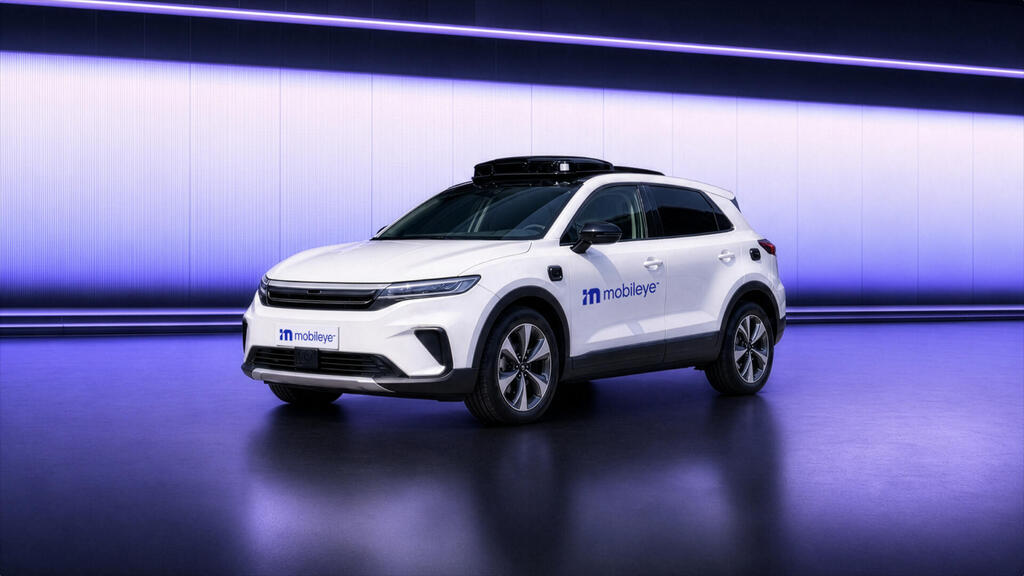
In the new model, Mobileye plans to deploy an initial fleet of about 100 vehicles in a major metropolitan area in the United States during 2027. The rollout is expected to be gradual throughout the year in order to test and validate the operating model under fully autonomous, driverless conditions. After successful deployment of the initial fleet, Mobileye aims to scale significantly, targeting approximately 17,000 vehicles over the next five years.
As part of this shift, Mobileye is also finding a new role for Moovit, a company its parent Intel acquired in 2019 for $1 billion and whose products have had limited use due to delays in realizing the autonomous vehicle vision. In April of this year, Calcalist reported that Mobileye had even explored selling Moovit’s operations at a valuation well below $1 billion. Now, Moovit is expected to play a central role in the new venture, providing not only mapping services but also fleet management capabilities. According to Mobileye, the Moovit mobility platform currently serves over 1.7 billion users across more than 3,500 cities in 112 countries and 45 languages.
In parallel with its standalone operations, Mobileye will continue its project with Volkswagen, although the latter has agreed that the Israeli company may install its autonomous driving systems in robotaxi fleets operated by other automakers. While Mobileye can also provide the trip management layer, it is not ruling out cooperation with Uber and Lyft, which lead the U.S. ride-hailing market. The company’s strategy is to move quickly with multiple manufacturers and partners in order to capture share in the emerging robotaxi market.
Today, while Google’s Waymo is considered the largest player in the U.S. robotaxi market and leads it decisively, it operates only about 4,000 vehicles across 10 cities in the United States, roughly 400 autonomous taxis per city. Tesla is still in experimental stages with only a small number of robotaxis, and Amazon’s Zoox operates fewer than 100 vehicles. Mobileye’s Volkswagen partnership is expected to put about 1,000 robotaxis on U.S. roads by 2027. Waymo is also pursuing a similar model, both through its own dedicated app and via cooperation with Uber. However, business models in the sector are still evolving, and Waymo itself reportedly loses money per ride, with profitability expected only at much larger scale.
Mobileye says the decision to establish an independent robotaxi company marks a significant strategic shift. The initiative will sit alongside its existing business model as a supplier of autonomous driving technology to automakers and mobility service operators worldwide, effectively creating a new operational arm while continuing support for existing partners. At this stage, there are no plans to hire additional employees for the new activity.
"The robotaxi revolution has only just begun, and its potential for transforming how we travel around the world continues to increase," said Prof. Amnon Shashua, founder and chief executive officer of Mobileye. "As interest in autonomous mobility accelerates, the industry has become increasingly dependent on a small number of technology providers and business models. We believe there is an opportunity for a new approach—one built on deep autonomous-driving expertise, strong industry partnerships, and proven capabilities across the mobility ecosystem.
"Mobileye has spent more than two decades building the technologies required for autonomous driving. Today we are taking the next step: combining those technologies with operational ownership to create a financially and geographically scalable robotaxi business designed from the ground up for global deployment.”



