










Greece and Israel move ahead with €3.1 billion Achilles’ Shield air defense network
The agreements mark the start of implementation of Greece’s multilayer system, combining Israeli missile defenses with existing Greek capabilities and AI-based command software.
Greece and Israel are set to sign agreements Monday in Tel Aviv formally launching the development of “Achilles’ Shield,” a €3.1 billion ($3.6 billion) integrated air defense and missile protection network that Athens sees as a central part of its effort to modernize its armed forces.
The agreements mark the transition of the project from government approval to implementation. They will be signed by Greece’s General Directorate for Defense Investments and Armaments and SIBAT, the Israeli Defense Ministry’s Directorate of International Defense Cooperation, along with the Israeli defense bodies and companies involved in the program.
The project was approved by Greece’s Government Council for Foreign Affairs and Defense, or KYSEA, on July 23. Defense Minister Nikos Dendias said at the time that the system would become operational within 35 months, with the network delivered in stages.
In recent days, Greece and Israel have resolved outstanding issues surrounding the project, including a requirement for at least 25% Greek participation and provisions covering the transfer of source code.
The source-code provision is particularly significant because it is intended to give the Greek armed forces control over the software running the electronic subsystems of the network, rather than leaving the country entirely dependent on the Israeli suppliers for that layer of the system.
The project is also expected to provide a substantial role for Greece’s defense industry. Twelve Greek companies are expected to participate, with work valued at more than €700 million ($800 million), according to Greek defense officials.
The scale of the domestic participation was one of the conditions attached to the project as Athens sought to combine the acquisition of foreign systems with the development of capabilities inside Greece.
Achilles’ Shield is designed as a multilayer network that will bring together systems already operated by Greece with Israeli-made air defense platforms.
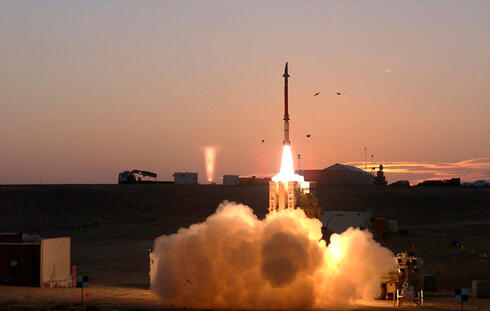
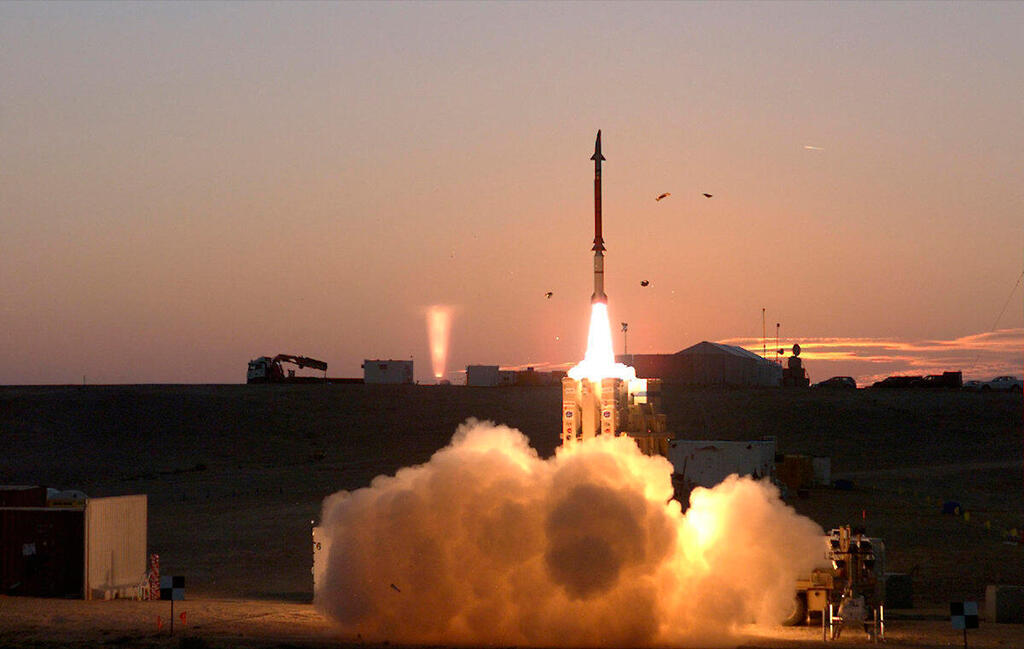
The architecture is expected to incorporate Greece’s existing Patriot systems and drones deployed at military facilities on the mainland and islands alongside Rafael’s SPYDER short-range air defense system, Israel Aerospace Industries’ Barak MX medium-range system and David’s Sling, which is designed to intercept ballistic missiles and other long-range threats.
The objective is to connect these different systems so that they can operate as parts of a single defensive network rather than as separate weapons platforms.
At the center of the network will be software using artificial intelligence to process information from the various subsystems. The software is intended to identify and classify potential threats, assess the available response options and recommend the most appropriate means of interception.
The system will connect capabilities covering ballistic missile defense, counter-drone operations and broader air defense. According to Greek officials, it will be able to evaluate incoming data without human intervention and indicate what it considers the optimal response.
That element reflects a broader shift in the way Athens is approaching defense modernization. Dendias has described Achilles’ Shield as part of the government's Agenda 2030 strategy to turn the Greek armed forces into a more technology-driven military capable of responding to modern threats.
Greek officials also see the network as a way to make air defense more economical.
The cost of responding to relatively inexpensive threats can quickly become disproportionate when expensive military assets are used to intercept them. Defense officials have pointed in particular to drones and other unmanned aerial vehicles, which can be engaged by fighter aircraft at a cost far exceeding that of the incoming threat.
A multilayer system allows Greece to select a response based on the nature of the threat, rather than relying on the same type of interceptor or platform for every target.
The Israeli systems being incorporated into the network have already been integrated into Israel’s Iron Dome architecture and tested against aerial attacks, according to Greek officials.



