










BiblioTech
CTech's Book Review: The distinction between managing a team and creating an institution
Gidi Adlersberg, Voca CIC Business Line Manager at AudioCodes, shares insights after reading “Alex Ferguson: My Autobiography” by Sir Alex Ferguson.
Gidi Adlersberg is the Voca CIC Business Line Manager at AudioCodes, an enterprise voice technology and voice AI innovation company. He has joined CTech to share a review of “Alex Ferguson: My Autobiography” by Sir Alex Ferguson.
1 View gallery
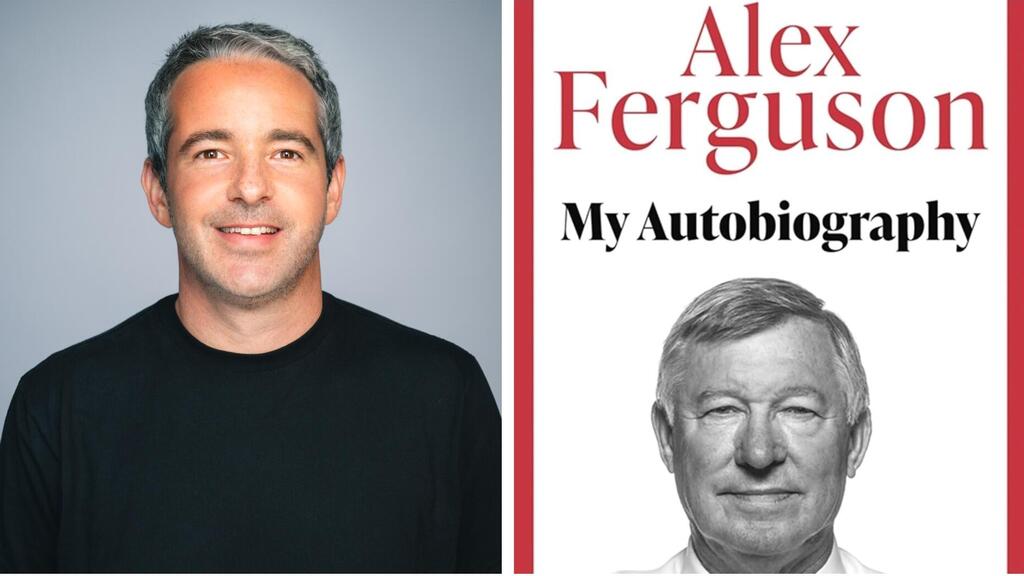
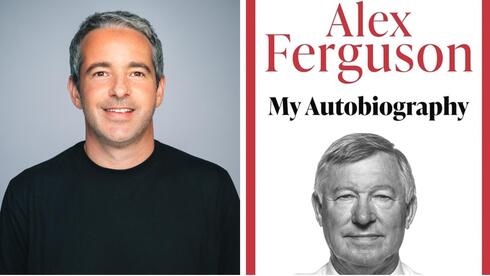
Gidi Adelsberg, Voca CIC Business Line Manager at AudioCodes
(Photo: AudioCode/Amazon)
Title: Alex Ferguson: My Autobiography
Author: Sir Alex Ferguson
Format: Book
Where: Commute
Summary:
Alex Ferguson’s autobiography is the story of a man who dedicated 28 years of his career not just to winning football matches, but to building a global sports brand empire. While ostensibly about sports, the narrative is really about the construction of the Manchester United brand, an entity that today generates billions of dollars. The book tracks Ferguson's journey from his arrival in 1986 to his retirement in 2013, a period in which he transformed a struggling club into a worldwide commercial and athletic powerhouse. It details his path to becoming Sir Alex, a title granted by the Queen of England in recognition of his unparalleled impact. It offers a window into the mind of a leader who defined an era through sheer longevity and force of personality.
Important Themes:
At the heart of this book lies the theme of institutional building versus short-term success. While the summary touches on the timeline, the deeper theme here is the managerial philosophy required to turn a sports club into a global commercial brand with repeatable, scalable growth and success. Ferguson illustrates that building an entity capable of generating billions, as Manchester United does today, requires a leader to look far beyond the immediate horizon. It is a study in patience and the refusal to sacrifice long-term stability for quick fixes. The narrative demonstrates that a brand is not created by marketing, but by the accumulation of decades of integrity, identity, and an unwavering approach to people management.
Linked to this is the profound lesson on consistent, ambitious management. As an inspiration for managers in any field, Ferguson portrays ambition not as a fleeting emotion, but as a disciplined habit. In Sir Alex’s words: “Working hard is a talent.”
The book explores the immense difficulty of maintaining high standards over 28 years. It is easy to be ambitious when you are hungry; it is much harder to remain ambitious when you have already won everything. Ferguson’s Sir title is presented not just as an honor but as a testament to a standard of excellence that never wavered, teaching readers that authentic leadership involves constantly resetting the goalposts to ensure the organization never stagnates.
Finally, the book champions the power of fundamentals (the basics) as the ultimate stabilizer. In an era of complexity and massive egos, Ferguson’s thematic focus remains on the simplicity of management. He argues that the bigger the operation becomes, the more strictly one must adhere to the basics: discipline, timekeeping, and work ethic. This theme serves as a critical counter-narrative to modern management trends that often overcomplicate leadership. Ferguson proves that the foundation of a billion-dollar empire is built on the rigorous, daily execution of the simplest tasks.
What I’ve Learned:
Working in the fast-paced world of technology and AI, where the industry reinvents itself every few years, reading about a 28-year tenure serves as inspiration for building a longstanding business. The most profound lesson I took from Sir Alex is the distinction between managing a team and creating an institution. I learned that true success isn't just about the tactical wins of the next quarter; it is about constructing a resilient framework of what makes a winning team. Sir Alex showed me that a manager's ultimate responsibility is to build and nurture a team that holds its value independently of any single player or product cycle. Seeing how he turned a sports club into a multi-billion-dollar financial powerhouse taught me that in business, culture is the engine of revenue.
Furthermore, Sir Alex fundamentally altered my perspective on the concept of ambition. Before reading this, I often viewed ambition as a drive for innovation. Ferguson teaches that ambition is actually an exercise in consistency. Being consistent and ambitious means having the mental toughness to demand the highest standards every single day for nearly three decades. It is a lesson in endurance. He inspired me to look at my own role not just as a business or product leader, but as a guardian of uncompromising standards.
Finally, the book re-educated me on the basics of management. In tech, we often get distracted by complex methodologies and tools. Ferguson brings you back to earth in keeping things clean and sharp through a simple, consistent foundation. I learned that no matter how sophisticated your vision is, if you neglect the basic human elements – drive, motivation, discipline, loyalty, and direct communication – you cannot succeed. Sir Alex taught me that the basics are not the bottom of the pyramid; they are the base and glue that holds an entire strategy together. To aim high, as Sir Alex did, you must be obsessed with the groundwork.
Critiques:
While the book is a goldmine for managerial philosophy, it’s also unmistakably Ferguson: direct, uncompromising, and written from the eye of the storm. At times, that first-person certainty can feel firm about old disputes, but it’s also what makes the story so credible, because you’re hearing it from someone who never managed from the sidelines emotionally. And if you came expecting a chalkboard-heavy tactical manual, you’ll find the bigger emphasis is on building standards, culture, and mentality, which is arguably the most managerial lesson of all: tactics change every season, but leadership that wins for decades is the rarest system.
Who Should Read This Book:
This book is essential reading for managers, executives, and anyone obsessed with organizational consistency. You don’t need to be a football fan to appreciate it; you just need to be interested in building a legacy through repeatable success. If you want to understand how to manage high-performing talent while keeping the basics in strict focus, or how to maintain authority while evolving over decades, Sir Alex provides the blueprint. It’s also telling that his approach has been studied far beyond sport: Harvard Business School built a case study around his leadership at Manchester United and later brought him in to lecture senior executives, and Harvard Business Review published “Ferguson’s Formula,” co-authored with him, distilling his principles into widely applicable leadership lessons.



