











The shekel surge and the future of Israeli high-tech
Layoffs, shrinking competitiveness, and a warning sign for the country’s innovation economy.
Over the weekend, the dollar briefly fell below the 2.8-shekel mark, trading at 2.79 shekels. According to a recent UBS report, the shekel is one of the strongest currencies in the world - if not the strongest. In theory, Israelis should be celebrating. A stronger currency makes imports cheaper, helps reduce inflation, increases households’ purchasing power, and improves consumer welfare.
Yet the stronger the shekel becomes, the more it feels as though something in that economic equation is no longer working as intended.
Last week’s events highlighted the problem. Wix announced plans to lay off 20% of its workforce, about 1,000 employees. CEO Avishai Abrahami cited, among other factors, the weakening dollar as a key reason for the move. At the same time, discount retailer Max Stock crossed a market capitalization of approximately NIS 5 billion, effectively becoming a local unicorn.
Two companies. Two economies. Two very different stories.

One represents the Israel that lives in dollars: exports, foreign investment, and high-tech. The other represents the economy of imports, retail, and consumer spending. One suffers from the shekel’s appreciation; the other benefits from it, profiting from cheaper goods arriving from China.
On the surface, this is exactly how economic theory says the system should work: exporters lose, importers gain; high-tech suffers, consumers benefit. One side pays the price while the other enjoys the reward.
But a closer look reveals that this balance exists mainly in textbooks.
The symmetry simply does not exist. The damage to exporters is immediate, direct, and almost unavoidable. The benefit to consumers, by contrast, is partial, slow, and sometimes never materializes.
A software company that earns revenue in dollars and pays salaries in shekels cannot avoid being hurt by the appreciation. There is no workaround. But when importers benefit from lower costs, no mechanism forces them to pass the full savings on to consumers. Some of the gains remain with the importer, some with distributors, some with retailers, and some are absorbed by market structures that are not always highly competitive.
The result is that exporters bear the full cost, while consumers receive only part of the benefit.
Take the construction sector as an example. A sharp appreciation of the local currency should, in theory, help contractors because many raw materials and pieces of equipment are imported. Yet contractors continue to report receiving frequent notices of price increases from suppliers. Once again, the mechanism that should transfer the gains from currency appreciation to the public is not functioning efficiently.
The larger problem is that the public may ultimately pay a much higher price than it realizes, not through higher prices, but through slower growth, fewer jobs, and lower tax revenues.
The consequences could include rising unemployment, reduced government income, fewer public services, larger debt-servicing costs, weaker consumption, and slower economic growth.
Viewed this way, the debate is not really about the exchange rate itself. It is about how the costs and benefits of the shekel’s appreciation are distributed across the economy.
Among economists, there is little disagreement about the existence of the challenge. The debate centers on its causes and the appropriate response.
Prof. Momi Dahan of the School of Public Policy argues that the exchange rate is fundamentally a market price and that excessive intervention could create new distortions. In his view, much of the problem stems from government policy.
The Bank of Israel’s reluctance to cut interest rates more aggressively, he argues, is understandable given the government’s large budget deficit and the uncertainty created by the ongoing war.
According to Dahan, “The growing appetite for higher defense spending and a larger deficit is pushing interest rates higher and the dollar lower. Only curbing that appetite will give the Bank of Israel confidence to cut rates further. Without a change in government behavior, the risks of inflation and higher government borrowing costs remain significant.”
He also cautions against calls for intervention in the foreign-exchange market.
“Many of the same stakeholders who advocate free markets when it comes to issues such as the minimum wage suddenly oppose market forces when their own interests are at stake,” he says.
Prof. Michel Strawczynski, former head of the Bank of Israel’s Research Department and a former member of its Monetary Committee, acknowledges the pressure that appreciation places on exporters.
He argues that both the Bank of Israel and the Treasury must act in coordination.
According to Strawczynski, the central bank could clearly signal that it remains committed to a gradual rate-cutting cycle, provided inflation remains under control. Meanwhile, the Treasury has several tools at its disposal, including reducing tariffs, accepting proceeds from large corporate acquisitions in dollars, and hedging portions of Israel’s foreign debt.
He also advocates encouraging greater overseas investment by Israeli savers.
“One of the best-known principles in finance is that diversification reduces risk,” he notes. “Increasing exposure to foreign markets can provide both diversification benefits and access to faster-growing economies.”
Ori Yogev, former Budget Commissioner and former economic adviser to Prime Minister Benjamin Netanyahu, warns that Israel may be heading toward a broader economic challenge.
“The Bank of Israel should urgently use all the tools at its disposal, including direct and indirect market intervention, to moderate the appreciation,” he argues. “The Treasury also has a responsibility to deploy measures that can ease pressure on exporters.”
Prime Minister’s economic adviser Avi Simhon places greater responsibility on the central bank. In his view, the Bank of Israel should have reduced interest rates more quickly.
“The appreciation itself reduces inflationary pressure and therefore creates room for a more expansionary monetary policy,” Simhon says.
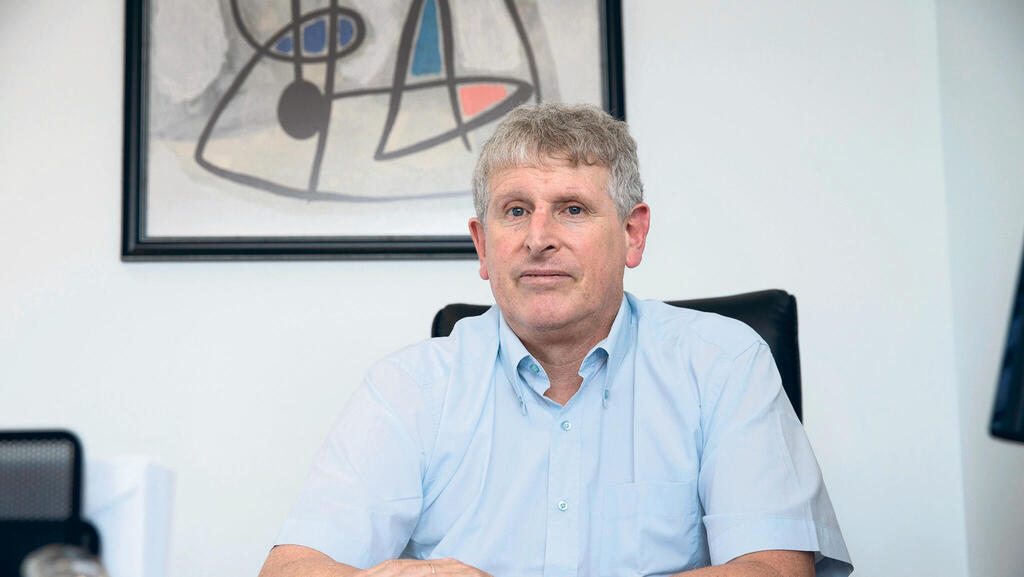
Dr. Yannay Spitzer of the Hebrew University offers a broader perspective.
According to him, the appreciation reflects renewed confidence in the Israeli economy, capital inflows, and institutional investors’ hedging activities.
“The fear that a stronger shekel will scare away investors is like a restaurant owner worrying that being too crowded will drive customers away,” he says.
Spitzer argues that part of the appreciation stems not from economic fundamentals but from large-scale currency-hedging activity by institutional investors, which can amplify exchange-rate volatility.
While foreign-exchange intervention remains an option, he believes the Bank of Israel currently prefers a gradual approach focused on interest-rate policy and inflation management.
The public debate has increasingly focused on one question: Has the Bank of Israel done enough?
Should Governor Amir Yaron have cut rates faster? Should the central bank already be buying dollars? Should it intervene more aggressively?
These are legitimate questions, but they are not the most important ones.
Even a substantial rate cut would not solve Israel’s underlying productivity challenges. It would not increase the supply of skilled workers, reduce bureaucracy, improve infrastructure, or encourage long-term investment.
At best, it would buy time.
And in the current environment, probably not much time.
The deeper issue is structural. It requires government action, not just monetary policy.
The real damage from appreciation is not necessarily visible today. It lies in future decisions that will never be made: employees who will not be hired, expansion plans that will never move forward, funding rounds that will never be launched, and investments that will be directed elsewhere.
The greatest risk is to future growth.
In that sense, the exchange-rate debate is about a symptom rather than the disease itself.
That was one of the key conclusions that emerged from a recent roundtable hosted by the Harel Center for Capital Market Research and the Safra Center for Banking and Finance at Tel Aviv University.
Unlike the public debate, which remains focused on what the Bank of Israel should do next, participants, including regulators, academics, and senior capital-market executives, focused on how to change the underlying mechanism itself.
One proposal involved allowing pension funds to conduct hedging transactions directly with the Ministry of Finance and the Bank of Israel. Instead of selling dollars in the market and adding pressure on the shekel, institutional investors could hedge directly with the state.
Such a system could reduce pressure on the exchange rate, lower costs for savers, and improve government debt management simultaneously.
Participants also noted that Israeli investors have recently shifted tens of billions of shekels away from foreign-index funds tracking the S&P 500 and Nasdaq and toward domestic investment products.
The more deeply one examines the issue, the clearer it becomes that this is not primarily a Bank of Israel story. It is a story about the structure of the Israeli economy.
The capital market is already searching for structural solutions. The government, meanwhile, remains focused on assigning blame.
That is the real challenge.
The shekel continues to strengthen. Export competitiveness continues to erode. Israel’s most important growth engine - high-tech - is under pressure. Even financial-market participants increasingly recognize that yesterday’s tools may no longer be sufficient.
The question is whether policymakers are prepared to recognize it as well.



