











"Things can be ruined very quickly": Bank of Israel official sounds warning on the economy
Prof. Ori Heffetz discusses global instability, central bank independence, and the fragility behind Israel’s economic resilience.
“Deciding on an interest rate is a two-day process. On the first day, we discuss it from morning until night, until we feel exhausted, and then we go home. We have 12 hours to sleep on it, look at the data again, and only vote the next morning. When we estimate that the upcoming decision will be particularly complicated, the process starts several days earlier.” This is how Prof. Ori Heffetz, an external member of the Bank of Israel’s Monetary Committee, describes the process of setting interest rates in an interview with Calcalist.
In a world where trade wars are returning to center stage, borders are closing again, inflation is resurging, and the global system is being shaken, economies are finding it increasingly difficult to rely on the rules of the past. Heffetz, a professor of economics at Cornell University and the Hebrew University of Jerusalem, describes a reality in which macroeconomic models are losing relevance, policymaking has become an exercise in continuous risk management, and certainty is fading. Against this backdrop, he believes Israel is displaying extraordinary resilience, but warns against complacency: “Things are built over decades, and they can be ruined very quickly.”
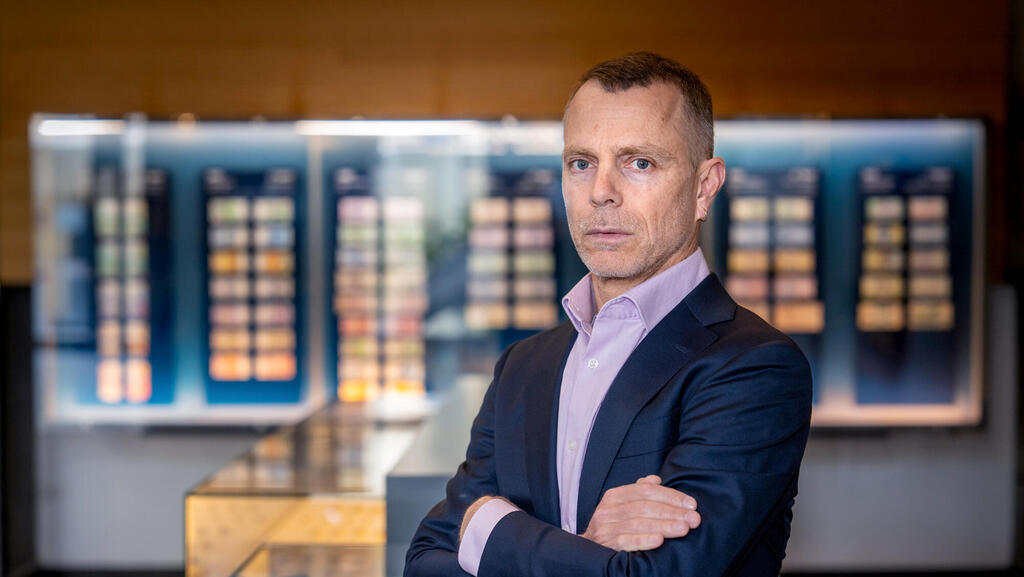
“In the last 20 years, we’ve experienced a series of shocks from every direction, and the pace is only accelerating. Amid all this, we are expected to make macroeconomic forecasts,” says Heffetz. “All our models, the entire conceptual and theoretical infrastructure of macroeconomics, were developed over the last 70 to 80 years. The system was built on agreed-upon principles: free trade, free capital flows, and open markets. That system is gradually falling apart. In 2008, we thought we were heading into another Great Depression, and we recovered. Then came Brexit. Trump’s election in 2016 surprised markets and brought trade wars back into the picture after decades. Then came the coronavirus: suddenly, international borders became a real thing again. Then came Putin, Ukraine, the commodities crisis, and an inflation wave we thought had been left behind in the 1980s. We built an impressive system of models and theories, and they are becoming less relevant. We are at a crossroads where it’s unclear how much we can continue relying on yesterday’s models.”
Are we entering an era of slower growth?
“For years, economic efficiency was the main story: free trade, specialization, and everyone doing what they do best. That approach is based on a fundamental assumption of global peace and stability. Today, the picture has flipped. During the coronavirus pandemic, countries started talking about vaccine independence, local production of medical equipment, food security, energy independence, and healthcare resilience. At the same time, defense budgets are growing.
“Countries have realized two things: first, that you cannot rely entirely on the global network; and second, that the network itself can be weaponized against you, through tariffs, disconnection from financial systems, or trade restrictions. China is an interesting example of both. On one hand, it grew thanks to globalization; on the other, it built backup systems and resilience mechanisms for itself. I don’t know where this will end, but interest rate decisions now have to be made within this new reality.”
Where does Israel stand in this reality? You are known as relatively optimistic about the Israeli economy and have even called it a “macroeconomic miracle.”
“If I came back from space now, without having read the news for years, and you told me about a country in the Middle East that had gone through what Israel has since October 7, and then asked me to guess its growth, unemployment, and inflation figures, I would not come close to reality. In that sense, I’m talking about a miracle. It’s enough to look at studies examining what happens to economies during prolonged wars and then compare them to Israel. Inflation here remains within the target range. Even leading economies that are not at war have experienced higher inflation than Israel in recent months. There is a success story here, certainly in terms of monetary policy.”
Is this structural resilience, or is it temporary?
“God forbid we think the Israeli economy is immune and that nothing can undermine it. We entered both the coronavirus crisis and the war with a debt-to-GDP ratio of around 60%, and that allowed the state to pursue an aggressive policy to absorb the shock. Israel has a long history of functioning under pressure. Over the years, it has built strengths in areas such as cyber, science, biotechnology, and agriculture. These are infrastructures that take decades to build and do not collapse in a year or two. But we must not assume this is guaranteed forever. Technology is changing at a dizzying pace.”
How do you make data-driven decisions when traditional models are becoming less effective?
“Monetary policy has always been about risk management. It’s like flying a plane while looking only in the rearview mirror. You don’t really know what will happen in the future, and in many cases you don’t even fully know what’s happening in the present. You’re working with past data, constantly asking yourself whether what you’re seeing is a temporary fluctuation or the start of a trend. The bad news is that uncertainty has widened even further. In times like these, professional modesty becomes even more important. That’s why central banks usually move in relatively small steps, a quarter of a percentage point, sometimes not at all, because the effects of monetary policy only filter through after several quarters.
“What has changed over the years is mainly the level of transparency. Today, we explain in much greater detail how decisions were made, what data was examined, and what considerations were behind them. On one hand, it helps markets understand our thinking. On the other hand, this transparency can create the impression of excessive caution. We could have been more vague, and maybe we would have appeared more confident. In reality, I think the opposite is true.”
“I have never felt political pressure”
The Monetary Committee, which determines interest rate decisions, is supposed to include six members: the Governor, who chairs the committee; the Deputy Governor; a Bank of Israel employee appointed by the Governor; and three public representatives appointed by the government. As of today, only Heffetz serves as an external member, as the government has delayed appointing the other two, a situation that is both undesirable and contrary to the Bank of Israel Law. Heffetz previously served as a volunteer adviser to Prime Minister Benjamin Netanyahu during the coronavirus pandemic.
Are there differences in perspective between the external and internal members of the Monetary Committee?
“Because of the uncertainty we discussed, I always leave a meeting wondering whether we made the right decision. But I also leave with the feeling that we left no stone unturned. Interest rate discussions last two days. We analyze everything, go home, think again about the data and the wording, and only vote the next day. The division between internal and external members is a major advantage. Those who work inside the bank experience the system from within. I come from academia, from daily interactions with students and researchers, and that brings a different perspective.
“The debates within the committee are healthy debates. Sometimes I manage to convince others, and sometimes they convince me and open lines of thought I hadn’t considered. Ultimately, everyone is committed to the same goal: making the best possible decision. Consensus is a byproduct, not a goal in itself. We are not seeking artificial harmony. We ask difficult questions, argue, and only then make a decision.”
The shekel is now stronger than ever. Is there a point at which a strengthening currency stops being a sign of strength and becomes a risk?
“I won’t go into specifics because we have an interest rate decision coming up in a week, but I’ll answer in the way we teach students: you cannot look at exchange-rate appreciation without also looking at inflation. It’s all one system, and responsible monetary policy always tries to take both sides into account.”
How critical is the independence of the Bank of Israel?
“Studies show there is a clear connection between central bank independence and low, stable inflation over time. I can say that during my year in office, I have never felt any political pressure. Central bank independence is an asset. Amid all the disintegration of the global order, monetary policy remains an anchor of stability. There is law, there is transparency, there are protocols, and that is extremely important for public trust.”
Are you worried about the future?
“I’m constantly worried. Things like this are built over decades, and they can be damaged very quickly. Part of Israel’s success is genuinely difficult to fully explain, and that is precisely why the concern is so great. We don’t fully understand how, 70 years after its founding, Israel became what it became. And because of that, we are always afraid something could change. Market sentiment can shift very quickly. Capital flows can reverse very quickly. Those are the things that keep you awake at night.”



