











War, what is it good for? The shekel
The dollar has fallen 19% over the past year, and market dynamics offer no clear signal of a reversal. While the weaker dollar has helped keep inflation low, most businesses say cheaper imports do not offset the impact of a strengthening shekel, as data points to rising production activity abroad.
Israel is at war, missiles are being launched from multiple fronts, yet the shekel continues to strengthen against the dollar.
To understand the scale of the shift, it helps to look back. In April 2025, the average exchange rate stood at 3.7 shekels per dollar. By April 2026, it had fallen to around 3.0 shekels, a 19% appreciation of the shekel in just one year. This marks the sharpest decline of the dollar against the shekel since the Global Financial Crisis, when the exchange rate dropped from 4.25 to 3.37. Calcalist examines the implications of the strengthening currency, and the possible responses.
1 View gallery
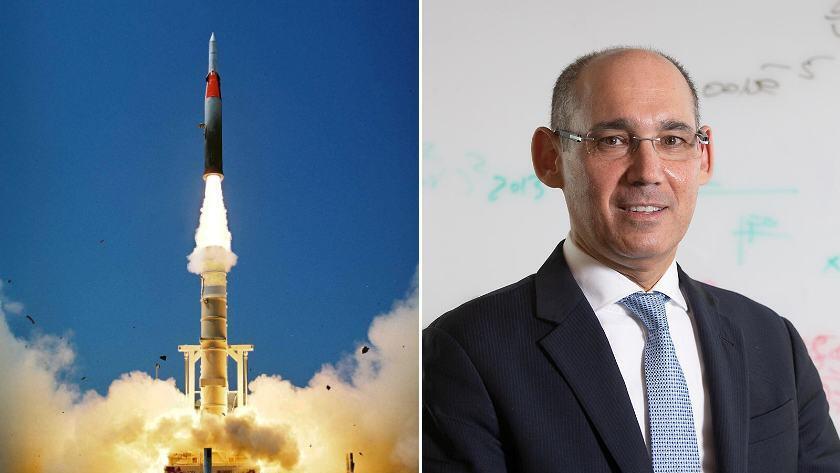
Launch of an Arrow missile, BOI Governor Amir Yaron
(Alex Kolomoisky, Israel Aerospace Industries)
Who Benefits, and Who Loses?
A stronger shekel creates clear winners and losers.
For consumers, the benefits are immediate. Travel abroad becomes cheaper (when flights are available), online purchases priced in dollars or euros become more affordable, and inflation moderates as imported goods decline in price. The euro has also weakened against the shekel by roughly 14%.
According to Dr. Alex Zabezhinsky of Meitav Investment House, if the exchange rate had remained at 3.7, inflation would be closer to 3% rather than the current ~2%.
On the other hand, businesses that earn revenues in dollars but incur costs in shekels are hit directly. This includes exporters, manufacturers, and much of Israel’s high-tech sector, whose products are largely sold abroad. Even individuals, such as freelancers providing services to overseas clients, see their income eroded in local terms.
Is the Impact Significant?
Yes, and not just marginally.
When companies earn less, wages tend to stagnate or decline, government tax revenues fall, and overall economic growth may slow. But beyond that, companies may respond structurally: hiring more workers abroad, expanding overseas production, or delaying investment in Israel.
The scale of the impact is substantial. A company with revenues entirely in dollars and expenses entirely in shekels effectively sees its profitability decline by 19%, a significant erosion.
Is There Evidence of Real Damage?
Hard data is still limited, but early signs are emerging.
There has not yet been a sharp decline in exports. However, there is evidence that Israeli companies are increasing production abroad, where costs are lower. Survey data from the Manufacturers Association indicates that 40% of exporting companies are considering expanding overseas production, along with 55% of high-tech firms.
While such survey data should be treated cautiously, the trend is notable.
Do Cheaper Imports Offset the Losses?
Only partially, if at all.
Just a minority of businesses report that cheaper imported inputs offset the currency impact. According to survey data, 46% say the stronger shekel does not compensate for losses at all, while 27% say it provides only partial relief.
In high-tech, the situation is more acute. Because the sector relies less on imported raw materials, it gains little from cheaper imports while still suffering from reduced dollar revenues.
Why Is the Shekel Strengthening?
At its core, Israel operates under a floating exchange rate regime: the price of the shekel is determined by supply and demand, like any other market.
In recent years, demand for shekels has consistently exceeded supply. This is largely due to strong inflows of dollars, primarily driven by Israel’s high-tech sector, which exports goods and services globally. The result is a persistent current account surplus.
What Has Changed Recently?
Beyond ongoing trade flows, additional capital inflows have accelerated the trend.
Foreign investment in Israel has surged, both in high-tech and in financial markets. In 2025, approximately $39 billion was invested in Israel, compared with about $25 billion in 2024. These inflows are typically converted into shekels, further strengthening the currency.
The Role of Institutional Investors
Institutional investors, such as pension funds, also play a key role.
To manage currency risk, they use hedging instruments that effectively increase demand for shekels. As their foreign (dollar-denominated) assets grow, so too does their need to hedge exposure, creating additional upward pressure on the shekel.
Should the Government Intervene?
This is where the debate intensifies.
In principle, a floating exchange rate should be left to market forces. However, exporters and high-tech companies argue that the pace of appreciation is too rapid and disruptive.
Notably, they are not calling for a fixed exchange rate. Instead, their demands are more targeted.
What Do Businesses Want?
Industrialists and high-tech firms are calling on the Bank of Israel to intervene more actively, either by purchasing dollars or offsetting institutional demand for shekels.
They have also proposed allowing companies to pay taxes in dollars, which would reduce the need to convert foreign revenues into shekels. Economically, however, this would not eliminate the underlying issue, as the government would ultimately need to convert those dollars back into shekels to fund domestic spending.
The Central Bank’s Position
The Bank of Israel has pushed back against calls for immediate intervention.
"The Bank of Israel's interest rate is a broad tool, and not one designed to address one market or another. The interest rate policy will include geopolitical uncertainty and its effects on the risk premium and exchange rate, supply constraints in the labor market, and fiscal policy and their effects on inflation. Premature interest rate cuts may harm the process of curbing inflation, thereby harming the weaker sections of society first and foremost. The Bank of Israel's monetary policy, which has received much praise from international bodies, will continue to be informed and data-based."



