










The AI shock: When technology disrupts the strong instead of the weak
Layoffs among academics and managers surge as artificial intelligence reshapes the job market.
The earthquake caused by artificial intelligence in the labor market is being felt by all of us personally. It is hard to believe that any of our readers have not used AI at work. In fact, its use is almost inevitable. Artificial intelligence tools have already become part of our daily lives, from rice recipes and drafting greeting cards to making financial and consumer decisions. And part of our daily lives, whether we like it or not, is work. Therefore, just as WhatsApp replaced email, email replaced postal letters, and digital archives replaced physical ones, so too, though on an entirely different scale, artificial intelligence is transforming the way we work.
Although we are all changing our behavior, we still do not fully understand what is changing, and what will change, in us as a society and as individuals as a result of implementing and relying on AI. We are flooded with speculation, and rightly so, because the future is difficult to predict. Yet it seems that now, in early 2026, we have reached a point that allows us to outline several trends with greater certainty. We can better characterize the crisis expected to emerge in the labor market, and we can begin to clearly formulate the existential and social questions that artificial intelligence raises for people in Western society.
1 View gallery
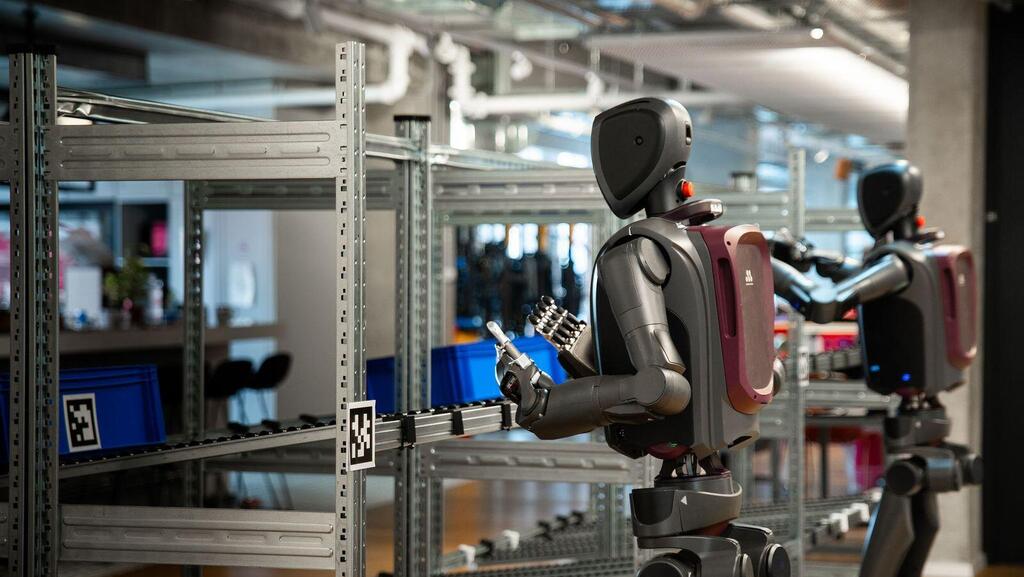
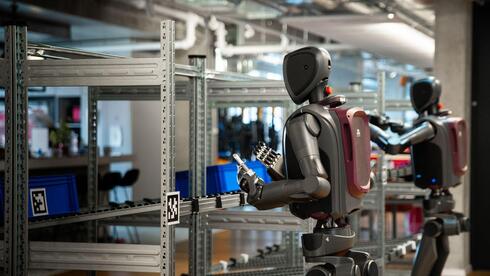
A robot from the Israeli company Mentee Robotics whose operation based on AI
(Mentee Robotics)
1. The Labor Market Shift
Let us begin with the labor market. A recent Employment Service review demonstrates quite convincingly that the implementation of artificial intelligence is disproportionately affecting white-collar workers, particularly highly skilled professionals. The share of academics and managers among those laid off rose from approximately 33% in the first quarter of 2022 to about 47% in January 2026. In contrast, the proportion of lower-skilled workers among the laid off declined from roughly 22% to about 16%. Similarly, the share of job seekers from affluent localities (ranked 8-10 in the socio-economic index) increased from 16% in 2022 to about 21% in 2026.
This represents a historically unusual development. Typically, technological revolutions have harmed society’s weaker segments: electricity displaced millions of manual laborers, railways replaced horse-drawn carriage drivers, and email reduced the need for postal workers. In this sense, the AI revolution is somewhat counterintuitive, and even, in the short term, reassuring. It is economically established groups that are being hit first. Many of those now threatened have already accumulated savings and assets. Moreover, these groups are often culturally and socially resilient, arguably better equipped to cope with disruption than the workers displaced in previous technological transitions.
2. Could AI Reduce Inequality?
Looking more deeply, the AI revolution may even reduce inequality between economic classes in several ways. A blue-collar worker may be more protected than an educated peer. Meanwhile, AI tools may allow workers without advanced degrees to perform a far broader range of tasks than before.
The influential MIT economist David Autor describes this as a potential “rebuilding of the middle class.” In his view, AI could distribute economic power rather than concentrate it in the hands of a small elite.
However, the labor market is only part of the story.
3. Beyond Jobs: An Identity Crisis
The more profound disruption may be existential. Many of us grew up with the mantra: “Routine jobs will be automated, pursue a creative profession.” That assumption is proving inaccurate. As psychologist Steven Pinker famously observed, “The main lesson of thirty-five years of AI research is that the hard problems are easy and the easy problems are hard.” Teaching a computer to play chess at a master level or draft a legal brief turns out to be easier than teaching it to fold laundry or load a dishwasher.
This is not only an educational crisis; it is an identity crisis. In Western societies, many people define themselves by their cognitive strengths. Lawyers take pride in dissecting complex cases. Financiers pride themselves on structuring intricate deals. Policymakers value their ability to design structural reforms. Journalists pride themselves on crafting sharp, reasoned commentary under deadline pressure. Increasingly, artificial intelligence performs these tasks competently.
Yet even within this disruption lies hope. There is an opportunity to shift from education focused primarily on earning a living to education focused on cultivating humanity. In future generations, our sense of value and pride may stem less from how intelligent, credentialed, or technically sophisticated we are, and more from how we contribute to the culture and society in which we live.



