










Ben Gurion passenger traffic nears prewar levels, but competition has yet to recover
Passenger numbers in September 2026 were close to those recorded a month before the October 7 attack, but foreign airlines remain less active and inbound tourism is still sharply down. El Al has expanded its market share as the industry adjusts to continuing security uncertainty.
International passenger traffic at Ben Gurion Airport has gradually recovered from the low point recorded after October 7, 2023, according to data published by the Civil Aviation Authority’s Economics and Aviation Relations Division. In September 2026, an average of 76,000 passengers passed through the airport each day, compared with 77,000 in September 2023. In August 2026, the daily average reached 85,000.
However, these figures do not necessarily signal a return to normal. In October 2023, the daily average fell to approximately 38,000 passengers, before plunging to just 13,000 in November. Traffic remained volatile in 2026, with an average of 7,000 passengers a day in March, rising to 16,000 in April and increasing further in the following months. The fluctuations underscore the difficulty airlines face in planning for the long term in a market where security escalations can quickly affect both demand and the availability of flights.
1 View gallery
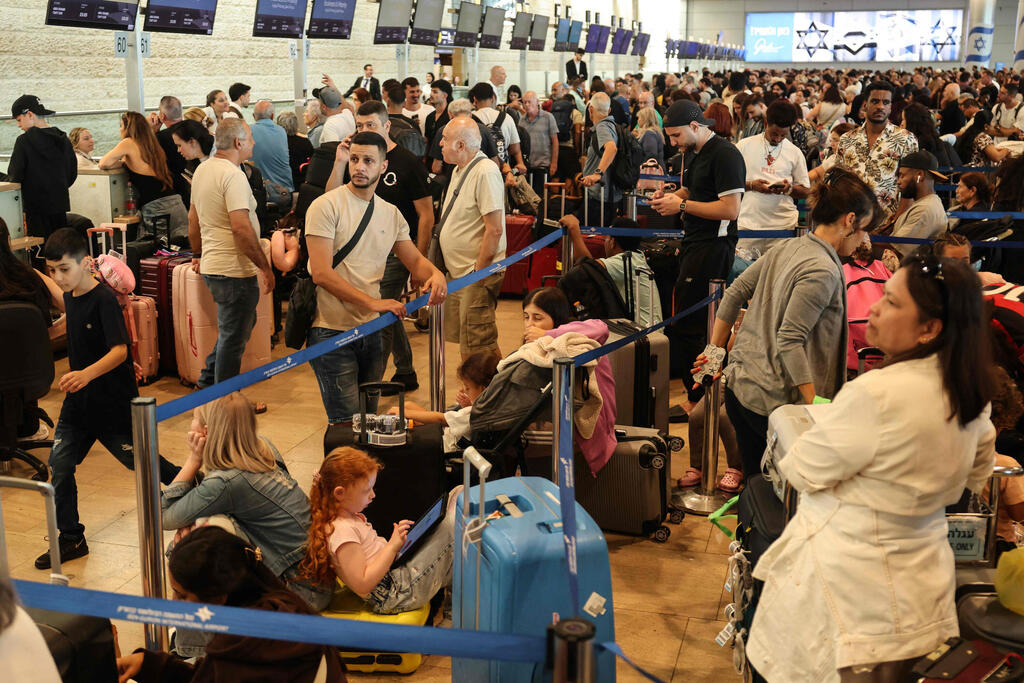
Congestion at Ben Gurion Airport following disruptions last August.
(Photo: Jack Guez / AFP)
The data also point to a strengthening of Israeli airlines, particularly El Al. The carrier’s share of international passenger traffic at Ben Gurion Airport rose from 21.1% in September 2023 to 30.1% in September 2026. The number of international passengers carried by El Al, Israir and Arkia combined increased by approximately 74% over the same period.
The growth has been supported by fleet expansion, greater use of aircraft operated under wet-lease agreements with foreign providers, and regulatory arrangements that give airlines more operational flexibility. Under a wet lease, an airline leases both an aircraft and its crew from another provider. The industry has also benefited from the liberalization process launched by the Civil Aviation Authority in 2006, the 2013 aviation agreement between Israel and the European Union, and other agreements that have expanded airlines’ operating options.
Yet the gains for Israeli carriers have come partly as foreign airlines have reduced or suspended operations during periods of heightened security risk. Israeli airlines have strengthened their position on routes that foreign competitors have yet to resume serving.
The shift has consequences for passengers. When fewer flights and routes are available, and a major domestic carrier captures a larger share of the market, competitive pressure on fares can weaken and travelers may have fewer choices. Ticket prices have also soared, adding to the cost of flying to and from Israel.
The number of foreign airlines operating at Ben Gurion Airport collapsed after the war began. From 77 foreign carriers in the summer of 2023, the number fell to just seven by December that year. A gradual recovery has followed. During the Tishrei holiday period in September 2026, 55 foreign airlines were operating at the airport, up from 45 during the corresponding period a year earlier.
But the return of more airlines does not necessarily mean that prewar competition has been restored. Some carriers have yet to resume all their routes to Israel, while the scale of their operations varies considerably across airlines and destinations. The number of airlines alone therefore offers only a partial picture of how much capacity and choice have returned to the market.
Inbound tourism remains particularly weak. In September 2026, an average of approximately 4,300 inbound passengers arrived each day, compared with about 9,700 in September 2023. The gap illustrates why a recovery in overall passenger traffic should not be mistaken for a recovery in tourism. Restoring air links is only one part of the challenge; a sustained recovery also depends on the conditions that allow visitors and airlines to return with confidence.



