










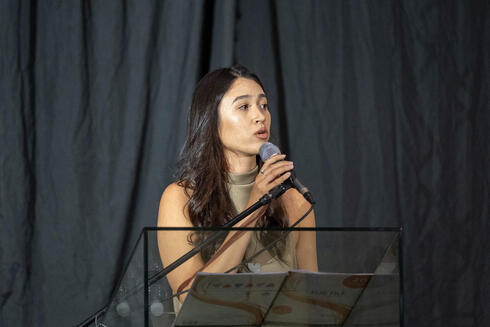
Noa Argamani joins Vine Ventures to help Israeli startups break into the U.S.
After 246 days in Hamas captivity, Argamani has started a new chapter in venture capital, splitting her time between San Francisco and Tel Aviv.
Noa Argamani, who became one of the most recognizable faces of the October 7 attacks and spent 246 days in Hamas captivity, has started a new career in venture capital, joining early-stage investment firm Vine Ventures.
Argamani announced the move in a LinkedIn post, writing that she was “excited, a little emotional, and mostly grateful to continue living my life.”
She also made clear that she wants to be known for what she does next, rather than only for what happened to her.
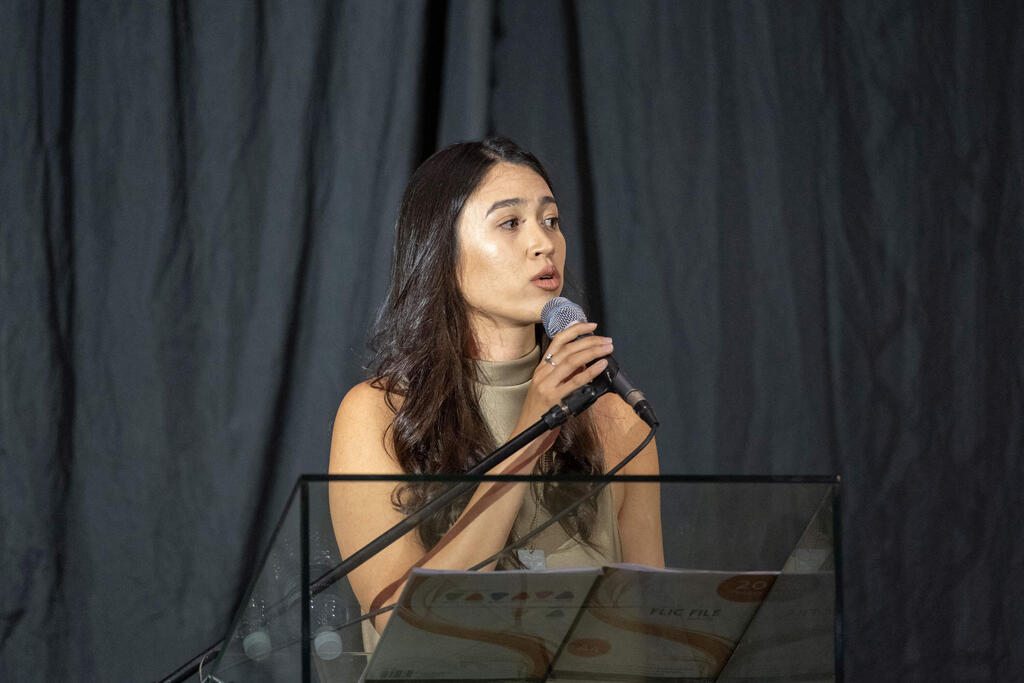
“For many people, I'm Noa Argamani, who was rescued by the IDF after 246 days in Hamas’ captivity. That's part of me, and it always will be. But it's not all of me, and I'd like you to get to know me in my new role too,” she wrote.
At Vine, Argamani will work with Israeli founders and companies seeking to expand into the U.S. market. “If you're building something, have an idea you can't stop thinking about or you’re in the Valley and looking to help the most ambitious founders in Israel succeed, I hope to be a bridge between the two ecosystems,” she wrote.
Argamani began working at Vine in an internship earlier this year and joined the firm full-time this month. She will divide her time between San Francisco and Tel Aviv.
In an interview with Business Insider, she said venture capital was a natural fit for the next stage of her life.
“At this point, if I want to learn and make an impact, venture capital is the right place for me,” she said. “I want to be surrounded by people who dream big.”
Her role will focus in part on helping Israeli startups navigate the U.S. market. “My mission is to help Israeli startups enter the market and really break through that barrier,” she told Business Insider.
Argamani said the U.S. can determine whether a promising Israeli startup remains a successful company or grows into a much larger business. She sees herself as a bridge between the two ecosystems, drawing on her experience in Israel while building relationships in the American technology and investment communities.
Vine Ventures was founded by Eric Reiner, who previously worked at Insight Partners and later at Dynamic Yield, the Israeli startup that was acquired by McDonald’s in 2019. The firm invests in early-stage companies on both sides of the Atlantic and manages about $500 million, with Israeli investments including Wonderful, Kodo and Eon.
Reiner met Argamani through her advocacy for hostages. In April, he invited her to intern at the fund, giving her an opportunity to learn the venture business while working with multiple startups.
Over the following months, she learned how investors assess young companies, evaluate market opportunities and decide whether to invest. She also gained a firsthand understanding of the different ways Israeli and American investors approach founders.
“They can smile through the entire pitch, then reject you at the end and never tell you why,” she said, describing what she had learned about the American investment culture.
Argamani's path into technology and venture capital also reflects the changes she experienced during and after her captivity. She said she became increasingly interested in artificial intelligence and software engineering, observing how quickly AI models had improved and how digital agents were beginning to perform tasks once reserved for people.
After her release, she and friends used large language models to analyze news coverage and identify patterns in antisemitic rhetoric, eventually building a website that allowed users to see where such rhetoric appeared most intensely on different dates.
She also participated in an entrepreneurship program, where she worked on a startup concept aimed at helping children with autism.
Argamani had returned to her studies at Ben-Gurion University after being released. But she said she ultimately decided that returning to coding full-time was not the best way to use the opportunities that had emerged from her experience.
“I felt that going back to coding would be a waste,” she said. “I want to do something with more impact, to make a change in the world.”



