










After captivity, Noa Argamani returns to campus and to her future in tech
Before Noa Argamani was a Hamas captive and a defining voice in history, she was an engineering student at Ben-Gurion University. After her release, she was adamant to still graduate with her friends. Now, as she nears the end of her studies, Argamani has her sights set on Israel’s startup sector.
“Right now, when all the hostages are back home, I can truly start to do all the things that I wished for myself before October 7,” says Noa Argamani. “Especially in data science and machine learning, and I really fell in love with the subject.”
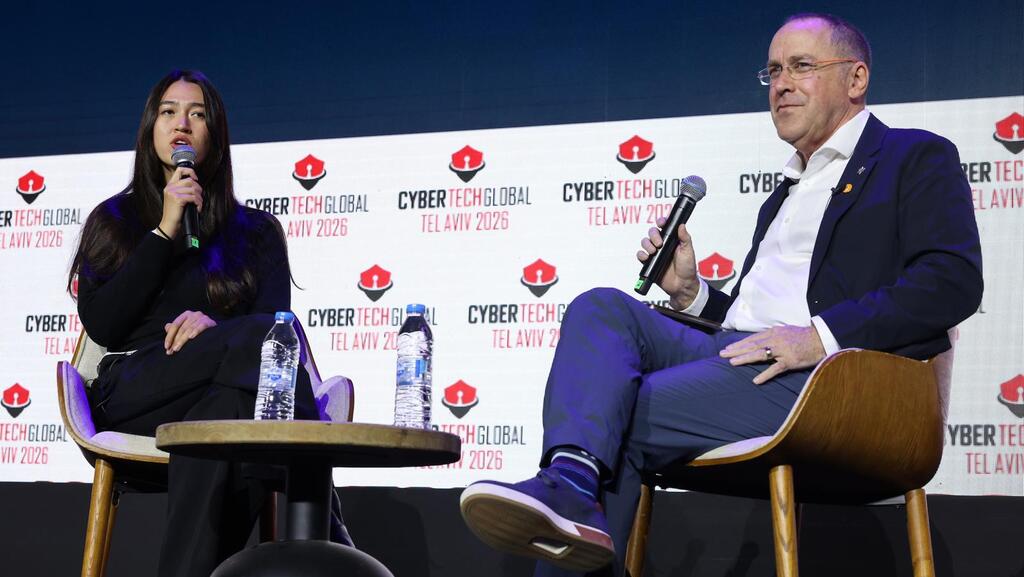
Argamani spoke at the Cybertech Global event in Tel Aviv alongside Professor Daniel Chamovitz, President of Ben-Gurion University of the Negev (BGU). The 28-year-old is currently in her fourth year of studies at the Be’er Sheva institution, pursuing a degree in Information Systems Engineering.
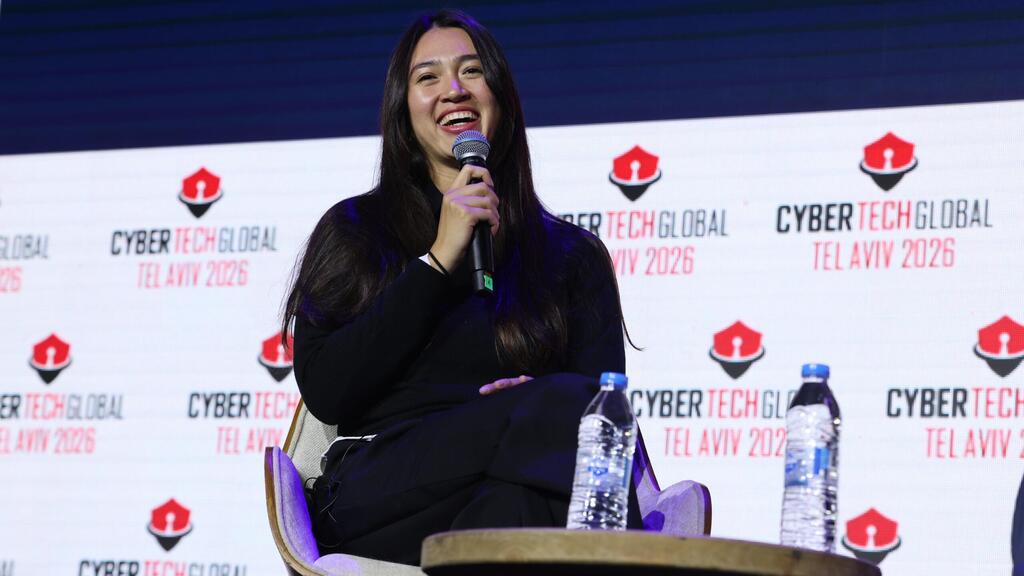
“Every time that the world felt weird and I felt that nobody understood me, I came back to the program,” said Argamani. “I come back to school and studies, and from that moment, I'm just the same person that I used to be before October 7.”
While Argamani has become a global face of the October 7 tragedy where she and her boyfriend Avinatan Or were abducted by Hamas, her appearance was a reminder of the ambitions she held long before her name became synonymous with the attack. While she continues to serve as a national advocate, her focus on academics further represents a commitment to the professional normalcy that will help define her next chapter.
Notwithstanding the poignancy of the timing, the interview took place just one day after the remains of Ran Gvili, who was killed on October 7, were finally retrieved from Gaza. “Now is the time for us to move on and begin healing,” Argamani told Chamovitz, speaking on behalf of the hostages who survived. “All this time we wanted all the abductees and the dead to return, we made it our top priority and now we can concentrate on healing.”
For Argamani, much of that healing has been in the return to Ben-Gurion University. While being thrust into the spotlight as a figure of national history was never part of her plan, attending the university in her hometown of Be’er Sheva was. “My mother met my father in Ben-Gurion University on exchange,” she explained. “My mother always told me that no matter what, I have to go to the university.”
Argamani's entry into the tech landscape began at 16 through the she codes; program. “It helps girls especially to learn how to code,” she said, recalling how she fell “in love” with the discipline and the realization that “this is what I want to do when I grow up.” Later, she studied programming during her military service, which further affirmed her path. “I… realized that this is what I wanted to do, so I chose a degree that focuses on artificial intelligence and machine learning.”
After her release from captivity, Argamani recalls, one of her primary concerns was the ability to still graduate alongside her friends. “All I wished for myself was just to come to my own routine,” she said. “I felt that I'm old and all I wish for myself is to be a normal woman, a normal student, with a normal job. So when I got back to school, I told myself that I need to complete the courses.” She acknowledged there was a knowledge gap resulting from her time in captivity, which she was adamant to bridge. “The only thing that didn't change in the last two years are all the courses that I need to learn.”
While her academic goals were remarkably unperturbed, Argamani explained that her experiences over the last few years have naturally changed her perspective, and along with it her career ambitions, in part due to her exposure to a broad cross-section of global leadership and Israel’s startup sector. “After October 7, I was in many other places, many conferences, I met special people,” she said. “I saw how we can start the startup from the first steps, and how the impact of leaders can change the whole mindset. For building your business on being in advance of other startups, it's really changed the whole world.”
Further, she notes, “I see how many people changed their mind and after October 7, they invest more in Israel, more in startups… to build Israel, to support Israel, to support the nation.”
Specifically, while she says it’s “not the only thing” she wants to do, Argamani spoke of a priority to launch a startup accelerator of sorts, aiming to “open my own business to advance other startups.” She elaborated: “To start my own business in Israel, to invest in startups in Israel and to make sure that people look at Israel not just as a country with war; as an independent country with a good economy.”
“This is how we will win,” she continued. “We need to win and to show the light for other countries and to see that it's not just how they imagined. And we need to make Israel stronger like that.”
While Argamani will always be synonymous with her heroism and her role as an essential voice for Israel and the survivors of October 7, her aspirations in tech are increasingly defining her path forward within the Startup Nation. There was a subtle nod to this at Cybertech Global Tel Aviv, where her title card notably listed her as an Information Systems Engineering student first, followed only then by “Captivity Survivor.”
At the close of the session, Professor Daniel Chamovitz, President of Ben-Gurion University, asked Argamani if there was one last request he could grant her. Argamani responded: “Right now I wish myself to finish my degree.”



