










Opinion
AI in 2026: Abundance is cheap. Trust is not.
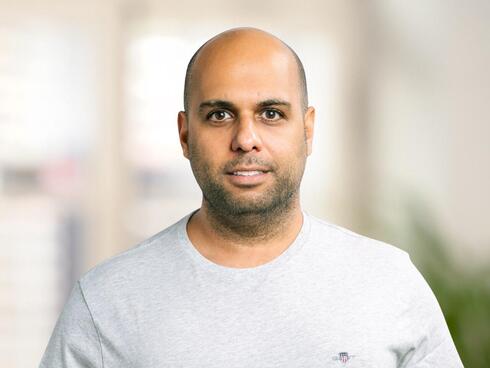
"AI makes intelligence cheap. Context, trust, privacy, and judgment become expensive. AI does not remove humans. It makes them more valuable. AI does not kill software. It makes it disposable. AI does not centralize power. It rewards focus and specialization," writes Itamar Mula, Principal at Hetz Ventures.
I believe 2026 will mark a quiet but fundamental shift in how we think about AI, software, and value creation. Not because AI suddenly becomes smarter, but because intelligence becomes cheap, widely accessible, and increasingly generic. When intelligence is abundant, what matters is no longer access, but how it is applied, constrained, and trusted.
AI is already making information and capability universally accessible. Today, almost anyone can build software, generate content, or automate workflows that once required teams and years of experience. This lowers barriers and accelerates innovation, but it also introduces new risks.

As AI becomes more general and more open, data protection weakens, accuracy declines in specialized fields, context is lost, and sensitive information is shared more freely than many users realize. General-purpose AI works well across many tasks, but it increasingly struggles where depth, precision, and accountability matter. It becomes good enough everywhere and truly reliable almost nowhere.
This is why the market begins to correct.
One of the clearest shifts heading into 2026 is the move away from purely general AI toward local, private, and tailored models. Users and organizations are being forced into an explicit choice. Either you use free or ad-supported AI and accept that your data improves the system, or you pay for privacy, control, and accuracy. As AI moves deeper into real workflows, privacy stops being a compliance issue and becomes a competitive advantage.
At the same time, software itself is changing in nature. AI collapses demand sensing, design, production, and marketing into continuous automated loops. Code becomes fast to generate and cheap to replace. Software is increasingly built for a specific moment and discarded rather than maintained. I often describe this by saying that code is becoming single-use plastic. Easy to produce, easy to throw away, and rarely designed to last. What endures instead are systems: orchestration, feedback loops, and judgment about what should be built in the first place.
This shift also explains why AI is absorbing entire functions rather than individual tools. Customer relationship management is a clear example. Instead of rigid schemas and dashboards, AI becomes the CRM itself, holding customer memory, understanding intent in real time, and acting dynamically. Human involvement does not disappear, but it moves up the stack. Customer support becomes a premium layer, reserved for moments where trust, empathy, and accountability matter.
As AI-generated content and interactions flood the market, human presence becomes more valuable, not less. Authenticity becomes a signal of quality. Trust becomes scarce. We already see this in media, where unique, human-authored writing increasingly outperforms mass-produced content. The same dynamic applies across support, design, and brand relationships.
This is also why specialized models consistently outperform general ones. General AI tries to do everything. Specialized models do one thing extremely well. Companies with siloed data, expert knowledge, and clear domain focus are better positioned to build systems that are safer, more accurate, and easier to trust. In 2026, specialization becomes a moat.
A natural question is what all of this means for Israel. At the national and institutional level, I am cautiously optimistic. Continued global investment signals long-term trust in Israel’s role in AI infrastructure and talent. NVIDIA’s expanded investment in Israel reflects confidence not just in short-term output, but in Israel’s place within the global technology stack. Large players and infrastructure companies are structurally better positioned to absorb rapid technological change.
At the startup and investment level, however, the criteria for success are evolving. Israel’s technical depth remains a strength, but traditional signals such as elite technical backgrounds matter less on their own than they once did. As AI abstracts much of the underlying engineering complexity, judgment, domain insight, and system design become stronger predictors of success. As Judah Taub, our Managing Partner at Hetz Venture’s, previously argued, the ability to define the right problems increasingly outweighs raw technical execution.
Taken together, these shifts point to a broader reorganization of value. This is not a story about AI replacing humans or eliminating jobs. It is a story about what becomes valuable when intelligence is abundant.
AI makes intelligence cheap. Context, trust, privacy, and judgment become expensive. AI does not remove humans. It makes them more valuable. AI does not kill software. It makes it disposable. AI does not centralize power. It rewards focus and specialization.
That is the shape of the AI economy heading into 2026.
Itamar Mula is a Principal at Hetz Ventures.



