










Missiles, drones, Iron Beam: Modi’s visit puts India-Israel defense ties in high gear
Agreements signed during the trip aim to integrate India into sensitive air defense and missile programs.
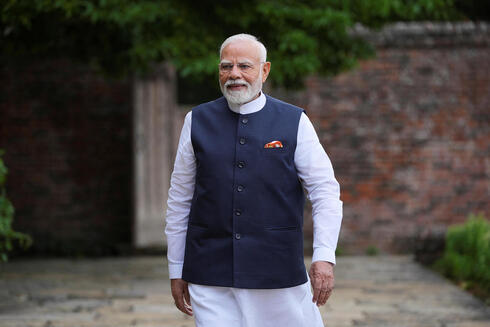
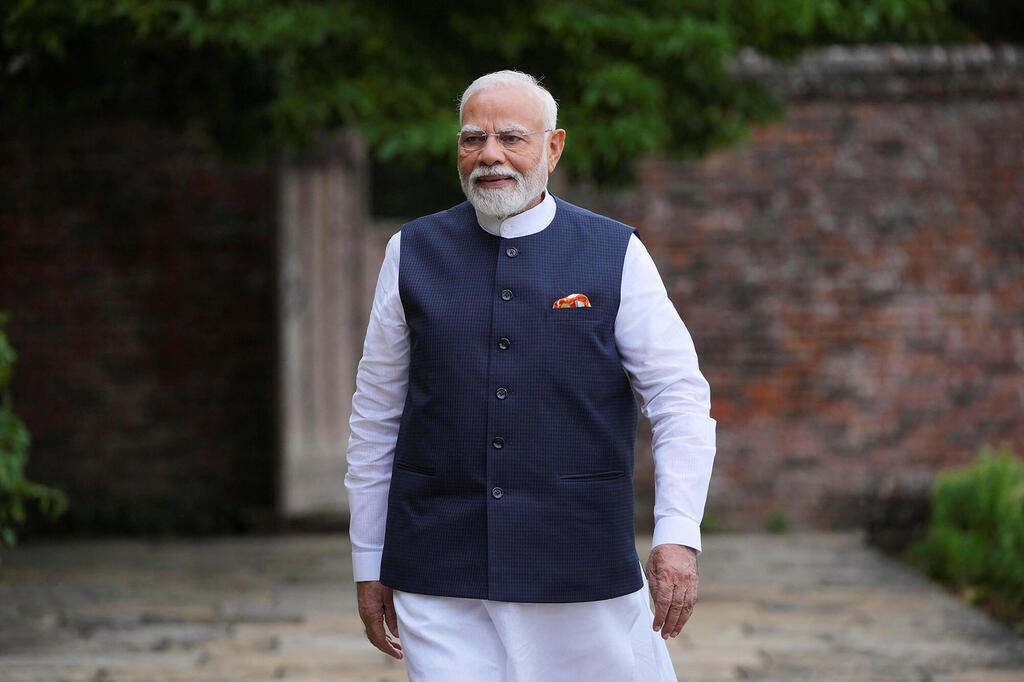
Indian Prime Minister Narendra Modi is set to arrive in Israel on Wednesday, a visit that officials describe as elevating bilateral relations to “special strategic relations,” Israel’s highest diplomatic tier, shared only with the United States and Germany. Analysts say the visit signals a significant deepening of defense cooperation between the two countries amid evolving regional security threats.
During his visit, Modi is scheduled to address the Knesset and hold meetings with Prime Minister Benjamin Netanyahu and President Isaac Herzog. A series of agreements are expected, with defense emerging as the centerpiece. A classified framework is to be signed, opening previously restricted areas of cooperation to India, including advanced air defense systems. Notably, India could gain access to Israel’s cutting-edge laser-based air defense platform, known as Iron Beam.
“This is a significant transformation,” an official told Israeli media. “The framework increases flexibility for our defense establishments and allows both sides to rely on each other in times of need.” Sources noted that the partnership could help mitigate the impact of potential future arms embargoes, a lesson drawn from Israel’s recent war, during which some suppliers limited deliveries. Reports indicate India has already provided drones and explosives during that war, signaling growing operational ties
The defense agenda forms only part of a broader set of agreements covering emerging technologies such as artificial intelligence, quantum computing, and cybersecurity. Officials highlighted India’s capacity to scale new technologies for mass implementation, an asset Israel hopes to leverage in joint projects. A joint cybersecurity center of excellence is expected to be established, further institutionalizing defense and technology cooperation.
“This visit represents a leap forward not only in defense but also across food security, agriculture, water, finance, and infrastructure,” Israel’s ambassador to India, Reuven Azar, told local media. Israeli officials are pushing for Indian participation in major domestic projects, including the Tel Aviv metro, and are exploring expanded direct flight routes beyond the current Air India service.
Ahead of Modi’s visit, the Israeli government approved a $40 million ($148 million shekel) plan to enhance cooperation across multiple sectors. Initiatives include establishing 10 new centers of excellence in India, boosting academic exchange, and creating joint programs in renewable energy, telemedicine, and infrastructure. A high-level steering committee led by the two countries’ foreign ministers will convene every two years to monitor progress.
Defense analysts note that the most consequential aspect of the visit is the update to the security agreement governing military cooperation. According to Azar, the new agreement is “broader, more sensitive, and timely, given the recent regional security challenges faced by both Israel and India.”
Israel’s role as a weapons supplier to India is already expanding rapidly. A recent report from Forbes India cited that Israel has agreed to $8.6 billion in arms deals with India in 2026, making it the country’s second-largest supplier after France. Deliveries include Rafael-manufactured SPICE 1000 precision-guided bombs, Rampage air-to-surface missiles with a 250-kilometer range, Air Lora air-launched ballistic missiles, and the IceBreaker missile system, capable of striking targets up to 300 kilometers away.



