









Blue-and-white Black Hat: How Israel came to dominate cyber's biggest conference
Israeli founders, investors and security executives descend on Las Vegas each year, using Black Hat to launch products, court customers and shape the industry's AI-driven future.
You would not be mistaken for thinking the streets of Tel Aviv feel a bit emptier this week, with a significant portion of the tech industry on their way to Las Vegas for the annual Black Hat cybersecurity event. “It’s definitely a unique market and place where I think being Israeli has a 100% upside,” says Aner Mazur, co-founder and CPO at Tenzai, an automated offensive security platform.
"It's crazy to think that Israel is such a small place in the world, but when you come to Black Hat, the statistics say that one of every four people in Black Hat is an Israeli,” adds Hila Zigman, General Partner at Cyberstarts, a VC fund solely focused on cyber with portfolio companies like Wiz, Onyx, and A Security. “It’s really an empire of cyber… It creates an illusion that Israel is so full of people.”
5 View gallery
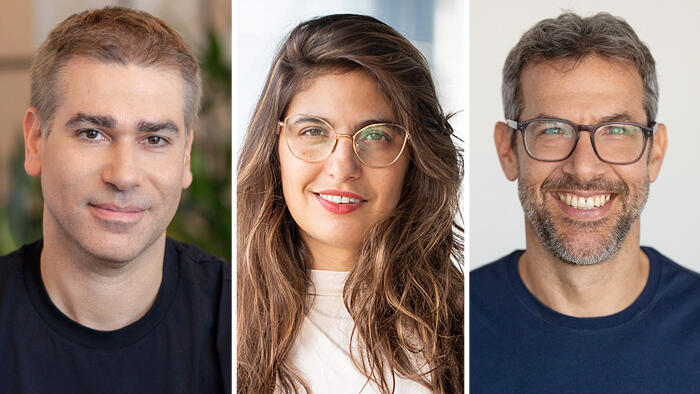
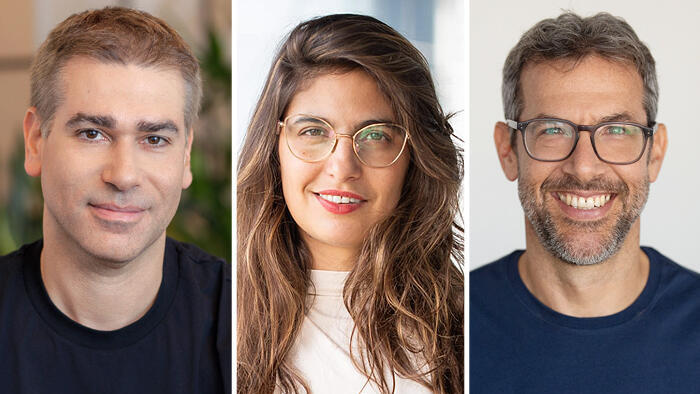
Shai Morag, Hila Zigman, Aner Mazur.
(Credit:Omer Hacohen, Shiri Grupper, Elad Malka)
Indeed, the six-day program arguably acts as an extension of Startup Nation itself. At the very least, an ambassadorial event for Israel's most dominant tech sector and the capital backing it.
“People all over the world come to talk about what will be the next problem in security, how the category is going to be defined for this year, what the budget looks like,” explains Zigman. She recalls her first time at the conference years ago as the CPO at Noname Security, describing the buzz of a room with 20,000 security leaders. “You're seeing so many familiar people in one place talking about the same problem,” she says. “You have like three days where you get to see almost every CISO in the world.”
"First and foremost, it's a great place to meet people. It brings the cybersecurity industry together,” Mazur comments. “Second, it's the classic cyber announcement season,” he continues, explaining how companies will often align their product launches and funding rounds with the lead-up to the event. Tenzai, for example, is “launching three new significant capabilities as part of Black Hat.”
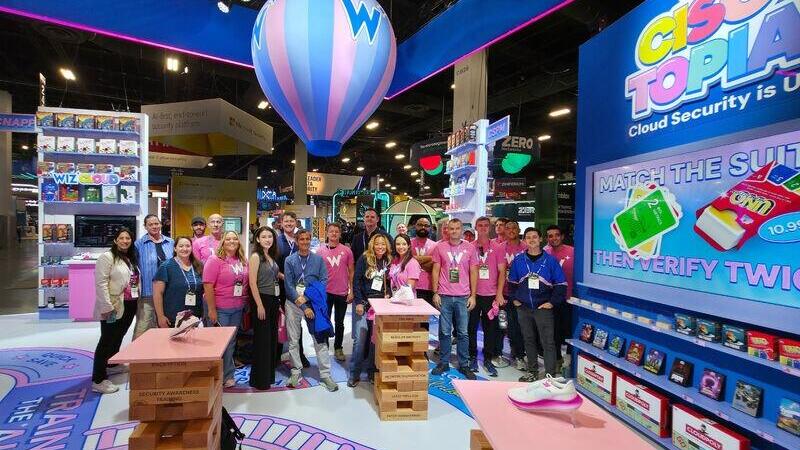
Founded in 1997 by Jeff Moss as a small, executive-focused gathering adjacent to his original hacker convention, DEF CON, the event series was once “mostly for the technical people,” says Shai Morag, serial entrepreneur and CEO and co-founder of Oak, an identity and AI security startup making its vendor debut at the conference this year. Today, Black Hat sits alongside the RSAC Conference as a marquee event in the US cyber calendar. “It became more and more as years progressed, especially in the last few years, one of the main events for cyber,” he notes, bringing together CISOs, security researchers, enterprise buyers, startup founders, and venture capitalists alike under one roof.
The conference also acts as a convening ground for a number of cyber titans, including strategic partners like Cisco and Wiz, as well as Microsoft Security and Palo Alto Networks, which are featured in the session schedule this year.
Naturally, each year, the conference floor is characterized by a salient theme or two. “For the last couple of years AI has probably been the trend of the year,” says Morag. “Now, of course, AI agents and AI and agent security and everything around that is a trend.”
He adds: “Identity is a very high trend right now because it's probably the biggest attack surface.”
As Zigman highlights, AI's rapid disruption of the cyber industry is literally reshaping the floor of the Mandalay Bay Convention Center. “This is a conference that used to look exactly the same every year,” she observes. “This is the first year they created a special area for AI attacks and for AI agents. This is the first year they're creating such a huge change”
Likewise, one of the main benefits of gathering at this magnitude is the ability to convene on these sector-specific challenges and propel the industry forward. “You're meeting the five largest banks in the US or you're meeting three of the largest retailers or pharmaceuticals. You get to see the largest organization dealing with this problem,” Zigman adds. “I think there is exponential growth that's happening before this week and after because of all of the transferences of data and information perspective.”
It’s a reminder of the importance of in-person events, even in a sector as digitally-oriented as cyber. "People are buying from people,” says Morag. “At the end of the day we're buying based on emotions, based on relationships. It's not just about tech, it's not just logical, it's not just based on metrics and KPIs. These are important, but at the end of the day it's also the trust.”
To that point, "there is no replacement to actually meeting people face to face,” he continues. “Trust is usually much, much easier to do in person."
What makes the room particularly interesting this year is how the power dynamic is swinging more towards agile newcomers than ever before. Being a legacy company is no longer inherently advantageous; in many cases, its size may actually carry a comparative liability. “We're living in an inflection point right now with AI. Everything is changing,” Morag continues. “This kind of disruption, like a disruption of the infrastructure, is probably one of the biggest revolutions ever.”
“When the whole AI revolution started, we all thought that large organizations will just embrace AI and it will be the same kind of a model,” says Zigman. Instead, these new AI-native startups, built on “different ecosystems and different architecture are creating an interesting view on a new upper-and-comers” that are taking favor in the market, “instead of the large ones that used to live here for a very long time.”
That is not to say selling cyber is easy right now. “With AI, customers ask themselves ‘Can I build this myself? With AI, three to four years out, is this product still relevant?” says Mazur. “There's just more of those questions from the buyer's side” compared to “when the world didn't change so quickly like it did with AI.”
Meanwhile, Morag argues that AI lowers the barrier to entry for entrepreneurs, in terms of what’s now expected of cyber vendors in the AI era, “the bar is higher,” he states.
“You need to leverage AI and to build much better solutions and create a moat around your company, and to make sure that you deliver much more. Because if the entry point is lower, you need to build bigger and more robust,” Morag says.
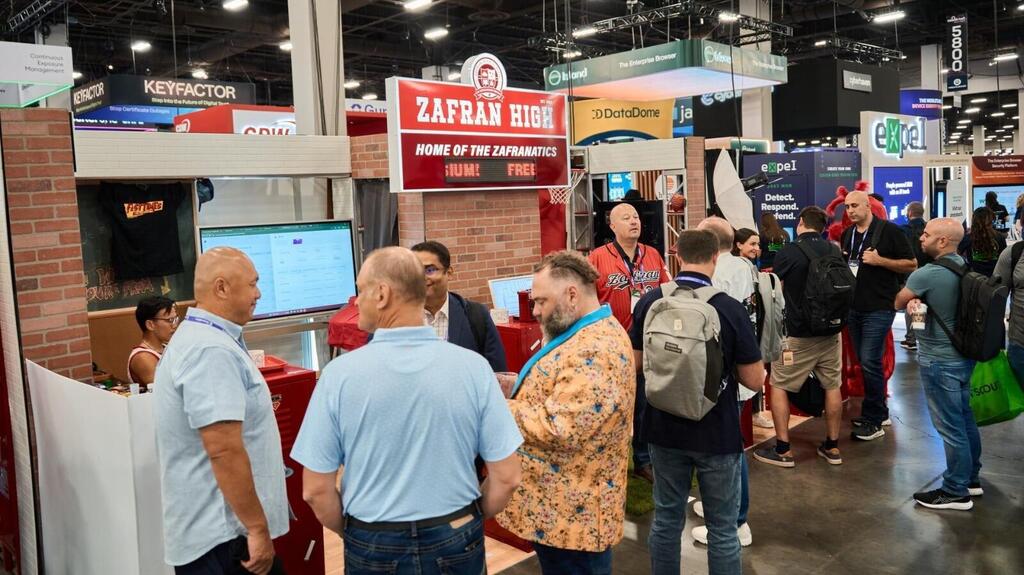
In many ways, the conference floor acts as a microcosm of the broader cyber market. “One of the big challenges in Black Hat,” says Mazur, is that “it's a very packed space,” both literally and figuratively. “In every area and domain you could have a double digit number of companies trying to solve a relatively similar pain.”
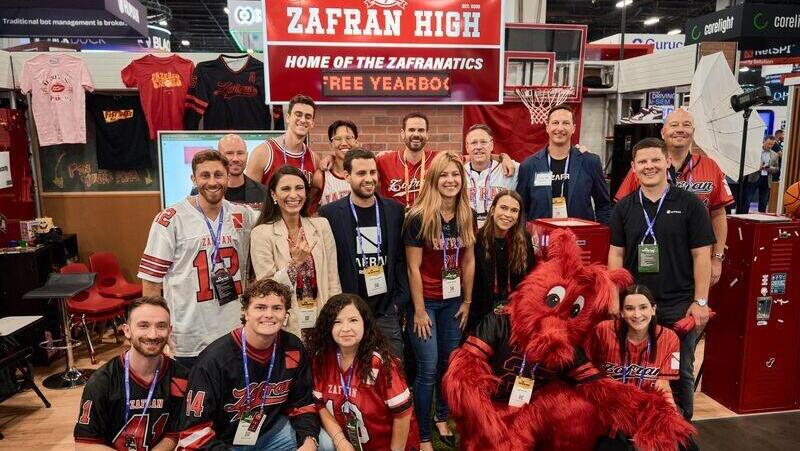
So how do you stand out in one of the noisiest rooms in tech? Of course, one of the main conference pulls is what sexy offerings the vendors can orchestrate, from the satellite events they organize to the spectacle of their conference booths. In terms of the Israeli vendor footprint, some standouts include Novee, an AI training startup building out a gym-themed booth featuring bodybuilders, a weightlifting competition, and a meeting suite to tie into its model “training” pitch.
Orca Security is taking clients to the Las Vegas Grand Prix Plaza for a Formula 1 karting track experience. Echo is hosting a party with Wiz, a joint dinner and happy hour with three other Israeli startups, alongside a billboard takeover on the Strip and a technical session by VP of Security Research Mor Weinberger.
Meanwhile, Semperis is pairing its booth with the premiere of Midnight in the War Room, a company-produced documentary on modern cyberwarfare targeting critical infrastructure like hospitals, power grids, and financial markets.
“You're seeing a lot of Israeli startups, a lot of Israeli founders on the floor,” Morag adds. “The buyers value the Israeli technology. They value the Israeli entrepreneurship and innovation. They're seeing the greatest companies coming from Israel, so being an Israeli in the cyber community, it's probably a big plus.”
Even with the rapid rise of other domestic sectors like defense and deep tech, Morag believes the cyber industry is too systematic to be eclipsed anytime soon. “It will take a lot of time to build something similar” to Israel’s cyber industry, he says. "I think we've built such a great community and such a great expertise in cyber. We have the talent, we have the expertise, we have the ecosystem.”
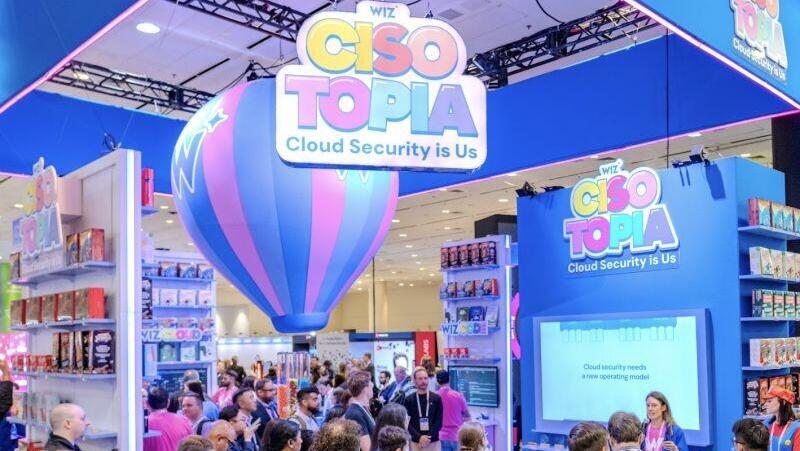
Thus, at a time when cyber feels at its most crucial, and most tumultuous, how are attendees best planning to navigate the behemoth conference?
"I'm spending most of my time in the Cyber War Forum events that are going on there because a lot of CICOs and a lot of investors are coming there,” says Zigman. “It's like a small ecosystem of talking about a problem from different perspectives. A lot of one-on-one with growth investors that are looking at the market with CISOs of large organizations that tell you specifically what's happening inside their organization."
“I'm barely on the floor itself,” says Mazur. “I think it varies between the types of people. The most interesting bits are the meetings you set around it for me, usually. Primarily it’s a great vehicle to get your messages out to the market,” he adds.
But after the exhibition floor clears and the networking parties wind down, one of the real tests of the week will be the business outcomes. “You see a lot of CICOs starting POCs with vendors,” expresses Zigman. “You see a lot of investors closing rounds, A rounds and B rounds and C rounds in those meetings here at Black Hat. You see a lot of small investors and large investors talking together about the market.”
“All this communication” produces a massive spike in “the amount of emails and POs and meetings pre-Black Hat and the week after,” she says, describing how a few days in Las Vegas is “creating such a huge wave every year."



