










After Medigate's $400 million exit, founders launch $60 million cyber startup from stealth
Seven months after Calcalist first revealed its funding, Act Security officially launches with a cloud security platform designed to eliminate the access pathways that AI-powered attacks increasingly exploit.
Seven months after Calcalist first revealed its $60 million fundraising, Israeli cybersecurity startup Act Security officially emerged from stealth on Tuesday, unveiling both its cloud security platform and the thesis underpinning the company: that the rise of AI has fundamentally changed how enterprises must secure cloud infrastructure.
Calcalist reported in December 2025 that Act had raised a $40 million Series A round just four months after completing a $20 million Seed financing, bringing its total funding to $60 million. The company is now publicly confirming those rounds for the first time alongside the launch of its platform.
Founded in 2025 by the team behind Medigate, the medical device cybersecurity company acquired by Claroty for approximately $400 million, Act is betting that cloud security must shift away from the industry's longstanding focus on identifying vulnerabilities and toward eliminating the excessive access permissions that make those vulnerabilities exploitable.
The company says the rapid adoption of AI agents has accelerated a problem that had been quietly building inside enterprise cloud environments for years. Organizations have accumulated vast numbers of unused permissions across employees, applications, and workloads. According to Act, nearly 97% of cloud access permissions at customer organizations sit dormant, yet remain available if compromised.
"Based on what we are seeing from our customers, close to 97% of cloud access sits dormant and unused, and now AI agents are inheriting those same old human permissions, running around the clock, at machine speed, with none of the judgment a person would apply," said Jonathan Langer, Act's co-founder and CEO.
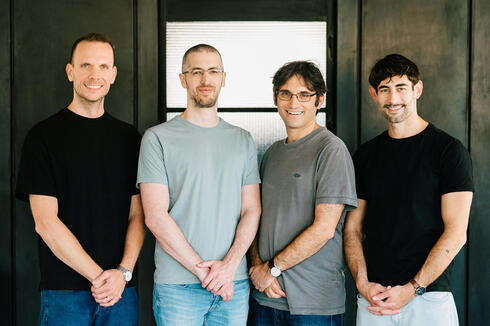
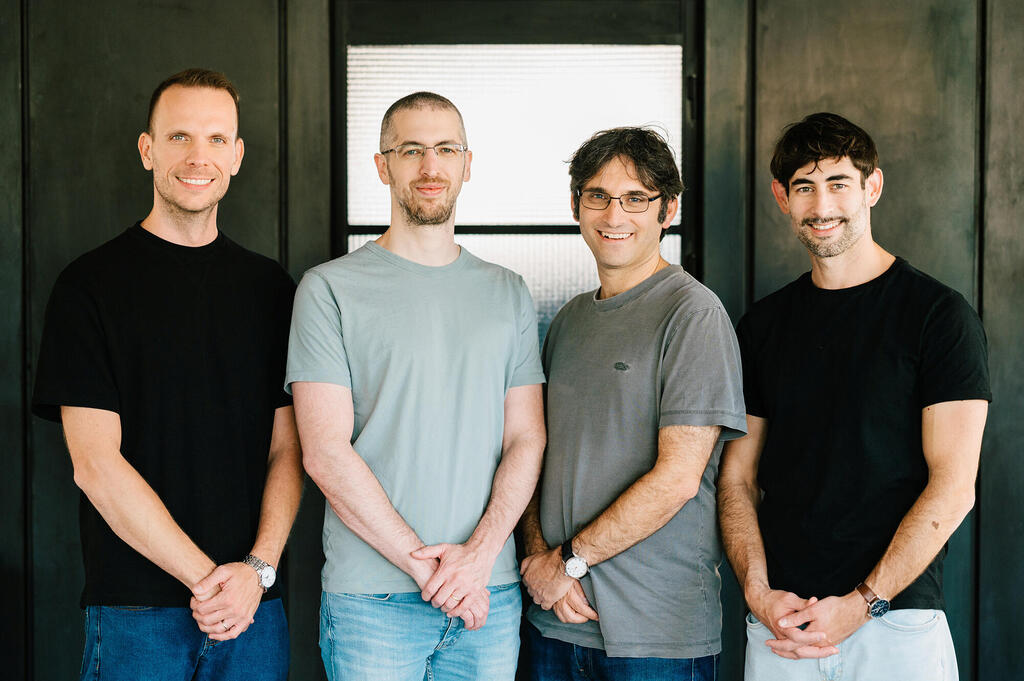
Act Security was founded by Langer (CEO), Itay Kirshenbaum (Chief Technology Officer), Stephen Goldberg (Chief Product Officer), and Ilai Fallach (Chief R&D Officer). Langer and Kirshenbaum previously co-founded Medigate, a medical device security and management startup, in 2017, with Goldberg joining as one of its first employees.
The company argues that AI is changing not only the speed of cyberattacks but also the economics of defense. As frontier AI models become increasingly capable of identifying exploitable pathways through enterprise infrastructure, traditional security practices centered on patching vulnerabilities and responding to alerts become increasingly difficult to sustain.
"In parallel, Mythos confirmed what much of the cyber world had started to realize, that we can't patch our way out of everything," Langer said. "Visibility tools surface thousands of findings and leave teams triaging symptoms one by one, while the root cause, the access architecture, goes unaddressed."
Instead of generating more alerts, Act's platform seeks to remove the conditions that allow attacks to succeed. It analyzes identity, network, and AI access simultaneously, enforcing tightly defined boundaries around employees, workloads, and AI agents so they can access only the resources required for their specific tasks.
The company says the platform continuously reduces unnecessary permissions, prevents new access sprawl from emerging through software development pipelines, and helps organizations enforce least-privilege principles while meeting compliance requirements including NIST 800-53, PCI DSS, and HIPAA.
The funding rounds disclosed today were previously reported by Calcalist. The initial $20 million Seed round was led by Team8 and Bessemer Venture Partners, with participation from Hetz Ventures and Claltech. The subsequent $40 million Series A was led by Notable Capital, with participation from Startpoint Capital and SVCI.



