











Political paralysis could cost Israel billions as ministries face budget freeze
A prolonged delay in forming a government could freeze billions of shekels in spending, postpone infrastructure tenders and put tax revenues at risk as ministries prepare for months without an approved 2027 budget.
Israel’s prolonged political uncertainty threatens to delay government spending, infrastructure projects and tax reforms, while adding to the economic cost of an election cycle that could leave the country without an approved budget for months.
The economic impact could reach NIS 6.5 billion ($2.09 billion), according to estimates cited in the discussion of the potential fallout. A slowdown in economic activity could reduce tax revenues by NIS 800 million to NIS 1.8 billion ($257 million to $579 million), while delays in planned tax legislation could put another NIS 3 billion to NIS 5 billion ($964 million to $1.61 billion) in projected revenue at risk. These estimates may overlap and should not be treated as a definitive cumulative total.
The 26th Knesset is scheduled to convene on November 10, but the election results have left no bloc with a clear majority. Until a government is formed, the distribution of ministerial portfolios and the work of parliamentary committees remain uncertain, complicating the implementation of economic policy.
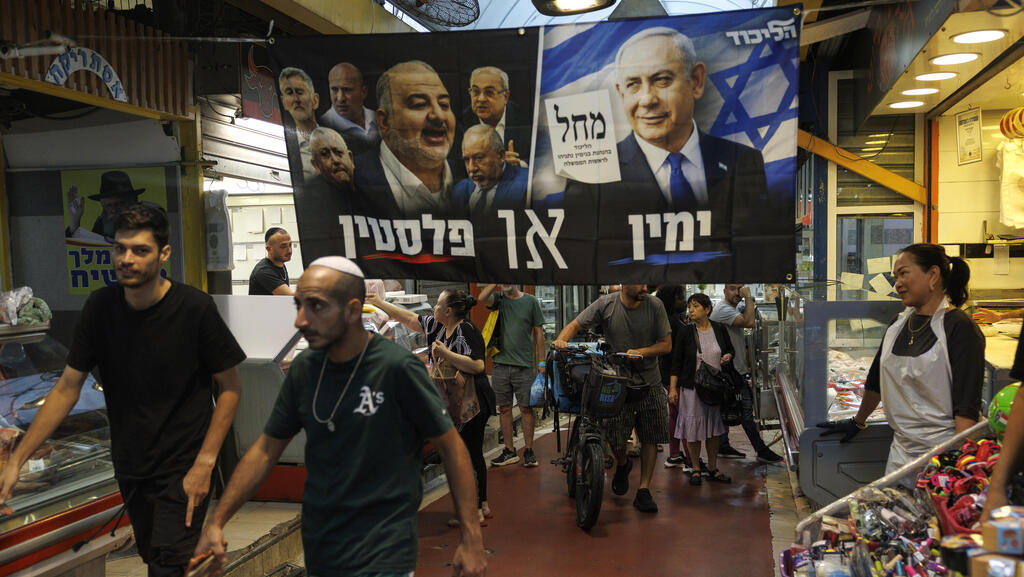
The Knesset is expected to establish an Arrangements Committee and interim committees for Finance and Foreign Affairs and Defense. The opposition, together with Arab parties, has also discussed establishing four committees aimed at repealing laws associated with the judicial overhaul. The proposed legislation concerns the Communications Law, the Attorney General Law, the composition of the Judicial Selection Committee and the Department of Internal Police Investigations. Whether these plans will move forward remains unclear.
The political deadlock also leaves uncertainty over who will lead key ministries. Avigdor Liberman has opposed forming a minority government backed by Arab parties, while Gadi Eisenkot of Yashar, Naftali Bennett of Beyachad, Yair Golan of the Democrats and Liberman have ruled out serving under Benjamin Netanyahu.
If a new government and budget are not in place by January 1, 2027, ministries are likely to face months of operating under a temporary spending framework. Under this arrangement, government ministries would be limited to monthly spending based on the 2026 budget, leaving little room for new initiatives.
New contracts could be halted unless approved by an exceptions committee, while new tenders and infrastructure projects could be delayed. The freeze would also complicate the implementation of structural reforms and legislation intended to combat the shadow economy.
The uncertainty could affect NIS 10 billion to NIS 15 billion ($3.22 billion to $4.82 billion) in planned expenditure, including allocations to local authorities, subsidies and new contracts. Infrastructure and development tenders worth an estimated NIS 4 billion to NIS 6 billion ($1.29 billion to $1.93 billion) could also be delayed.
The broader economic cost would depend on how long the political stalemate lasts and which projects and reforms are postponed. Delayed structural reforms could weigh on growth, with the estimated annual impact put at 0.05% to 0.2% of GDP.
The Finance Ministry has prepared an Arrangements Law for the incoming finance minister, but the timing of its implementation is uncertain. The legislation is intended to advance economic measures alongside the state budget, making its progress dependent on the formation of a government and the parliamentary timetable.
Tax measures face further delays
Tax legislation scheduled for the coming months is also at risk. Election-related provisions automatically extend certain measures until February 10, 2027, including the 8% purchase tax on real estate investors. If the relevant provisions are not extended, the tax brackets could change, potentially reducing the tax burden on some buyers.
The delays could also affect plans to tackle tax evasion. The shadow economy is estimated to cost the state NIS 20 billion to NIS 30 billion ($6.43 billion to $9.65 billion), while one planned measure would introduce an online VAT reporting system intended to help identify fictitious invoices.
Each two-month delay in passing the planned tax legislation could put another NIS 3 billion to NIS 5 billion ($964 million to $1.61 billion) in projected revenue at risk, according to the estimates. The eventual impact would depend on which measures are delayed and whether they are implemented retroactively or abandoned.
Defense spending adds pressure
The political uncertainty comes as Israel continues to face substantial defense needs, with assessments of a possible renewed conflict with Iran adding another layer of uncertainty to budget planning. A prolonged delay in approving a new budget could make it harder for the government to allocate funds between defense, civilian services and investment.
Political instability could also affect Israel’s borrowing costs. If investors demand a higher risk premium to compensate for uncertainty over fiscal policy and government stability, the state could face higher costs when issuing debt. The scale of any increase would depend on market conditions and how long the uncertainty persists.
The timeline for approving a budget remains uncertain. If a government is formed by the end of December, the budget would need to be approved by mid-April under the applicable timetable. If no government is formed within roughly 100 days, the Knesset would automatically dissolve and the country would head toward another election. A government formed later could face a budget deadline in mid-to-late April, around 140 days after its inauguration.
Until a government is established and a budget approved, ministries, businesses and local authorities will have to plan around the possibility of delayed funding and stalled policy decisions. The final economic cost will depend not only on how long the political impasse lasts, but also on whether the next government can quickly restore budget certainty and advance legislation that has already been prepared.



