











"AI is everywhere. It's no longer enough to differentiate a company"
Elyor Zitalni, Deputy CEO at Phoenix ESOP, explains why AI no longer guarantees higher valuations, which sectors are attracting the strongest investor interest, and how equity valuations are evolving alongside Israel's startup ecosystem
"The hottest sectors right now are semiconductors, with an emphasis on AI, and cybersecurity. That's where we're seeing the most high and aggressive valuations relative to the stage the company is at. The market has clearly risen, and the pace of deals and investor appetite remind us of active periods we've seen before".
That's according to Elyor Zitalni, Deputy CEO Private Sector at Phoenix ESOP, whose team conducts hundreds of equity valuations for private companies each year. From that vantage point, she has watched investor appetite shift across sectors, funding rounds accelerate, and employee ownership evolve.
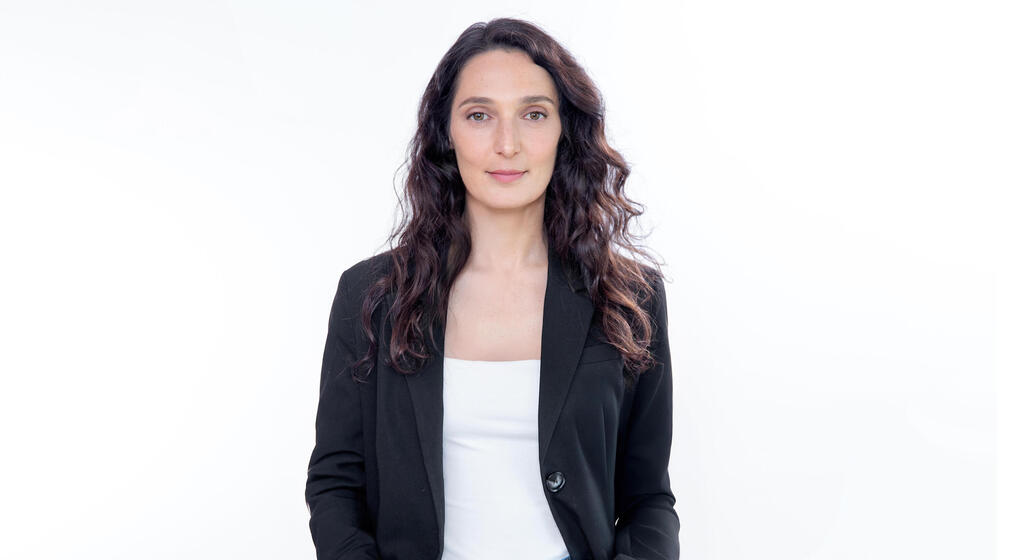
Despite the attention surrounding artificial intelligence, Zitalni says the firm's experience does not point to a universal "AI premium".
"Out of the hundreds of valuations we've conducted, we haven't been able to identify a consistent AI premium", she says. "AI is everywhere today, and it's no longer enough on its own to differentiate a company".
The notable exception, she says, is the semiconductor industry.
"The entire AI industry relies on semiconductors, and that's where the impact on valuations is clearer and more significant than anywhere else".
Those observations stem from a type of valuation that many founders only think about when they're ready to grant employee stock options. Unlike fundraising or acquisition valuations, which seek to determine what investors are willing to pay for a company, equity valuations establish the fair market value of shares issued to employees, consultants and other option holders.
"It's a completely different kind of valuation", says Zitalni. "Every private company that grants options will eventually need to value its shares. The challenge is finding the model that best fits each company's specific structure".
According to Zitalni, the process involves far more than applying financial models.
"Looking beyond the numbers because eventually they're not everything", she says. "They're important, but there are a lot of things you don't see through the numbers".
Instead, valuations incorporate comparable companies, fundraising activity, market conditions and industry-specific developments.
"We're looking at the whole market", says Zitalni. "We're not working from a manual. We look at what's happening around us, compare companies, and take both quantitative and qualitative factors into consideration".
That broader perspective also helps address one of the biggest challenges she encounters: balancing founders' expectations with market reality.
"Entrepreneurs naturally believe they have the next billion-dollar idea", she says. "That's what motivates them. But when you're performing a valuation, you have to approach it objectively. Explaining the gap between how a company sees itself and how the market sees it is often one of the biggest challenges".
As startup ownership structures have become more complex, so too has the valuation process. To streamline that work, Phoenix ESOP developed an internal platform that integrates AI and financial data sources, allowing much of the technical analysis to be completed in hours instead of days.
For Zitalni, however, the real benefit isn't speed.
"The technical work becomes much faster", she says. "That gives me more time to actually look at the quality aspects, understand what's happening in the market and think about what the numbers are really telling us".
Because Phoenix ESOP also manages equity plans and cap tables for many of its clients, the valuation team begins with a detailed understanding of a company's ownership structure, reducing much of the manual work traditionally involved.
"We've already seen so many equity structures and so many different situations", says Zitalni. "That experience helps us find the model that fits each company".
A changing startup market
the company’s across hundreds of private companies has also revealed broader changes in the startup ecosystem.
"The pace of funding rounds rose sharply during the first half of 2026", says Zitalni. "Investors are rushing to pour money into young companies".
Another shift has been the growing use of secondary transactions to provide liquidity for employees before a company reaches an exit.
"We're seeing more and more secondary transactions designed to give employees liquidity," she says. "In the past, you waited for an exit to see cash from your options. Today, if you're an early enough employee at a hot company, you might see that money at an earlier stage as well".
The trend reflects a broader evolution in how startups use equity as part of compensation.
While equity valuations are often viewed primarily as a regulatory requirement, Zitalni argues they have become an increasingly strategic part of attracting and retaining talent.
"When a company's value grows, employees benefit from that growth", she says. "Options have become part of the overall compensation package. People don't just look at salary anymore. They also look at the long-term value those options could create".
For Phoenix ESOP, that has expanded the role of valuation beyond compliance. Rather than simply calculating a share price, the team works to help companies understand how market conditions, industry trends and ownership structures affect the value they ultimately deliver to employees.
"If I only followed the valuation textbook, I couldn't give that extra value", says Zitalni. "When you know what's happening in the market, you're able to understand how those changes should be reflected in a company's valuation".
Ultimately, she says, that combination of market knowledge, technology and experience is what clients are looking for.
"Our job is to give clients the best solution we can".



