










Former ironSource executives raise $27 million Seed to build the advertising layer for AI
Velocity believes AI apps need a new monetization model as millions of users remain free users while computing costs continue to rise.
Israeli startup Velocity, which develops infrastructure for revenue generation and distribution for AI applications, has raised $27 million in a Seed funding round. The round was led by venture capital funds NFX and Red Dot Capital Partners, with participation from Stardom Ventures, Corner Ventures, and Transcend.
The company was founded by Tal Shoham (CEO), Amir Shaked (COO), and Nimrod Zota (CPO), former senior executives at ironSource and Unity who spent more than a decade building and leading advertising, monetization, and growth platforms serving hundreds of thousands of apps and developers worldwide. The founding team was joined by Guy Kirschenbaum, Velocity’s founding VP of Engineering.
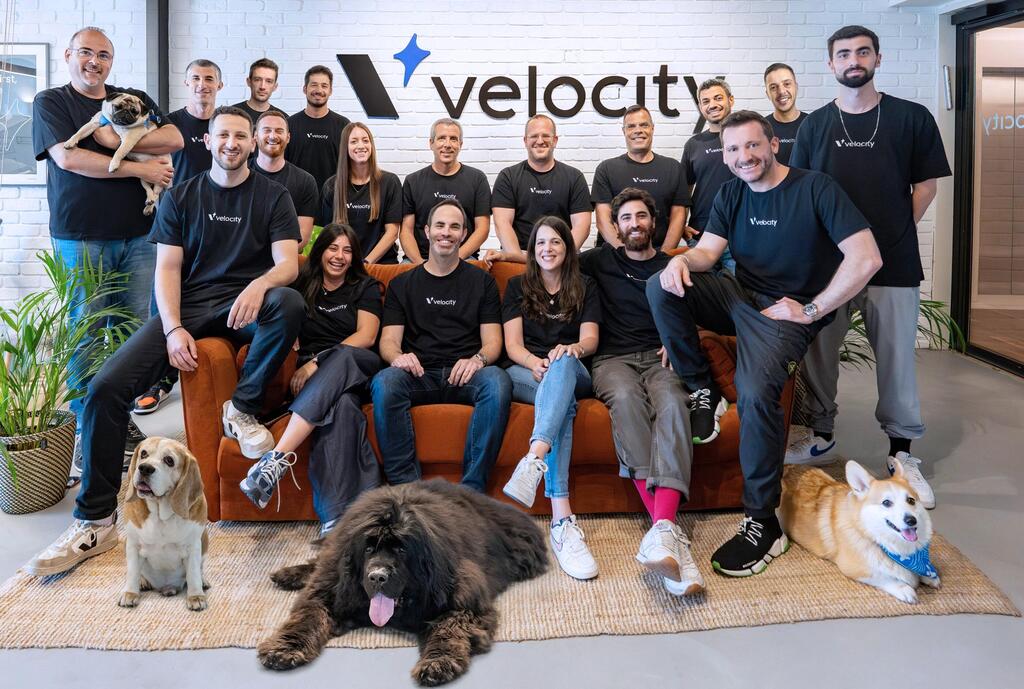
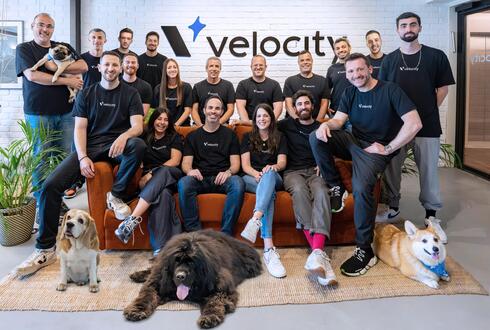
Velocity currently employs approximately 20 people and operates its research and development center in Israel. The company said that within months of its founding, its technology had already been adopted by leading international AI companies serving millions of daily active users.
The funding round also included angel investors from the technology, AI, advertising, and gaming industries, including including Ofir Ehrlich, founder and CEO of EON; Elad Kushnir; Omer Kaplan, co-founder of ironSource and CEO of Zyg; Nadav Ashkenazy, co-founder of Zyg; Amit Gilon; Gilad Almog, founder and CEO of SuperPlay; and Lior Shiff, founder and CEO of Tripledot Studios.
“We want to build the ironSource of AI”
In a conversation with Calcalist, Velocity CEO and co-founder Tal Shoham said the company aims to build a monetization infrastructure layer for AI companies similar to the role ironSource played in the mobile app ecosystem.
“We aspire to build a company like ironSource,” Shoham said. “We have a similar vision of creating monetization infrastructure, but not for gaming companies, for native AI companies that face a much bigger challenge.”
According to Shoham, AI companies face a fundamental economic problem: while millions of users engage with their products, only a small percentage convert into paying customers.
“The problem in AI is even bigger than in gaming because the cost of usage is not zero,” he said. “Companies need to generate revenue from users who are expensive to serve. Advertising is an essential layer beyond subscriptions because it allows users to continue using products while creating another revenue channel.”
Velocity is also developing a distribution channel that connects advertisers with AI users based on the context of their interactions.
“Advertisers want to understand the context of a conversation, similar to what happens in Google Search,” Shoham said. “We do not touch personal privacy. The goal is to understand intent without exposing personal information.”
Shoham said Velocity is attempting to adapt the advertising model of the internet era to the emerging AI ecosystem.
“We are trying to bring the advertising model of the old world into the world of artificial intelligence,” he said. “We believe we can go very far.”
According to Shoham, AI is also changing the way technology companies operate internally by allowing smaller teams to achieve significantly more.
“Today, I see what people can build with small and highly efficient teams,” he said. “In the past, reaching the same level would have required much larger organizations. We believe in efficiency, not size.”
Velocity currently employs around 20 people and has deliberately maintained a lean structure.
“Until two weeks ago, we were 15 people, and with that team we built the entire system we have today,” Shoham said. “We had demand and could have raised much more money, but we decided to focus on execution.”
He added that the company is not limiting future hiring but will scale its workforce according to customer demand.
“If our thesis continues to prove itself and demand keeps growing, we will become more aggressive,” he said.
Velocity argues that advertising has undergone two major transformations over the past three decades.
The first was the transition from traditional media to the internet, which created search-based advertising and digital marketing. The second was the move to mobile, which created the app economy and transformed user acquisition.
The company believes AI interfaces represent the third major shift, one that requires a new infrastructure layer for monetization, distribution, and growth.
Hundreds of millions of users now interact with AI products daily, but only a small percentage become paying subscribers. At the same time, the cost of operating AI models remains high as users demand increasingly sophisticated capabilities.
According to Velocity, as developing AI applications becomes faster and cheaper, the main challenge is shifting from building products to creating sustainable revenue and growth engines.
At the center of Velocity’s technology is the ability to understand user intent in real time.
The platform analyzes conversations, requests, and interactions with AI systems to identify what users are trying to accomplish. Unlike traditional advertising systems based on browsing history or user profiles, Velocity focuses on the user’s immediate goal.
The company believes user intent will become the defining commercial signal of the AI era, similar to the role search queries played during the internet era and personal identity played during the rise of social networks.
Velocity’s platform includes a dedicated advertising network for AI applications, alongside AI and machine learning models designed to analyze conversations, context, and intent signals in real time.
The system converts interactions into structured intent data, allowing AI applications to deliver more relevant recommendations, offers, and commercial messages.
According to Velocity, the approach could allow AI companies to extend free usage instead of quickly restricting users behind paywalls, while creating an additional revenue stream alongside subscriptions.



