










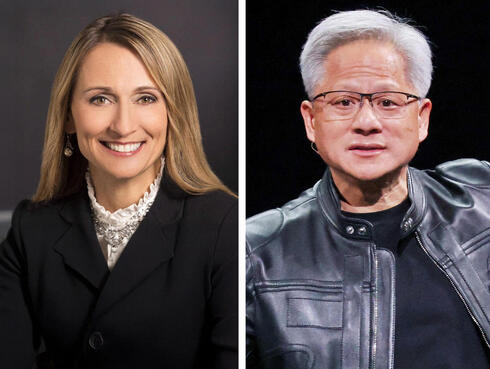
Colette Kress helped bring Israel to the heart of Nvidia's AI business. Now she's in charge.
The longtime CFO supported the Mellanox acquisition, which gave Nvidia critical networking technology and a major R&D presence in Israel. Her next task is to steer the company without Jensen Huang.
For more than a decade, Colette Kress has occupied one of the most important positions at Nvidia without becoming one of its most visible public figures. As chief financial officer, she helped turn the company's technological ambitions into one of the most extraordinary financial success stories in corporate history. Behind the scenes, she also served as a counterweight to CEO Jensen Huang, sometimes challenging his appetite for risk as he pushed Nvidia into increasingly ambitious investments.
Now, following Huang's departure after three decades at the helm, the 59-year-old executive has been appointed interim CEO as Nvidia searches for a permanent successor. Her appointment puts one of the company's longest-serving executives in charge at a moment of considerable uncertainty, with questions surrounding Huang's departure, Nvidia's increasingly complex investment strategy and the sustainability of the AI boom.
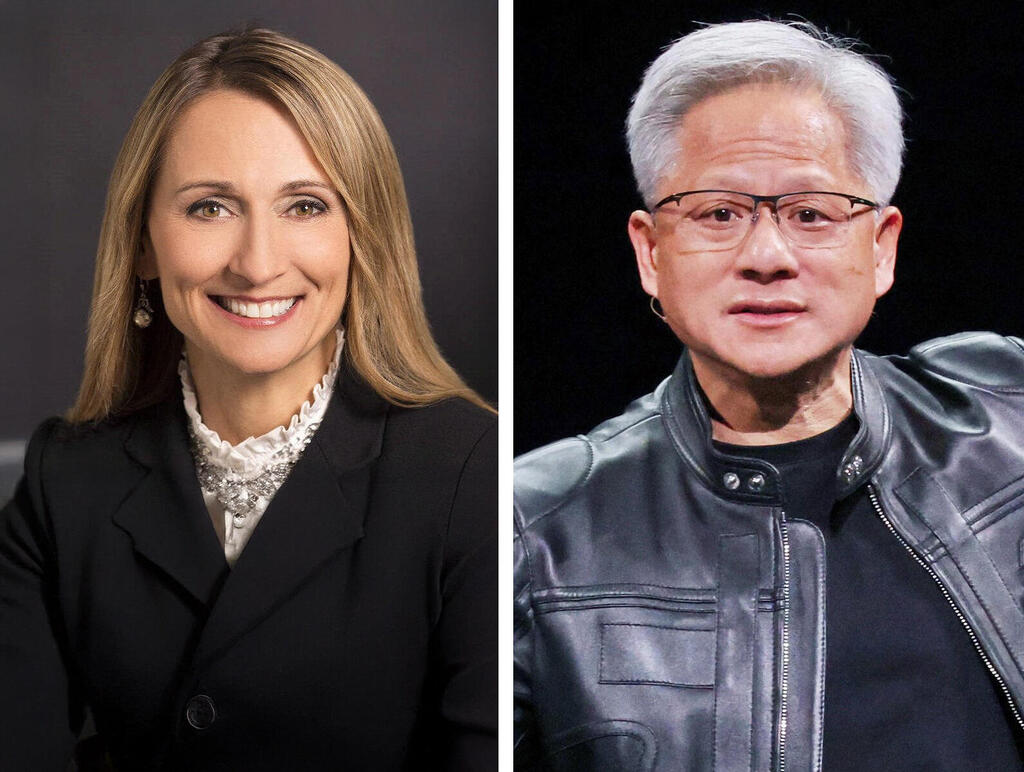
According to people familiar with the matter cited by Reuters, Kress and her team clashed with Huang and Nvidia's sales organization over some of the company's large financing commitments, including investments in OpenAI and AI infrastructure companies such as Lambda. The concern was that Nvidia was taking on substantial risks by financing companies that were also among its customers, potentially contributing to an increasingly circular AI economy.
One proposed $250 billion plan to support an OpenAI data center project in Ohio was ultimately reduced to $120 billion. Kress's willingness to challenge Huang's plans reportedly made her an important counterweight to a founder whose extraordinary success had given him considerable freedom in making major strategic decisions.
Those who know her describe Kress as a pragmatist with a measured and calming style, in contrast to Huang's more confrontational approach. Her experience and familiarity with Nvidia's financial operations make her a natural choice to stabilize the company during the transition. She has already taken part in calls with customers and suppliers aimed at reassuring them amid the upheaval.
But whether she can permanently replace Huang is a different question. While her financial expertise and understanding of the company are widely recognized, some investors and analysts doubt that a finance executive can maintain the technological ambition and willingness to take risks that transformed Nvidia into the central player in the AI revolution.
Kress joined Nvidia in 2013, after a career spanning more than three decades in the technology industry. She previously held senior financial positions at companies including Microsoft, Cisco and Texas Instruments, and served as a senior vice president and CFO within Cisco's business technology and operations finance organization.
Huang personally recruited her, laying out his vision for Nvidia as a company that would provide both the computing power and the underlying infrastructure for the next generation of technology. At the time, Nvidia was primarily known for its graphics processors, which were widely used in gaming computers. Huang believed those same processors could eventually power much more complex computing tasks, including artificial intelligence.
Kress was initially hesitant about joining the company. Her two sons, then eight and ten years old, were familiar with Nvidia through its gaming products and encouraged her to take the opportunity. She ultimately joined, becoming part of the leadership team that would oversee the company's transformation from a graphics-chip maker into the dominant supplier of AI computing infrastructure.
Her arrival coincided with a period in which Nvidia was still far from its current position. One of the early breakthroughs that helped validate Huang's vision came in 2012, when researchers at the University of Toronto used Nvidia GPUs to train neural networks. The emergence of ChatGPT a decade later created another turning point, unleashing demand for the computing power Nvidia had spent years developing.
Kress has repeatedly emphasized that Nvidia's business is not simply about selling chips. Its competitive advantage comes from combining hardware with software, development tools and a broader computing platform. That strategy has helped the company build a position that competitors have struggled to replicate.
A key figure in Nvidia's Israeli expansion
Kress also has a particularly close connection to Nvidia's Israeli operations, which became strategically important to the company following its $6.9 billion acquisition of Mellanox Technologies in 2020.
The acquisition was the result of a fierce competition with Intel and gave Nvidia control of a leading Israeli networking technology company. It allowed Nvidia to combine its GPUs with high-performance networking equipment, enabling it to offer more complete data center systems rather than individual components.
Kress was a strong supporter of the acquisition, which she considered one of the most successful deals she had seen in the technology industry. She has explained that the combination of Nvidia's computing capabilities and Mellanox's networking technology made it possible for the company to build almost entire data centers for its customers.
The deal also transformed Nvidia's presence in Israel. Following the acquisition, approximately 3,200 employees, or around 12% of Nvidia's global workforce at the time, were based in the country.
Kress maintained unusually close contact with the Israeli operation. She described Israel as an integral part of her daily schedule, with meetings involving local executives typically taking place at the beginning of her working day, before she moved on to California. Her involvement reflected the importance of the Israeli business to Nvidia's global strategy, particularly in networking and data center infrastructure.
The acquisition has become even more significant as the AI boom has increased demand for the technology that connects thousands of processors inside increasingly powerful data centers. Mellanox's networking capabilities are now a central part of Nvidia's broader AI infrastructure offering.
A billionaire CFO facing an unprecedented challenge
Kress has become one of the wealthiest women in the technology industry through her Nvidia shares. Her fortune was estimated at approximately $1.2 billion in mid-2026, according to Forbes, which placed her among the richest self-made women in the United States. She has also appeared on lists of the most powerful women in business compiled by Fortune and Forbes.
Despite her growing wealth and influence, Kress has generally maintained a low public profile compared with Huang. Her public comments have tended to focus on financial performance, the company's long-term strategy and the economics of the AI market rather than the grand technological pronouncements that have become synonymous with Nvidia's founder.
Her interim appointment comes with a set of challenges that extend well beyond managing Nvidia's finances. The company has made increasingly large investments in AI developers and infrastructure providers, while its own customers are spending billions to build the data centers that drive demand for its chips. Kress has reportedly been among those questioning the risks of this model.
She will also face scrutiny over what she knew about Huang's personal relationships and Nvidia's dealings involving China. One source cited by Reuters said Kress knew about Huang's relationship with Kimberly Powell, Nvidia's vice president of healthcare, who reported to him. Nvidia and Powell did not immediately respond to requests for comment. Questions have also been raised about the company's oversight of chip sales involving Chinese military-linked institutions and intermediaries in Southeast Asia.
The immediate task is to reassure investors, customers and employees that Nvidia can continue operating smoothly without its founder. The longer-term challenge is more fundamental: preserving the technological ambition that made Nvidia a dominant force in AI while imposing greater financial discipline on a company whose expansion has become closely intertwined with the fortunes of the entire industry.
Kress has spent 13 years helping Huang build Nvidia into a technology giant. She now has to demonstrate that she can help lead it without him.



