










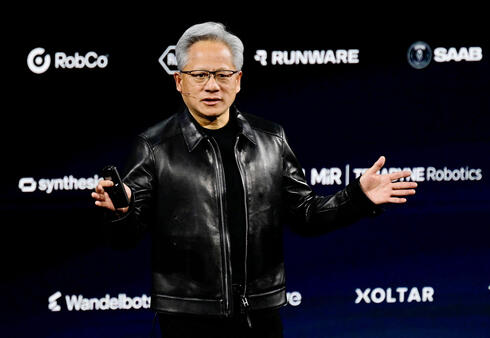
Jensen Huang steps down as Nvidia CEO, leaving the AI industry without its leading champion
CFO Colette Kress will serve as interim CEO as the $4 trillion chipmaker searches for a permanent successor. Huang's departure follows reports of two extramarital relationships and raises questions about the future of the AI ecosystem he helped finance.
Jensen Huang is stepping down as CEO of Nvidia, ending a 33-year tenure in which he transformed a graphics-chip maker into the most valuable company at the center of the artificial intelligence boom. The departure marks a dramatic turning point not only for Nvidia, but for an industry whose growth, investment and direction have become closely associated with its co-founder.
Chief Financial Officer Colette Kress will take over as interim CEO while the company searches for a permanent successor, Nvidia said Thursday. The company also appointed Harvey Jones, a former Synopsys CEO and longtime Nvidia board member, as its first-ever board chairman. Huang, who owns approximately 3.61% of Nvidia and is its fourth-largest shareholder, will also leave the board.
The announcement came after days of mounting pressure over reports concerning Huang's personal relationships and their potential implications for the company. The 63-year-old executive, who is married, has faced scrutiny following reports that he had an affair with a Chinese businesswoman whom U.S. authorities suspect of having links to Beijing's intelligence services. The New York Times subsequently reported a second alleged relationship, with a senior Nvidia executive who reportedly reported directly to Huang.
Nvidia's board met on Wednesday to consider Huang's future, according to a person familiar with the matter cited by Reuters. The company had previously launched an investigation into whether Huang had been targeted as part of a foreign intelligence operation. Huang has acknowledged being unfaithful to his wife, but has said he did not know that the Chinese businesswoman was allegedly connected to espionage. The allegations have not been established as fact.
The departure immediately rattled investors. Nvidia shares fell more than 10% in premarket trading on Thursday, adding to a selloff that had already erased hundreds of billions of dollars from the company's market value. The stock's decline also weighed on broader markets, reflecting the company's extraordinary importance to investor confidence in the AI sector.
But the implications of Huang's exit extend well beyond the company's share price. Nvidia has become a central force in the AI economy, supplying the processors used to train and run the industry's most advanced models while also investing in cloud providers, suppliers and AI developers. Huang has used the company's growing cash reserves to help finance parts of the very ecosystem that depends on its chips, creating a network of commercial relationships in which Nvidia is both a supplier and an investor.
That strategy has helped reinforce Nvidia's position at the heart of the AI boom, but it has also made the company unusually dependent on Huang's judgment and ability to coordinate a complex network of partners. His departure raises questions about whether the company will continue to pursue the same investment strategy, and whether its customers and partners will have the same confidence in its long-term commitments.
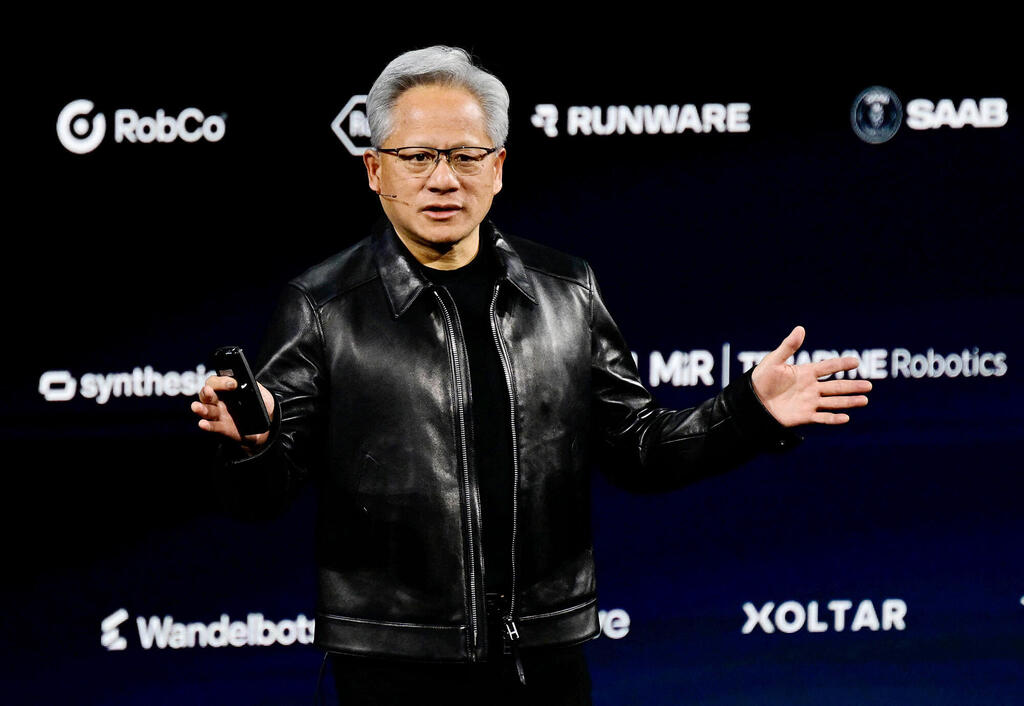
The challenge facing Nvidia is that Huang was more than a chief executive overseeing a successful chip business. He was its most visible salesman, its strategic architect and the person who helped persuade governments, technology companies and investors that accelerated computing would underpin a new era of technological growth. His leather jacket and high-energy presentations became almost inseparable from the Nvidia brand, while his ability to anticipate the industry's next major shift helped turn the company into a central player in the global AI race.
There is no obvious successor who combines Huang's technical influence, operational authority and public profile. Kress, who joined Nvidia in 2013 and has served as CFO for more than a decade, offers continuity and familiarity with investors, but her background is primarily in finance. Other names discussed in connection with the succession question include Ian Buck, who leads Nvidia's hyperscale AI hardware and software business and played a central role in the development of CUDA; Michael Kagan, the company's chief technology officer and a co-founder of Mellanox; and external candidates such as Arm CEO Rene Haas, AMD CEO Lisa Su and Apple's senior hardware executive Johny Srouji. None has been identified by Nvidia as a permanent successor.
The leadership change also comes at a sensitive moment for the broader AI industry. Investors have become increasingly concerned about the enormous sums being spent on data centers and computing infrastructure, as well as the debt and cash burn required to sustain the expansion. Nvidia's own results have become a key measure of whether the AI boom is translating into durable demand and profits. The company is scheduled to report its quarterly results on November 17, giving Kress an early opportunity to reassure investors that the transition will not disrupt its business.
Huang's departure could also have implications for U.S. policy toward China. He has been an outspoken advocate of maintaining access to the Chinese market, arguing that restricting Nvidia's ability to sell there could strengthen local competitors. His close relationship with President Donald Trump has made him an influential voice in the debate over semiconductor exports. Trump said Sunday that Huang had "done an amazing job for our country" and that the Nvidia chief had told him he did not know the Chinese businesswoman was allegedly a spy.
The issue has become more complicated as Washington scrutinizes the possibility that restricted Nvidia chips have reached Chinese customers through intermediaries. Huang's departure could leave a vacuum in the debate over how to balance national security concerns with the commercial interests of American chipmakers.
For Nvidia's Israeli operations, the transition also raises questions about the future of one of the company's most important research and development centers outside the United States. As CTech reported Thursday, Israel has become deeply embedded in Nvidia's product development, particularly in networking technology inherited through its $6.9 billion acquisition of Mellanox in 2019. The company is also pursuing a multibillion-shekel campus in Kiryat Tivon that could eventually accommodate thousands of additional employees. While the existing R&D operation is difficult to separate from Nvidia's core business, the planned campus represents a major long-term investment that a new CEO will ultimately have to defend.



