









Former Simplex founders raise $6 million to build dozens of AI-native software companies
IAIG believes artificial intelligence has rewritten the economics of software development, allowing startups to compete with established SaaS vendors in weeks rather than years.
IAIG (Inevitable AI Group) has raised $6 million in a pre-Seed funding round led by Aleph, with participation from leading angel investors.
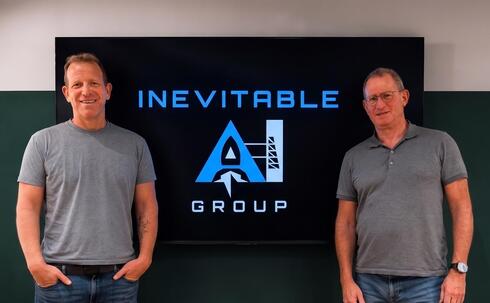
Founded by serial entrepreneurs Nimrod Lehavi, CEO, and Ofer Bar-Or, COO, IAIG is building what it describes as an AI-native venture studio. Rather than creating a single company, its ambition is to launch dozens of AI-native software businesses, betting that advances in artificial intelligence have fundamentally changed the economics of building software.
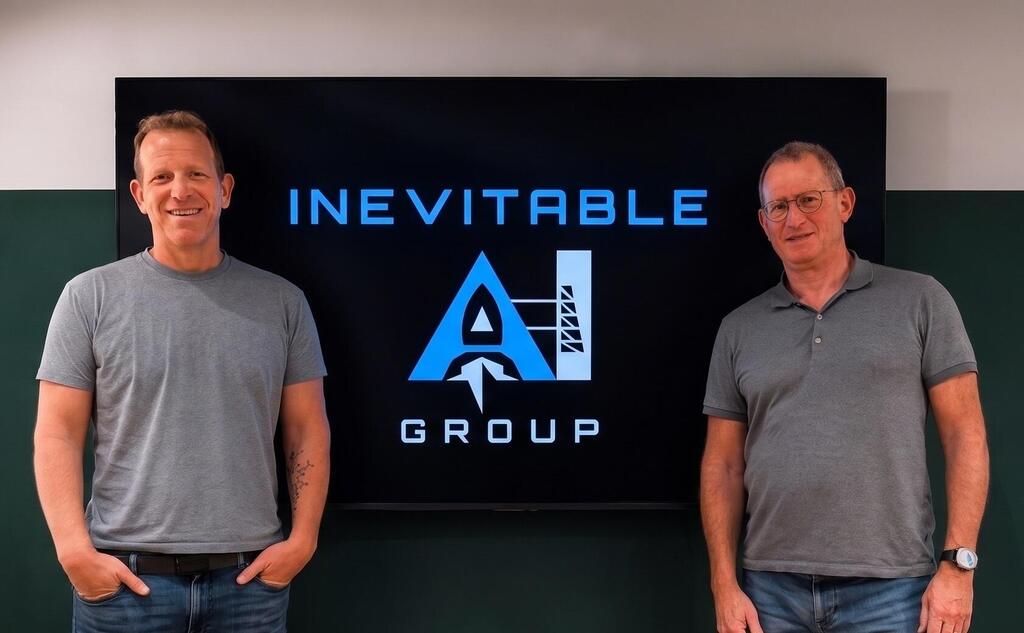
Lehavi and Bar-Or previously worked together at Simplex, the payments fraud prevention company acquired by Nuvei for $300 million. Lehavi was Simplex's co-founder and CEO, while Bar-Or served as COO. Earlier in his career, Bar-Or co-founded ParallelM, an MLOps company acquired by DataRobot, and UCnGO, which was acquired by Emblaze. A graduate of Israel's Talpiot military program, he also spent seven years working on Israel's space program.
Instead of building a single startup, IAIG operates as a venture studio, partnering with entrepreneurs to launch AI-native software companies in proven SaaS markets where customer demand already exists. The studio provides entrepreneurs with product development, go-to-market, operational and growth infrastructure, aiming to launch enterprise software products within weeks rather than years.
The company's thesis is that artificial intelligence has dramatically reduced the cost and complexity of building software, allowing small teams to reach feature parity with established products while operating with significantly leaner organizations.
At the heart of IAIG's strategy is the belief that much of today's SaaS industry was designed for an era when humans manually navigated dashboards, forms and workflows. While incumbent software companies are racing to add AI capabilities to legacy platforms, IAIG argues that many remain constrained by years of accumulated technical debt, complex architectures and operating models built for a different technological era.
By contrast, AI-native companies can automate much of the software development and operational process while delivering enterprise-grade products at lower cost and higher speed.
Founded in January 2026, IAIG says it has already launched five ventures and expects to establish dozens more by the end of the year. The company focuses on software categories where AI can materially improve efficiency, accessibility or pricing.
"We believe AI is changing the foundations of how software businesses are built, marketed, grow and exit," said Lehavi.
"Many of today's software companies were designed for a different technological era. We see an opportunity to build a new generation of companies that can move faster, operate more efficiently and deliver greater value to customers."
Bar-Or said AI is fundamentally changing what it takes to build a startup.
"The biggest challenge in startups has always been finding something the market truly needs and then executing well," he said. "AI is dramatically reducing the barriers to execution, allowing entrepreneurs to spend more time solving meaningful problems and less time navigating the complexity of software development."



