









Amazon's $7.5 billion Decart deal exposes the growing price of AI talent
The acquisition reflects Amazon's determination to challenge Nvidia in the AI chip market, but it also highlights the increasingly common practice of buying technology and hiring founders rather than acquiring entire companies.
The sale of Decart to Amazon almost got lost on Monday amid a flurry of surprising headlines that marked the start of the week. There was the dramatic return of Jensen Huang to the CEO's chair at Nvidia, with the active involvement of President Donald Trump; a massive $44 billion deal for CrowdStrike to acquire Zscaler; and a day of extraordinary gains on Wall Street. And that was before even considering the turmoil surrounding the formation of a government in Israel and rising tensions with Iran. Adding to the confusion was the ongoing saga surrounding Decart's sale, which began in August with an exclusive report in Calcalist about talks to sell the startup.
Yet the significance of this unusual deal should not be overlooked. It is the first major AI-related transaction to emerge from Israel, and Decart is, to date, the only Israeli startup to have developed its own proprietary language model, earning a place on every major list of significant AI startups. The deal also marks Amazon's largest acquisition in Israel to date. At a reported $7.5 billion, it ranks as the fifth-largest exit in Israeli history, behind Wiz, CyberArk, Mobileye and Armis, and is slightly larger than the valuation of Mellanox when it was sold to Nvidia.
1 View gallery
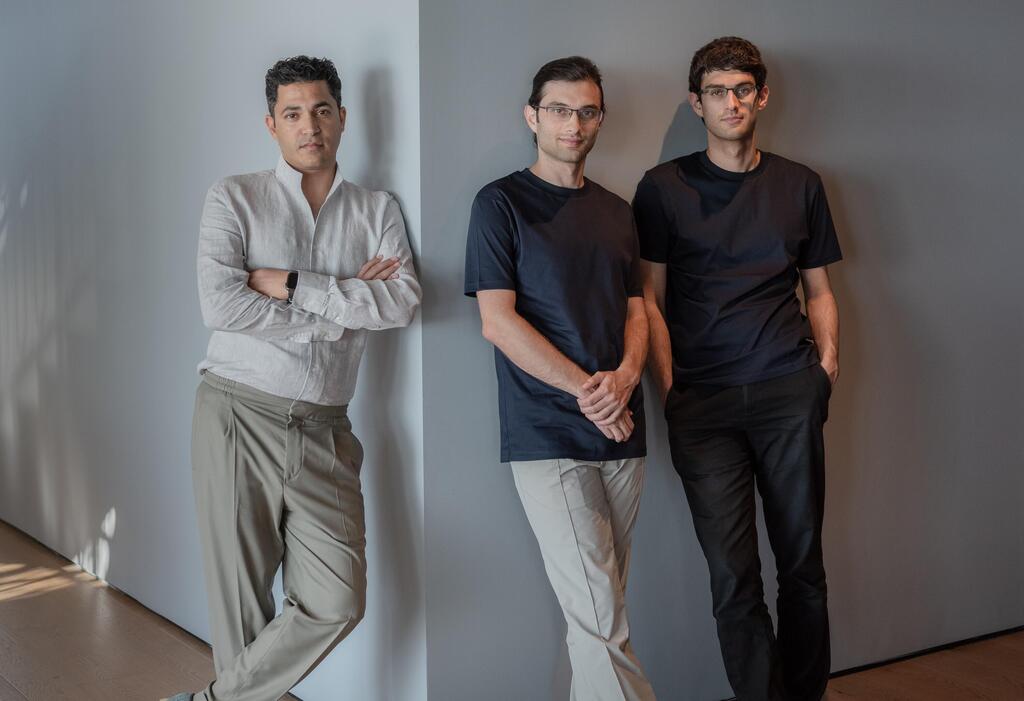
Decart founders Orian Leitersdorf (from right), Dean Leitersdorf and Moshe Shalev.
(Amit Elkayam)
And speaking of Nvidia, the timing of Amazon's announcement could hardly have been more symbolic. The Decart deal was announced on Monday, just before trading resumed on Wall Street, almost simultaneously with the dramatic news that Nvidia's board had reinstated Jensen Huang as CEO. While Amazon's acquisition of the Israeli startup, reportedly valued at $7.5 billion in cash and stock, would likely have proceeded regardless, it is possible that Amazon was even more eager to complete the deal now following Huang’s departure.
Nvidia is a central part of the rationale behind Amazon's decision to spend such a substantial sum on Decart. The price represents a major outlay for a company known for its reluctance to pursue large-scale acquisitions and its preference for smaller deals. But Amazon has identified an opportunity to intensify its competition with Nvidia in the AI chip market. The company believes its Trainium 3 chip can challenge the GPUs that currently dominate more than 80% of the market. Amazon already uses Trainium chips in its own data centers, and about a month ago CEO Andy Jassy said the company intends to begin selling its chips to external customers by late 2027.
Decart is only three years old and does not yet have a fully developed commercial product, but it has assembled a team of several dozen AI specialists led by three technically accomplished founders: Dean and Orian Leitersdorf and Moshe Shalev. They developed the Decart Optimization Stack, a technology designed to extract substantially more computing power from chips, potentially making alternatives to Nvidia's expensive GPUs more competitive. Computing costs have become one of the biggest bottlenecks in the AI boom. They are also central to Nvidia's enormous profits and have driven startups and technology giants including Google, AMD and Broadcom to race to develop more efficient chips and systems for AI applications.
But Nvidia's presence looms over the Amazon deal in ways that go beyond direct competition. Huang's swift reinstatement, despite the serious conduct issues that have surrounded him and which he has acknowledged, sends a stark message to the business world: money comes first, while other considerations, including questions of morality and ethics, can take a back seat. When the commercial stakes are high enough, companies may decide that enforcing ethical standards is simply too costly.
The question of how companies structure acquisitions also raises a broader issue that might initially appear technical: why is Amazon acquiring Decart's technology and workforce rather than the company itself? Amazon did not invent this approach. It has become increasingly common in recent years, particularly in the AI industry, and can reduce the need for regulatory scrutiny. An acquisition of an entire company may require approval from competition authorities, while a deal to acquire technology and hire its employees can sometimes avoid the same level of review.
Such transactions have proliferated over the past two years, often justified by the argument that success in AI requires speed and that companies cannot afford to wait for lengthy regulatory processes. Amazon said this week that it expects to complete the Decart transaction within 50 days, an unusually short period for a deal of this scale. The company has already used similar arrangements, acquiring the teams and technology of Adept and Covariant in 2024. Other prominent examples include Google's $2.4 billion deal for the technology and founding team of Windsurf in 2025, its arrangement with Character.AI in 2024, and Microsoft's deal with Inflection AI that same year. Nvidia, too, belongs on the list, having acquired technology from Groq along with its founder.
In the United States, the Federal Trade Commission was reported to have begun examining such arrangements earlier this year, amid concerns that companies may be using them to circumvent merger regulations. The strategy does not always work as intended: founders and employees who join a buyer may eventually leave. Amazon appears to have taken that risk into account.
The full structure of the Decart deal and its payment schedule will only become clear when the transaction closes, which is expected in about a month and a half. But according to information obtained by Calcalist, considerable effort has gone into securing the founders' continued involvement. They are committed to remaining at Amazon for five years, rather than the more typical two or three, with much of their cash compensation due toward the end of that period. Upon closing, they are expected to receive primarily shares, giving them a financial incentive to help develop the technology and increase the value of Amazon stock.
Speaking of rewards, it is difficult to overlook the fact that the former commander of Unit 8200, the IDF's primary signals intelligence unit, has also found a lucrative new opportunity in the private sector. Yossi Sariel, who led the unit during the October 7 attack, has faced no public consequences for the intelligence failure that occurred on his watch. Instead, he stands to benefit financially from Decart's sale, having joined the startup after leaving the military and bringing with him the connections and experience he accumulated during his service.
Sariel led Unit 8200 from 2021 to 2025. He was the commander of both Leitersdorf and Shalev, who first met in the corridors of the intelligence unit. When he left the IDF last year, he was also released from reserve duty, in a special decision by Chief of Staff Eyal Zamir in light of his command responsibility. Even before his departure, Sariel's identity, which was supposed to remain classified, had been exposed after he published an e-book about artificial intelligence. In what the IDF Spokesperson's Unit described as a "glitch," the digital trail left by the book led directly to one of Sariel's private Google accounts.
None of this prevented Sariel from joining Decart in early 2026. He reportedly came on board without a clearly defined title, serving instead as an adviser to the founders. According to sources close to the company, he took part in negotiations with both Anthropic and Amazon and attended many of the key meetings.
The episode raises an uncomfortable question about the value attached to senior intelligence credentials in the technology industry. Sariel's former position appears to have given him access to some of the most important figures in the global AI business, despite the questions surrounding his record in public service. In Huang's case, the board's decision to bring him back was followed by a surge in Nvidia's market value. In Sariel's case, the Decart deal could translate his military connections into a substantial personal financial reward.



