









Nikesh Arora says Palo Alto buys companies to turn $200 million bets into $10 billion assets
The CEO has laid out an unusually candid account of his acquisition strategy ahead of the company’s quarterly results, explaining why he pays premium prices, targets category leaders and insists on keeping founders involved. Palo Alto is reportedly negotiating to acquire Israeli startups Beacon Security and Clutch Security.
Palo Alto Networks reports quarterly results on Wednesday, and its CEO has recently set out, in unusual detail, how he buys companies.
"M&A is not a strategy," Nikesh Arora recently said in an interview with David Senra. He said he buys when he decides he needs to win a category and doesn't have the team for it. On pricing, he said the same company would have cost a third to a quarter as much three years ago, but "you buy them if it makes sense on your strategy." Then he put a number on it: "If something's worth $200 million, it's worth $800 million," because his job is to turn it into an asset worth $5 billion to $10 billion. At $300 billion, he said, Palo Alto "should be buying things which I believe in the next 5 to 10 years will be worth 5 to 10 billion for us."
He said he buys only companies that are first or second in their category, because those two "end up with disproportionate share of the profits," and put the number of companies Palo Alto has bought at 35, adding that "not everything works out."
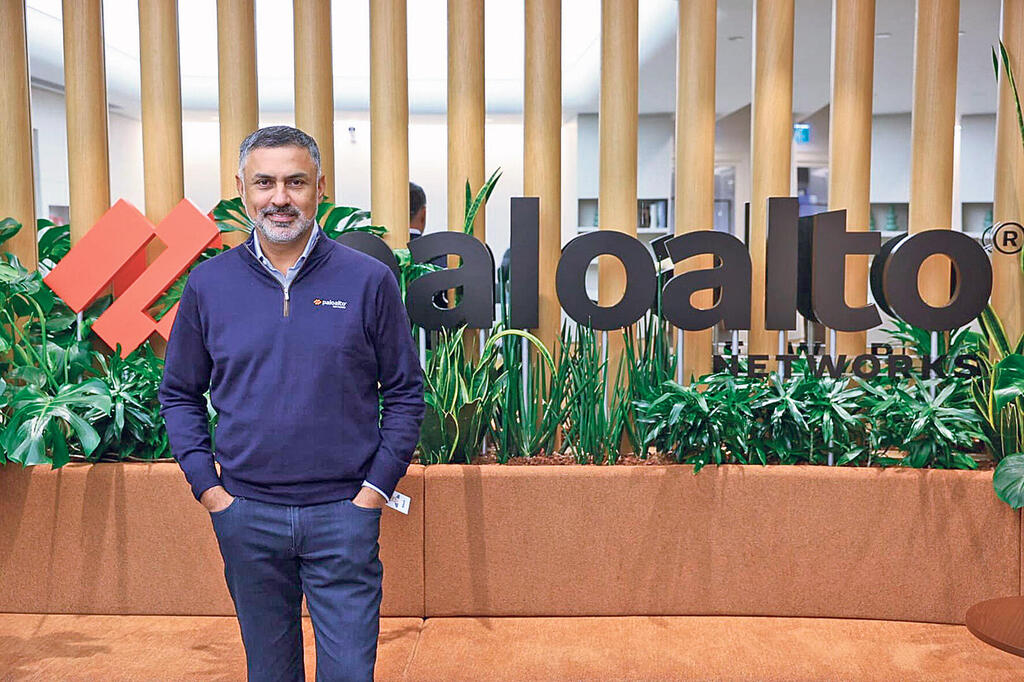
He also described a process built around founders. He said he negotiates the deal directly with the founder, without bankers, and then gives the founder 30 days to agree a joint product roadmap before he signs a definitive agreement. Palo Alto walked away from two deals at that stage, he said. After closing, he said, "we revest the founders for 3 years, ideally four," because "you're buying a team," and engineering founders rarely leave, while those who handled business development or sales tend to fall away. When an acquired founder takes over a product area, he said, existing Palo Alto managers in that area sometimes "wind up leaving or whatever. But it doesn't matter."
Palo Alto reports its fiscal first-quarter results after the U.S. market closes on Wednesday. Analysts expect revenue of about $3.31 billion and non-GAAP earnings of $0.97 a share. The company has a history of pairing results with deals. A year ago, in the same release as its fiscal first-quarter results, it announced a definitive agreement to buy the observability company Chronosphere. Whether it will announce anything this time is unknown.
CTech reported last week that Palo Alto is in negotiations to acquire Israeli startups Clutch Security and Beacon Security. Clutch, which secures the credentials AI agents use, would reportedly cost about $500 million in cash plus milestone-based payments, according to TechCrunch, against annual recurring revenue approaching $10 million. Beacon, founded in 2024, raised a $13 million Seed round in July and says its recurring revenue grew more than 300% in the first half of the year. Its investors include the founders of Talon, Dig Security and Cider Security, three Israeli startups Palo Alto bought. Palo Alto has not commented.
The deals would extend a long Israeli record. By CTech's count Palo Alto has bought 12 Israeli startups since 2014, from Cyvera ($200 million) and Demisto ($560 million) to Talon ($625 million) and Koi ($400 million, completed in April). CyberArk, at about $25 billion, closed in February, and Arora said last year it was his "number one choice" out of more than 300 companies he had looked at. Palo Alto employed about 1,600 people in Israel before CyberArk, which added roughly 1,000.



