










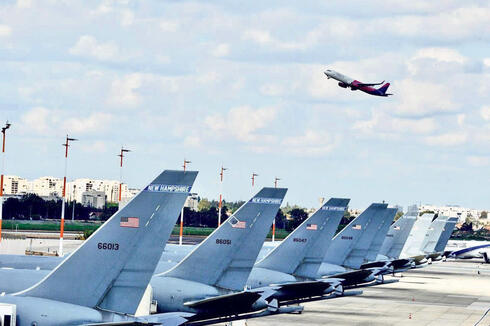
U.S. military planes threaten to squeeze Ben Gurion Airport as Iran tensions rise
The arrival of American refueling aircraft has raised concerns over parking shortages, flight disruptions and potential cancellations as Israel’s main airport enters its busiest summer period.
Last week, a dispute erupted at Ben Gurion Airport after the U.S. military began returning aerial refueling aircraft to the airport, occupying parking areas and creating concerns that the move could disrupt commercial aviation and force the cancellation of thousands of flight tickets.
Transportation Minister Miri Regev instructed the Israel Airports Authority (IAA) to prevent additional U.S. refueling aircraft from parking at Ben Gurion Airport. The directive was later withdrawn following intervention by Prime Minister Benjamin Netanyahu, but the sides reached an agreement that by Tuesday, July 21, only 20 refueling aircraft would remain at the airport, in line with the original understanding reached with the U.S. military.
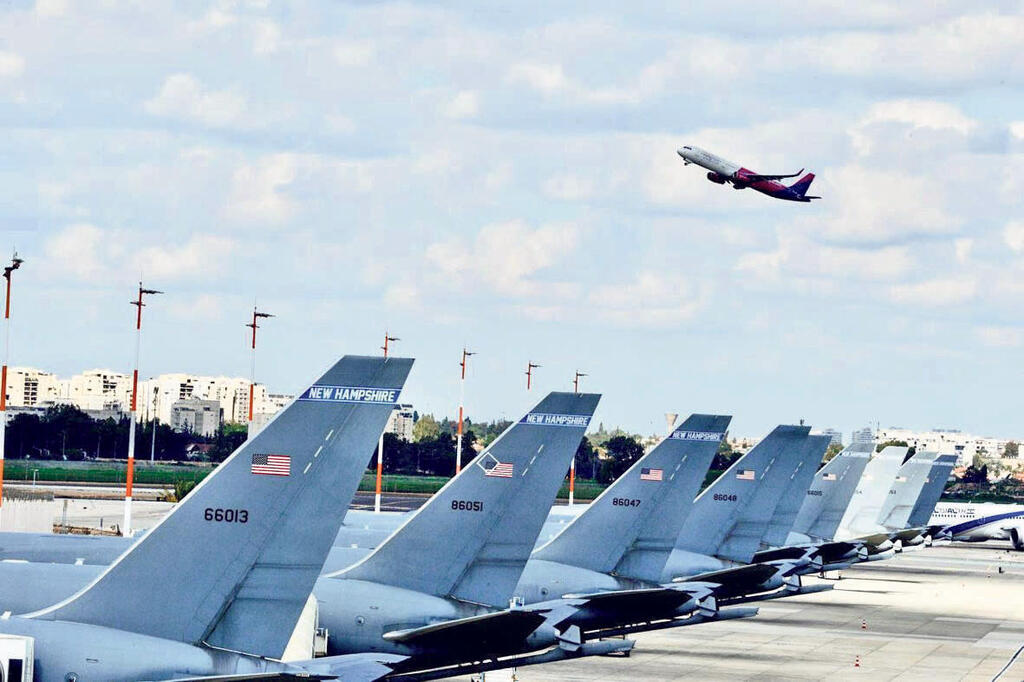
However, as security tensions in the region rise following renewed fighting between the United States and Iran, concerns are growing that Washington could again request additional parking capacity at Israel’s main international airport.
The potential disruption comes at a sensitive time for Israeli aviation. Around 90,000 passengers passed through Ben Gurion Airport last Thursday, and a similar number are expected this coming Thursday. With passenger traffic expected to rise further during the summer vacation period, additional military aircraft occupying airport infrastructure could create significant operational challenges and potentially lead to flight cancellations.
The renewed tensions in the region follow the collapse of diplomatic understandings and the escalation of U.S. military operations against Iran. After a prolonged campaign of American strikes targeting infrastructure, bridges and logistics systems in Iran, Tehran responded with ballistic missile attacks and drone launches against U.S. bases and strategic targets across the Gulf region and neighboring countries.
In Jordan, two U.S. soldiers were killed after a direct strike on a military base. In Kuwait, where airport operations were temporarily suspended, attacks damaged power and desalination facilities, causing fires and significant damage. In Bahrain, multiple alerts were triggered following an attack targeting a base of the U.S. Fifth Fleet, while missiles were intercepted over Qatar and Saudi Arabia. The escalation prompted Washington to issue an urgent travel warning covering countries across the region, including Israel, over concerns of further Iranian retaliation.
According to the understandings between the U.S. military and the Transportation Ministry, the evacuation of the refueling aircraft from Ben Gurion Airport is expected to be completed by July 22. The aircraft will then be transferred to airfields at Israel Defense Forces bases designated by the Defense Ministry.
Some aircraft have already been moved, and currently around 30 refueling planes are parked at Ben Gurion Airport on average. The number fluctuates as aircraft rotate through the airport to receive ground support and refueling services.
The Israel Airports Authority has warned that the airport can accommodate the presence of up to 20 refueling aircraft without significant disruption. Beyond that threshold, the impact could become more severe and potentially result in flight cancellations.
The military aircraft are already affecting operations because they receive priority for takeoffs and landings, potentially creating delays for commercial flights.
The pressure is expected to increase as passenger traffic rises. During the first week of June, Ben Gurion Airport handled around 360-390 flights per day, compared with 480-520 flights per day during the first week of July. August is expected to bring even higher traffic volumes, increasing the risk that additional military aircraft could interfere with civilian aviation.
Regev has conveyed a message to the Defense Cabinet that Ben Gurion Airport cannot become the default destination for U.S. military aircraft and that alternative locations must be considered. She has argued that, absent an urgent national security need, refueling aircraft should be stationed at IDF air bases rather than Israel’s main civilian airport.
However, the U.S. military has expressed a preference for Ben Gurion Airport because of its proximity to Tel Aviv and the logistical advantages it provides for personnel operating in Israel.
As regional tensions continue to escalate, Regev is expected to continue pressing the issue. But if the U.S. military requires additional aircraft support for operations in the Middle East, the government may again face a difficult choice between accommodating Washington’s operational needs and protecting the stability of Israel’s civilian aviation system.



