










VC Survey 2026
"Fund managers will need to recalibrate expectations and develop patience"
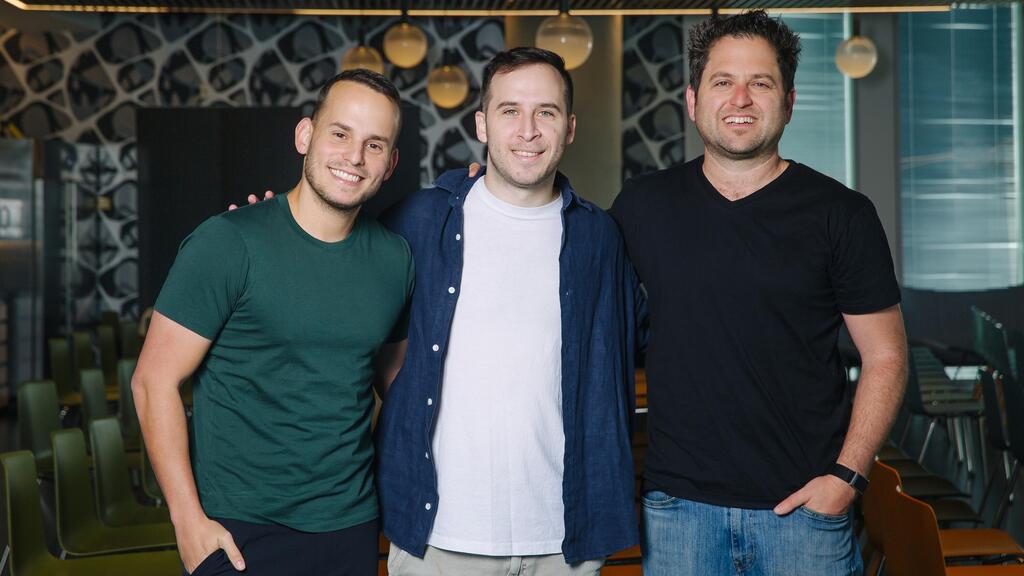
Fusion founding partner Guy Katsovich joins CTech as part of the VC Survey 2026: The Next Leap, to discuss his outlook for the coming year, including liquidity trends, global investor perceptions and expectations, and the maturing Israeli tech ecosystem.
Guy Katsovich
(Video: Orel Cohen)


One of the “real challenges” facing venture capital, says Guy Katsovich, founding partner of Fusion, lies in culture and mindset. “In an era where AI-native companies can reach hundreds of millions of dollars in revenue within one or two years of inception, fund managers and their LPs will need to recalibrate expectations and develop patience for sectors where profitability often arrives only after many years of development and sufficient market maturity,” he says.
Following the turbulence of recent years and the stabilization of 2025, the Israeli tech ecosystem is entering a new era: The Next Leap. Katsovich joined CTech to share insights for its VC Survey 2026, which invites prominent investors to discuss the topics, trends, and “leaps” expected in the year ahead.
In Israel, Katsovich predicts that “the combination of innovation, resilience, and the industry’s structural maturation over recent years will continue to define the narrative.” He adds: “Foreign investors do not invest in Israel solely because of resilience, but because of the underlying attractiveness of the Israeli technology asset class.”
You can read the entire interview below:
Fund ID
Name of Fund: Fusion
Total Assets Under Management (AUM): $30M
Partners/Managers: Yair Vardi, Guy Katsovich (Founding Partners), Amit Shecther (Principal)
Notable Portfolio Companies (Active): Agora, ScaleOps, Base.ai, Hoopo, Accense, Samplead, Singit, Obol, Newlight, iBrick, The Real Cereal Company, and more
Notable Exits: Innplay Labs ($300M), DigitalOwl ($200M), Novacy (by Lusha), Spetz (by Paradox)
The Liquidity Leap: After a period defined by cash preservation, will 2026 see the reopening of the IPO window for Israeli tech, or will M&A remain the sole viable liquidity event?
I believe the answer is both. We have already seen meaningful Israeli companies go public this year (such as eToro), and this trend is likely to continue. At the same time, as Israeli technology companies raise capital at increasingly higher valuations, the pool of potential acquirers naturally narrows. As a result, we are seeing more PE-style acquisitions, similar to what we saw with Armis prior to its strategic acquisition by ServiceNow.
The Global Leap: How is the 'Israeli Tech' asset class being rebranded to global LPs in 2026? Are we shifting the narrative from 'Innovation' to 'Extreme Resilience'?
Foreign investors do not invest in Israel solely because of resilience, but because of the underlying attractiveness of the Israeli technology asset class. Over the past few years, the ecosystem has undergone a significant leap forward, with dozens of companies surpassing the $100M revenue mark, alongside exits and IPOs at unprecedented scale. This success cascades down the stack, enabling promising early-stage companies to raise substantial capital from day one. The combination of innovation, resilience, and the industry’s structural maturation over recent years will continue to define the narrative.
The Deep Tech Leap: With the rising focus on hardware-heavy sectors (Defense, Climate, Quantum), is the Israeli VC model adapted to fund high-CAPEX ventures?
The VC model itself is not the problem. Funds are already extending their average lifecycle, with data showing a shift from the traditional 8-10 years toward 12 years, and in some cases even 13-15 years. The real challenge lies in culture and mindset. In an era where AI-native companies can reach hundreds of millions of dollars in revenue within one or two years of inception, fund managers and their LPs will need to recalibrate expectations and develop patience for sectors where profitability often arrives only after many years of development and sufficient market maturity. In this sense, some Israeli investors – and their LPs – will need to adapt.
The Efficiency Leap: In the era of AI-driven hyper-productivity, is the traditional correlation between 'Headcount Growth' and 'Company Success' permanently broken?
Yes. This is, once again, a mindset shift. In many software companies building off-the-shelf products without deep technological moats, the emphasis is moving toward go-to-market execution, operational excellence, and the ability to build companies that not only grow quickly, but also operate in a fundamentally healthy and sustainable way.
The Next Engine: Cybersecurity has been Israel's primary export engine for a decade. Which domain is best positioned to take the lead by 2030?
Cybersecurity will remain a leading sector, alongside AI and quantum. I also hope to see deep tech and vertical software play a more central role. It is also worth highlighting consumer, gaming, and media – areas where Israel has historically produced category-defining global companies that have not always received the exposure they deserve.
Finally, what are 2-3 startups that, in your opinion, are likely to make a leap forward in 2026?
Agora & ScaleOps (portfolio companies) are going to keep growing and raise successful funding rounds.



