












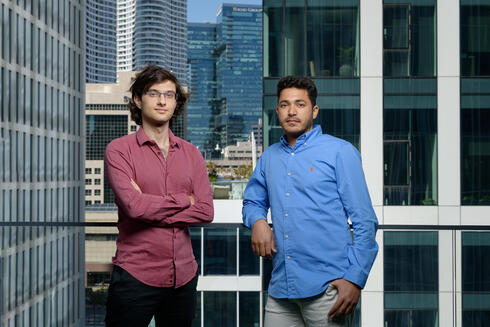
Top 50 Most Promising Startups
Even amid war, Israeli startups keep scaling at record pace
Last year's "50 Most Promising Startups" have met great expectations, raising hundreds of millions, becoming unicorns, or being sold successfully.
Since last Independence Day, Israel has remained in a prolonged period of conflict, yet its high-tech sector has continued to demonstrate resilience. The industry has recorded new funding highs, three major acquisitions of Israeli cyber companies - Wiz, CyberArk, and Armis - for a combined value of more than $60 billion, and the continued emergence of new startups, particularly in cyber and artificial intelligence. Calcalist’s “50 Most Promising Startups” list has also reflected this momentum, with significant fundraising rounds and exits across its 2025 cohort.
Topping last year’s list was AI company Decart, then still relatively unknown. The company was founded by Dr. Dean Leitersdorf and Moshe Shalev, the former a Technion PhD and AI optimization specialist, the latter an alumnus of Unit 8200 with an unusual background in the Haredi community.
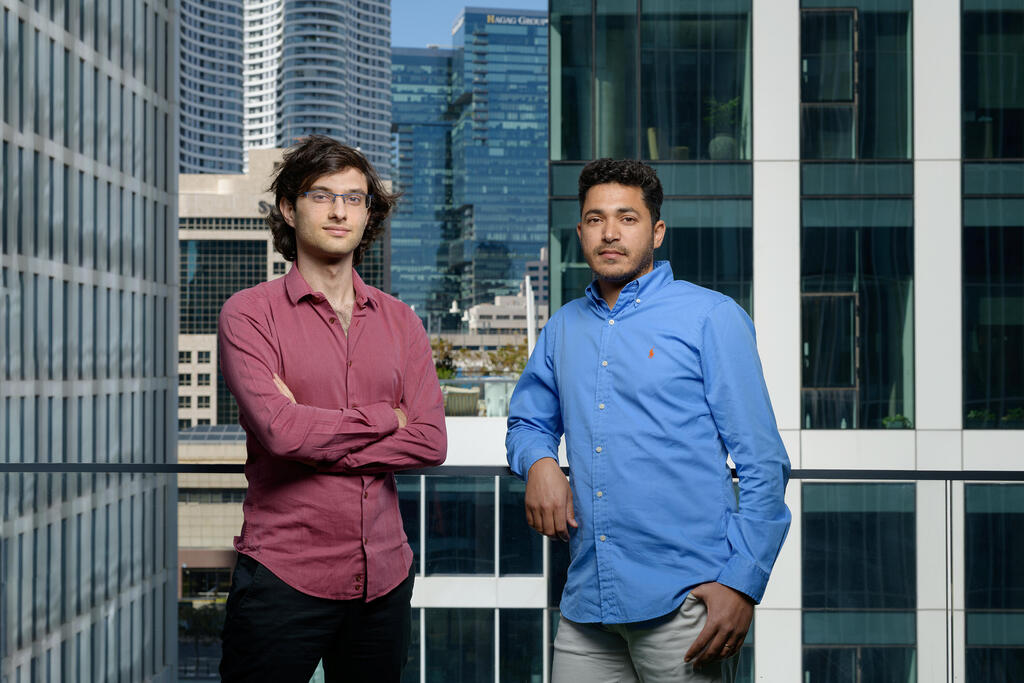
Since its selection, Decart has raised $100 million at a valuation of $3.1 billion, backed by existing investors Sequoia Capital, Benchmark, and Zeev Ventures, alongside Aleph and senior industry angels. The company is now preparing for a significantly larger round potentially in the hundreds of millions, at a much higher valuation, with expectations that Nvidia could also participate.
Decart developed a real-time video generation model that initially ran on Nvidia GPUs. Last summer, Amazon representatives approached Leitersdorf at a conference and suggested testing the company’s model on their new chip. The experiment succeeded. Weeks later, Decart was invited to present at Amazon’s annual re:Invent conference in the United States, a stage typically reserved for far more mature industry players.
Since the outbreak of the Russia-Ukraine war, defense tech has become one of the fastest-growing sectors, a trend that intensified after October 7 and the subsequent regional conflicts involving Iran. The intersection of software innovation and military systems has produced a new generation of startups, among them Kela, which ranked sixth on the 2025 list despite being founded only in July 2024 and employing just 25 people. The company was founded by Hamutal Meridor, Alon Dror, Jason Manne, and Omer Bar-Ilan.
In May, Kela raised $60 million, following an earlier $28 million round, from Sequoia, Lux Capital, and the CIA-backed investment arm In-Q-Tel. The company has built an open platform enabling Western militaries to rapidly and securely integrate commercial technologies into defense systems. Its platform aggregates data from multiple sources, processes it in real time, and presents it through a unified command interface, allowing control across connected systems without requiring major changes to legacy infrastructure.
Cybersecurity remains one of the most active areas for venture capital. One standout is Zafran, ranked 12th on the 2025 list, which has since raised an additional $60 million. The round was led by Menlo Ventures, with participation from Sequoia Capital, Cyberstarts, PSP Partners, Vintage Investment Partners, and Knollwood.
Founded in 2022 by CEO Sanaz Yashar, CTO Ben Seri, and CPO Snir Havdala, Zafran’s platform enables organizations to neutralize security vulnerabilities across enterprise environments and prepare for AI-driven threats.
2 View gallery

Zafran CEO Sanaz Yashar speaking at a New York CTech conference.
(Photo: Elad Gershgoren)
Two other cyber companies, Torq and Upwind, ranked 19th and 20th respectively, also raised significant capital. Torq, which develops a platform for centralizing security operations, raised $140 million at a valuation of $1.2 billion in a round led by Merlin Ventures, focused on U.S. federal markets. Upwind raised $250 million at a valuation above $1 billion, led by Bessemer Venture Partners and Insight Partners.
Vega, ranked 35th, raised an additional $120 million, bringing its total funding to $185 million.
In 2025, major cybersecurity companies increasingly sought AI-native capabilities. One of the standout startups was Prompt Security, ranked 14th on the list. Founded just two years earlier by former Check Point executives Itamar Golan and Lior Drihem, the company had raised only $23 million.
Prompt Security’s platform monitors all interactions between AI tools and enterprise environments, including employees, browsers, applications, and model inputs and outputs. After attracting interest from multiple acquirers, the company was ultimately acquired by cyber firm SentinelOne in a cash-and-stock deal valued at approximately $250 million.
The medical devices sector continues to produce notable exits, particularly in stents, though ophthalmology remains a more challenging field due to clinical complexity and high capital requirements. Despite this, ForSight Robotics ranked 16th on last year’s list and raised $125 million in June 2025.
The company developed the ORYOM platform, a robotic system designed for cataract and other eye surgeries, aimed at improving precision, expanding access to care, and reducing surgeon workload.



