













Top 50 Most Promising Startups
The 50 most promising Israeli startups - 2026
Now in its 17th year, Calcalist and CTech’s Top 50 list showcases Israel’s most promising private tech companies, selected with input from leading investors, entrepreneurs, and industry advisors, and curated by the publication’s editorial team, reflecting the sector’s shift toward AI-native platforms, deep tech, and scalable, revenue-driven innovation.
Israel’s technology sector in 2026 is entering a more focused phase. After years defined by rapid growth and heavy funding, attention is shifting toward companies building core systems and addressing complex, real-world challenges.
Calcalist and CTech's 50 most promising startups list this year reflects that change. Artificial intelligence remains central, but many startups are now focused on the infrastructure around it - securing models, managing computing resources and enabling large-scale deployment. Alongside them are deeper technological bets, including quantum computing, advanced chips and autonomous systems, as well as companies applying AI across industries such as healthcare, finance and gaming.

Cybersecurity continues to play a key role, evolving to address risks created by AI and increasingly complex cloud environments. Defense technologies are also gaining prominence, shaped by rising geopolitical demand.
At the same time, startups are being built differently. Teams are often smaller, revenue is a priority earlier on, and companies are targeting specific, high-value problems rather than broad markets.
Together, the 50 startups on this year’s list point to a clear direction: a more disciplined ecosystem, focused on building the technologies that others depend on.
1. Irregular
Sector: AI| Established: 2023| Founders: Dan Lahav, Omer Nevo | Employees: 40 | Funding: $$80 million from Sequoia, Swish, Red Point, Assaf Rapaport, Ofir Ehrlich and others
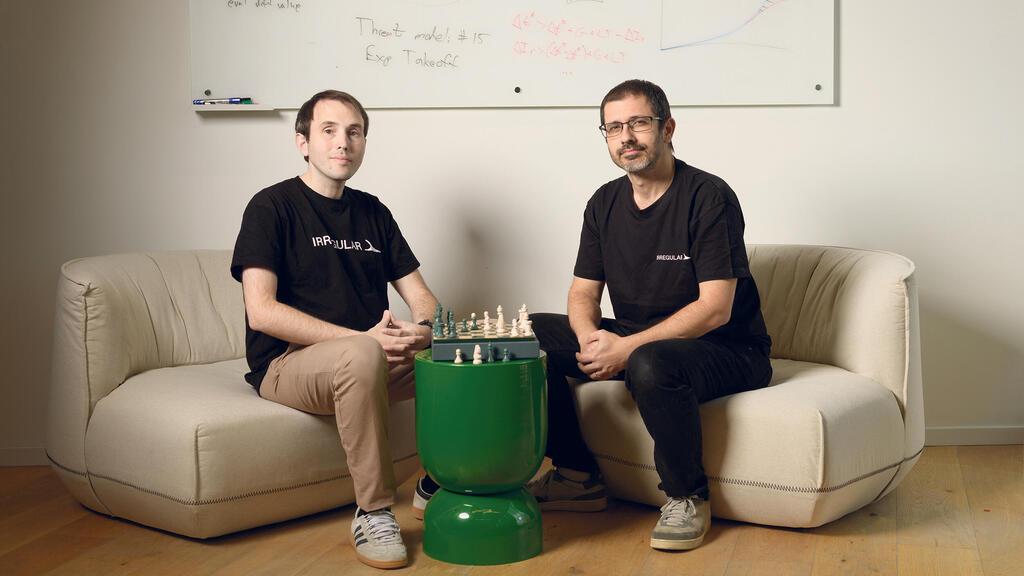
“Our ambitions are huge. We know we are irregular in the landscape, hence the company’s name, but at the same time, we find ourselves sitting in conference rooms with the biggest AI players, and our contract with Anthropic bears the signature of founder Dario Amodei,” say Dan Lahav and Omer Nevo, founders of the startup Irregular, which they describe as “the world’s only security lab for advanced artificial intelligence.”
According to Lahav, the CEO, and Nevo, the CTO, “an extraordinary business opportunity has emerged to build a powerhouse focused on model control. After Anthropic executives told us, ‘You are worth the two hours a week that we spend with you,’ we realized the scale of the opportunity. That’s why we decided to raise capital, even though we unexpectedly became profitable in 2025.”
If Irregular’s plans come to fruition, many of today’s cybersecurity companies could become obsolete. The company is already working not only with Anthropic, but also with Google and OpenAI, as well as with governments, including the British government. Irregular is building tools that allow clients to assess how advanced AI models behave under threat and to develop methods to reduce risk.
For now, the signs suggest that Irregular is gaining traction. The funding Lahav and Nevo refer to, announced in September 2025, consisted of two rounds completed within weeks. The first round saw Sequoia Capital invest $30 million, followed by a second round of about $50 million, in which Sequoia participated again alongside Redpoint Ventures, Omri Caspi’s Swish Ventures, and several Israeli angel investors, including Wiz founder Assaf Rappaport and Ofir Ehrlich of Eon. Since then, the founders say, the company has been receiving constant inbound interest from investors. “We get proposals for funding every day, non-stop, and at times it’s no longer pleasant.”
2. Unframe
Sector: Enterprise software to support the transition to AI | Established: 2024 | Founders: Shay Levi, Larissa Schneider, Adi Azarya | Employees: 120, of which about 60 are in Israel | Funding: $50 million in two rounds from Cerca, Third Point, Bessemer, TLV Partners, Craft Ventures, and others

Unframe’s model is built on a paradox. On one side are social media voices describing how individuals can now build products that, until recently, only large software companies could develop, fueling anxiety among Wall Street investors, who rush to sell shares in traditional software firms. On the other side is reality. A recent MIT study found that 95% of independent AI-driven projects fail when organizations attempt to implement them. In other words, the grand promises often collapse in the face of security issues, bugs, conflicts between different agents, and other challenges.
Unframe steps into this gap by offering organizations across industries the ability to build AI agent-based solutions tailored to their needs. The company commits to delivering a solution within just one week after completing the problem characterization process and guarantees that customers will only be charged if they are satisfied with the result. At present, however, there are no clearly defined criteria for what constitutes “satisfaction.”
“Despite all the noise in the software industry, large organizations struggle to adopt artificial intelligence technologies and extract real value from them. Although countless agents have been built, few have actually solved problems because they were not accurate or reliable enough, or because they failed to cover entire business processes. What remains is often a pile of useless tools,” explains Shay Levi, co-founder and CEO of Unframe.
3. AIR
Sector: Aviation | Established: 2018 | Founders: Rani Plaut, Chen Rosen, Netanel Goldberg | Employees: 70, including 7 in the United States | Funding: $50 million from Entree Capital, Shmuel Harlap, and others
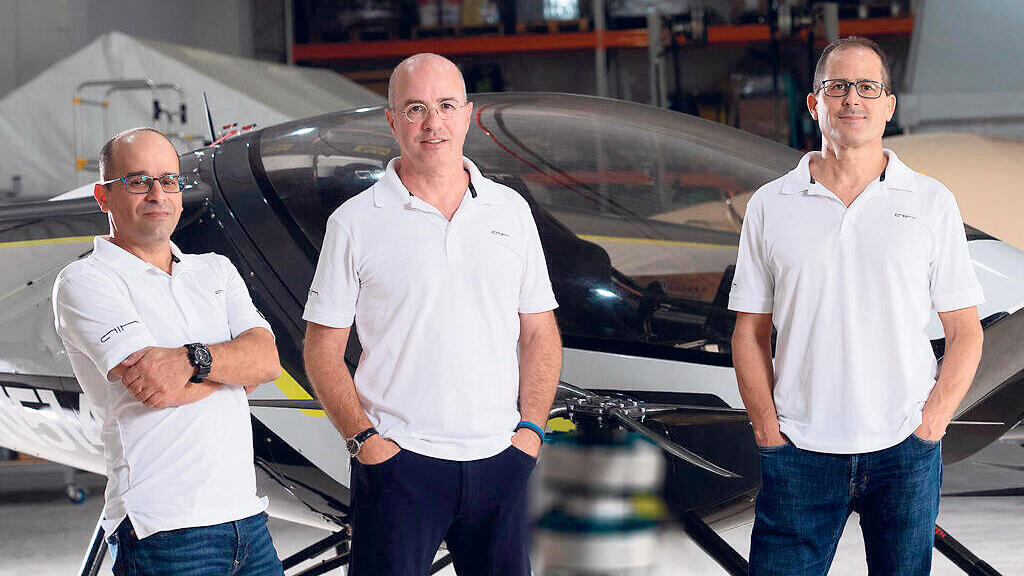
In the modern world of technology, the term “disruption” is thrown around far too often, usually in the context of delivery apps or fintech tools. It is rare to come across a company that truly disrupts the established rules of the game, and AIR, which emerged in Kfar Yona in the Sharon region, is aiming to do just that.
AIR isn’t just building aircraft; it is creating a new category in the transportation industry, personal aircraft that almost anyone can fly themselves. With a billion-dollar order backlog and fresh approval from the US Federal Aviation Administration (FAA), it is positioning itself at the forefront of the electric revolution in the skies and is already being called “the Tesla of the skies.”
While most eVTOL (electric vertical take-off and landing) aircraft companies focus on “flying taxi” projects, AIR has chosen a markedly different and bolder path: personal aviation that is cheaper and more accessible to the masses. The aircraft the company is building, AIR ONE, is capable of reaching speeds of 250 km/h with a flight range of about 160 km on a single charge. Unlike traditional light aircraft, which require significant skill to operate, it is equipped with software that prevents the pilot from performing dangerous maneuvers, simplifying the process of obtaining a flight license and significantly lowering the barrier to entry.
The FAA recently granted the company’s prototype a Light Sport Aircraft certification, paving the way for production models to be licensed. AIR is expected to deliver its first aircraft to customers later this year; it already has a waiting list of 3,300 people willing to pay about $500,000 per unit. The company plans to produce dozens of aircraft by 2027 and thousands in the years that follow. To finance the transition to mass production, AIR raised $30 million in its latest funding round and will also rely on existing revenues of about $35 million annually from supplying unmanned AIR Cargo models to the logistics and defense sectors.
4. ZyG
Sector: AI for e-commerce | Established: 2025 | Founders: Omer Kaplan, Assaf Ben Ami, Nadav Ashkenazy, Tomer Bar-Zeev, Daniel Shinar, Dr. Eyal Amitt, Omri Steinmetz, Guy Tsur | Employees: Approximately 65 | Funding: $Approximately $58 million from Bessemer Venture Partners, Viola Ventures, Lightspeed Venture Partners, Stardom Ventures, Access Industries (ClalTech), Emerge, Disruptive AI, Jibe Ventures
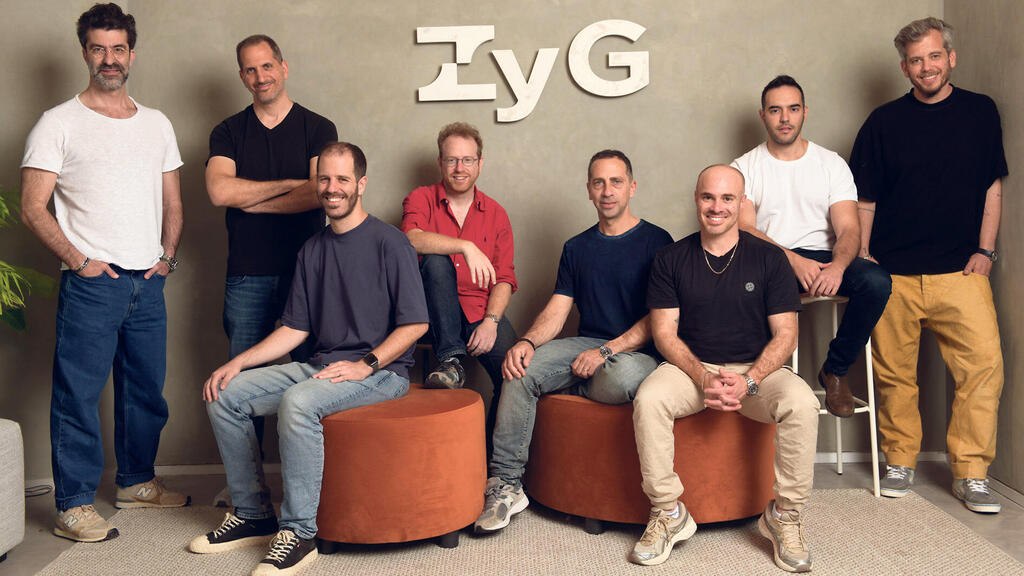
The founders of ironSource have already built a technology giant that sold for billions, but now they, along with several other founders, also alumni of the company and the IDF’s technological units, are setting themselves a far more ambitious goal: to build an autonomous platform that will replace the marketing and operational systems of e-commerce brands.
ZyG’s vision was born from identifying a core pain point in digital commerce. An entrepreneur who develops an innovative product, for example, a new hair care formula or a technological home accessory, often finds themselves drowning in a sea of tasks unrelated to the core of their creation. They must set up a website, manage inventory, research the market, produce advertising creative, and buy media on Meta and Google. Many entrepreneurs fail because they lack the resources or expertise to manage this entire ecosystem.
ZyG decided that instead of providing entrepreneurs with software they need to learn how to operate, it could build an infrastructure based on independent AI agents. The system consists of more than 60 agents that communicate with each other. One analyzes competitors and identifies their weak points; another builds a sales website based on those insights; a third produces advertising videos using AI; a fourth manages media buying and optimization, and so on.
ZyG’s system does not rely on customers to train it. Instead, the company has established three of its own e-commerce brands, which generate millions of dollars in revenue but primarily serve as a “testing ground.” These brands allow the agents to experiment in real time with changes in Facebook algorithms, fluctuations in shipping costs, and shifts in consumer preferences. Only after an agent has “proven” itself on ZyG’s internal brands is it offered to external partners.
ZyG employs about 65 people, but its leadership emphasizes that future growth will not depend solely on hiring more staff. Instead, it will focus on developing and improving its agents so that a relatively small team can support hundreds of global brands. The company expects to generate tens of millions of dollars in revenue in 2026, with significantly higher growth anticipated in the following year.
5. Appcharge
Sector: Direct-to-Consumer Infrastructure for Game Developers | Established: 2022 | Founders: Maor Sason, Roei Barassi | Employees: 140, 105 in Israel | Funding: $89 million from IVP, Glilot Capital, Playrix, Smilegate, Supercell, Creandum, Play Ventures, and others

In recent years, the mobile gaming industry has been dominated by Apple and Google, which take a 30% cut of every in-app purchase, locking developers and users into a closed ecosystem. But beneath the surface, a legal and regulatory battle has been reshaping the industry, and at its center is one Israeli company that identified the opportunity early: Appcharge.
With revenues approaching $100 million a year, a major funding round led by IVP, one of Silicon Valley’s leading venture capital firms, and momentum from legal rulings against the tech giants, Appcharge is emerging as a significant player in gaming. Its goal is to become the “Shopify of games,” giving power, and revenue, back to developers.
Founded by Maor Sason and Roei Barassi in 2022, the company has quickly established itself as a key player, providing mobile game developers with a payments and sales platform that allows them to bypass traditional app stores. It builds branded online stores, while also handling payment processing, complex tax calculations and fraud protection.
Appcharge’s numbers reflect rapid growth. Its platform processes more than $1 billion in transactions, and by the end of 2026, the company expects total transaction volume to reach $2 billion, alongside annual revenues of about $100 million. After raising a modest Seed round in December 2022, Appcharge recently completed a $58 million Series B round, with participation from gaming companies such as Playrix and Supercell.
Appcharge’s rise has been shaped in part by broader industry shifts. The turning point came with Epic Games’ high-profile lawsuit against Apple, followed by regulatory and legal decisions in the United States, the European Union and South Korea that have restricted Apple and Google from preventing developers from directing users to external payment systems.
While gaming remains its primary growth engine, Appcharge is already targeting its next market: paid apps. The broader mobile subscription and services sector is vast, and demand for independent payment infrastructure continues to grow.
6. Port
Sector: Development Platform | Established: 2022 | Founders: Zohar Einy, Yonatan Boguslavski | Employees: 200, half of whom are in Israel | Funding: $158 million from General Atlantic, Accel, Bessemer, TLV Partners, Team8, and others
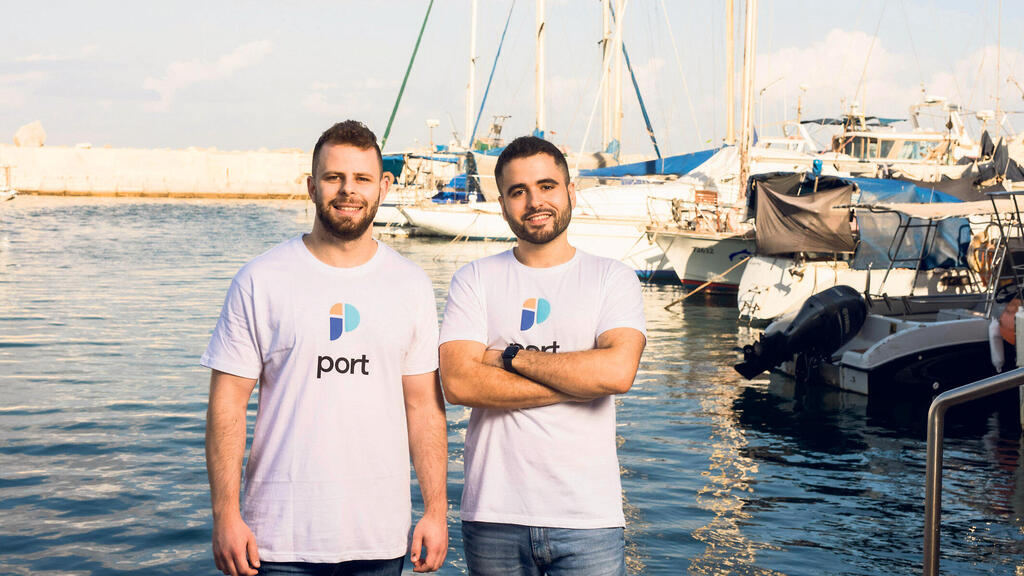
While most tech headlines over the past year have focused on artificial intelligence’s ability to write code faster, at Port’s offices in Tel Aviv, the team identified a different constraint: writing code accounts for only about 15% of a software engineer’s working time. The remaining 85%, spent on version management, cybersecurity, infrastructure maintenance and troubleshooting, is the real barrier preventing large organizations from accelerating development. Now, with a $100 million raise in its third funding round, Port is unveiling a vision it believes could reshape the industry: turning the developer portal into the nervous system for AI agents within organizations.
The latest round, led by General Atlantic with participation from Accel, Bessemer and Team8, reflects a sharp increase in the company’s valuation to $800 million post-money. It comes alongside rapid growth, with revenue up 300% and the customer base nearly doubling over the past year, including major clients such as Visa, GitHub and British Telecom.
Port, founded in 2022 by Unit 8200 graduates Zohar Einy and Yonatan Boguslavski, initially set out to address cognitive overload among developers, who often juggle dozens of tools simply to deploy new software versions or assess security. The company built an internal developer portal to centralize these processes, and has since begun integrating AI agents into the platform. “Companies want to work with us because they understand that artificial intelligence needs context to operate. Without Port, the AI agent is like a skilled surgeon operating in the dark, without knowing where the patient is,” explains Einy, the company’s CEO.
Port’s shift from a developer portal to a platform for engineering AI agents is designed to enable developers to resolve production issues, close security vulnerabilities autonomously and manage cloud resources more efficiently.
The company expects its sales to triple this year, reaching tens of millions of dollars, and is already targeting the $100 million revenue mark in the near term. This growth, which has also led to the addition of 60 employees over the past year, underpins a clear strategic stance: despite nearing a billion-dollar valuation, Port is not seeking a sale, but aiming to redefine how software is built and maintained.
“The big question is what the development process will look like in a world of AI,” says Einy. “We believe humans and agents will work together. The agents will take on the repetitive, operational workload, while humans remain in control, supervise the processes, and focus on real creativity. That could enable organizations to move at a pace we haven’t seen before.”
7. Qodo
Sector: Code testing using AI | Established: 2022 | Founders: Itamar Friedman, Dedy Kredo | Employees: 115 | Funding: $120 million across two rounds from Qumra Capital, Maor Ventures, Square Peg, TLV Partners, Vine Ventures, and others

In an era where artificial intelligence can write millions of lines of code at the click of a button, the global technology industry faces a growing paradox: writing code has become faster and cheaper than ever, but trust in the final product is at a low point. Qodo (formerly CodiumAI) identified this gap and has emerged as a significant player in efforts to restore control to developers and improve reliability across the software development process.
The problem the company addresses is critical. Large language models (LLMs) excel at generating generic code, but they lack organizational context. They do not understand a company’s development history, its architectural standards, or its risk thresholds. The result is often “noisy code” that can introduce errors and, in some cases, lead to failures in critical systems.
Qodo’s platform integrates AI agents that scan code in real time, analyze past decisions, and provide developers with feedback that can be applied immediately. In doing so, the company aims to transform AI from a tool that generates additional workload, such as extensive manual testing, into one that builds confidence and transparency.
The company was founded in 2022 by Itamar Friedman, formerly a director at Alibaba, and Dedy Kredo, an experienced product leader who previously worked at VMware and Explorium. Drawing on their experience with the challenges of validating code against complex product requirements, they built a platform that now serves hundreds of customers, ranging from early-stage startups to large enterprises such as Walmart and Nvidia.
Its market traction, alongside rapid revenue growth, reportedly increasing tenfold within a year, recently led to a $70 million Series B funding round. The round was led by Qumra Capital, with participation from investors including Peter Welinder of OpenAI and Clara Shih of Meta, bringing the company’s total funding to $120 million.
Today, with a team of 115 employees across Israel, the United States and Europe, Qodo is positioning itself at the forefront of what the industry increasingly refers to as “code governance,” AI systems that not only generate code, but also understand and oversee software systems more broadly.
8. ScaleOps
Sector: Autonomous management of cloud and AI resources | Established: 2022 | Founders: Yodar Shafrir and Guy Baron | Employees: More than 120, across Israel, the United States, and Europe | Funding: $210 million from Insight Partners, Lightspeed, Glilot Capital, NFX, Picture, Fusion, and others

In today’s computing world, the cloud is no longer just “a place to store files,” but the engine behind nearly every application, software product, and AI service we use. The challenge is that this engine is expensive, complex and often inefficient. ScaleOps, founded just four years ago, has developed a solution to manage this complexity, and its performance has made it one of the more prominent companies in both the local and global tech scenes. Last month, it announced a $130 million Series C funding round at a valuation of over $800 million. The round, led by Insight Partners with participation from firms such as Lightspeed and Glilot, reflects year-over-year growth of more than 350%.
The idea for the company originated with CEO and founder Yodar Shafrir, who identified a deep market need: development and DevOps teams spend significant time trying to estimate how much computing power their applications require at any given moment. The result is often over-provisioning, paying for cloud resources that are not actually used, simply to avoid potential system failures under heavy load.
ScaleOps’ core proposition is automation. Its platform makes decisions in real time, dynamically adjusting the exact amount of resources allocated to each application based on changing demand. The impact can be significant, with reported reductions of up to 80% in cloud costs, alongside improved system stability.
The company’s rapid growth, from just a few million dollars in revenue to tens of millions within a year, is closely tied to the rise of artificial intelligence. As more companies deploy AI agents and AI-based applications, the need for flexible and efficient computing infrastructure has become increasingly critical. Its customer base includes companies such as Adobe, Wiz, DocuSign and Armis, which rely on technology developed at its Tel Aviv headquarters to manage production environments.
To support its ambition of becoming the “operating system of the cloud,” ScaleOps now employs more than 120 people across Israel, the United States and Europe, and plans to triple its workforce by the end of the year.
9. Guardio
Sector: Cybersecurity for end users | Established: 2018 | Founders: Amos Peled, Michael Vainshtein, Daniel Sirota | Employees: 110, all based in Israel | Funding: $128 million from ION Crossover Partners, Tiger Global, Vintage Investment Partners, Emerge, and Union Tech Ventures (the investment arm of the Union Group)

For decades, Israel’s cybersecurity industry focused almost exclusively on protecting large organizations, national infrastructure and government databases. While B2B companies competed for the massive budgets of Fortune 500 firms, individual users were often left exposed to increasingly sophisticated and personalized attacks. Into this gap stepped Guardio, founded in 2018 with the ambition of becoming the world’s largest consumer cybersecurity company, and it is growing at a pace few in the sector can match.
As traditional antivirus companies lost focus, the threat landscape evolved. Today, hackers no longer need to break into a computer; instead, they use AI to generate convincing phishing messages, fake banking websites that closely mimic legitimate ones, and even fabricated phone calls. Guardio’s detection engine is designed to stop these attacks in real time, focusing on the browser and the user’s personal digital environment. The aim is to provide everyday users with a level of protection comparable to that of large enterprises, but through an accessible and easy-to-use interface.
Guardio’s story stands out in the Israeli tech landscape not only because of its product, but also because of how the company operates. It has grown threefold for four consecutive years and is expected to reach positive cash flow later this year. Although the company has raised about $128 million to date, including a recent $80 million round led by ION Crossover Partners, it maintains a lean approach: with a team of just 110 employees, it generates more than $100 million in revenue.
While 99% of the company’s revenue comes from individual customers, its technology is beginning to attract large enterprises as well. A recent strategic partnership with the Lovable platform, one of the fastest-growing platforms in the GenAI and website-building space, illustrates this shift. Guardio’s protection engine has been integrated into the system to automatically scan newly created websites and help prevent attackers from using AI tools to build malicious infrastructure.
This development points to a broader shift. While Guardio remains focused on individual users, organizations are increasingly seeking solutions that also protect employees and their families at home, reflecting the reality that the boundary between work and personal digital environments has largely disappeared.
10. Quantum Art
Sector: Quantum computing | Established: 2022 | Founders: Prof. Roee Ozeri, Dr. Tal David, Dr. Amit Ben Kish | Employees: 60, all based in Israel | Funding: $150 million across two rounds from Amiti, StageOne, Entrée Capital, Vertex, QBeat, Disruptive, Battery, Harel, Bedford Ridge Capital, Hudson Bay Capital
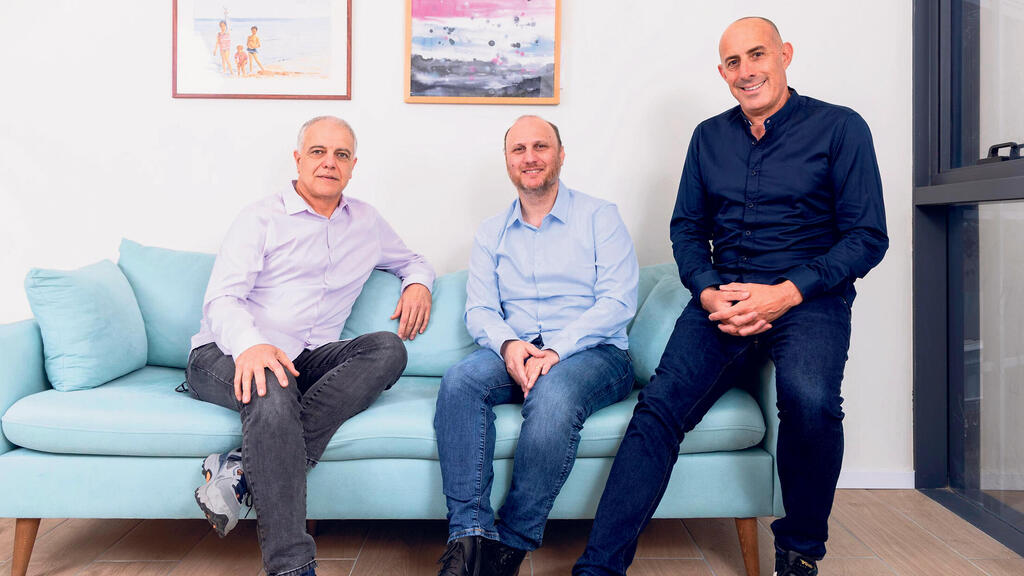
Quantum Art is one of the most advanced quantum computing companies in Israel - and globally. It has raised more than $100 million and is among a group of companies that could achieve multi-billion-dollar valuations through a SPAC listing on Wall Street, should they choose to go public. IonQ, a prominent competitor that went public in 2021, is currently valued at around $15 billion.
Like most companies in the field, Quantum Art does not yet generate meaningful revenue and is focused on building a full quantum computer using the trapped-ion method. This approach competes directly with the cold-atom model used by others in the sector, such as Q Factor. The technology has already passed the proof-of-concept stage, and the market expects functional machines capable of running business applications, in industries such as banking, pharmaceuticals, chemicals, and weather forecasting, within the next two to three years. Quantum Art plans to launch its first commercial quantum computer later this year.
As is typical in the sector, Quantum Art was founded and is led by scientists. Its founders include Dr. Tal David, who previously led Israel’s national quantum computing program and spent years in the defense industry; Prof. Roee Ozeri of the Weizmann Institute, whose research underpins the company’s technology; and Dr. Amit Ben Kish, who completed his PhD under Nobel Prize–winning physicist Prof. David Wineland.
For now, quantum computers are primarily sold to government entities, and total industry revenues reached approximately $1.5 billion in 2025. However, forecasts suggest the sector could grow into a trillion-dollar market within the next decade.
11. Qedma
Sector: Quantum computing | Established: 2020 | Founders: Dr. Asif Sinay, Prof. Netanel Lindner, Prof. Dorit Aharonov | Employees: 40 | Funding: $30 million across two rounds from Q Fund, TPY, Glilot Plus, Alumni, Castor, IBM
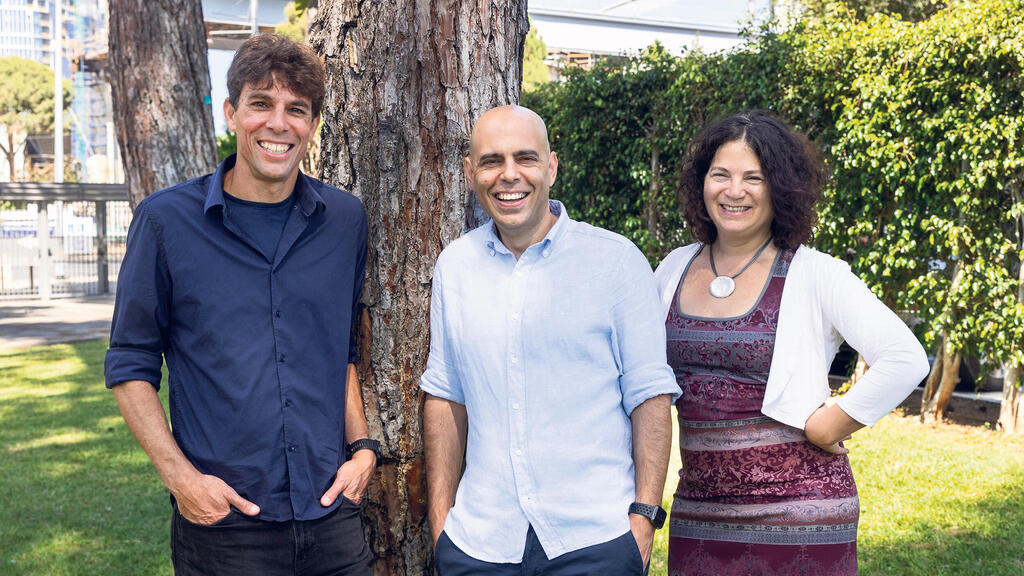
The idea for founding Qedma was conceived by Dr. Asif Sinay, who completed the IDF’s Talpiot program in the same cohort as the founders of Wiz. Sinay served at Rafael as a physicist and participated in the development of the Iron Dome system. After his release, he became a researcher in the Faculty of Physics at the Technion. Unlike many of his colleagues working in quantum computing on the hardware side, Sinay focuses on software designed for next-generation computers and aims to address one of their core challenges: the difficulty of producing consistent and reliable outputs.
The company’s other two founders, Prof. Netanel Lindner and Prof. Dorit Aharonov, continue to conduct research, teach, and assist the company in recruiting high-quality talent from among their students.
At this stage, Qedma already has dozens of customers in sectors such as banking and automotive. However, its ambitions extend much further: to leverage the popular SaaS model to deliver software designed to prevent and correct errors, addressing the tendency of quantum computing systems to occasionally produce incorrect results.
12. Q Factor
Sector: Quantum computing | Established: 2026 | Founders: Dr. Guy Raz, Prof. Nir Davidson, Prof. Ofer Firstenberg, Prof. Yoav Sagi | Employees: A handful; several dozen physicists and engineers will be recruited this year | Funding: $24 million seed round from NFX, TPY, DEEP 33, Intel Capital, Matias Ventures, Korea Investment Partners, the tech transfer companies of the Weizmann Institute and the Technion, and the Israel Innovation Authority
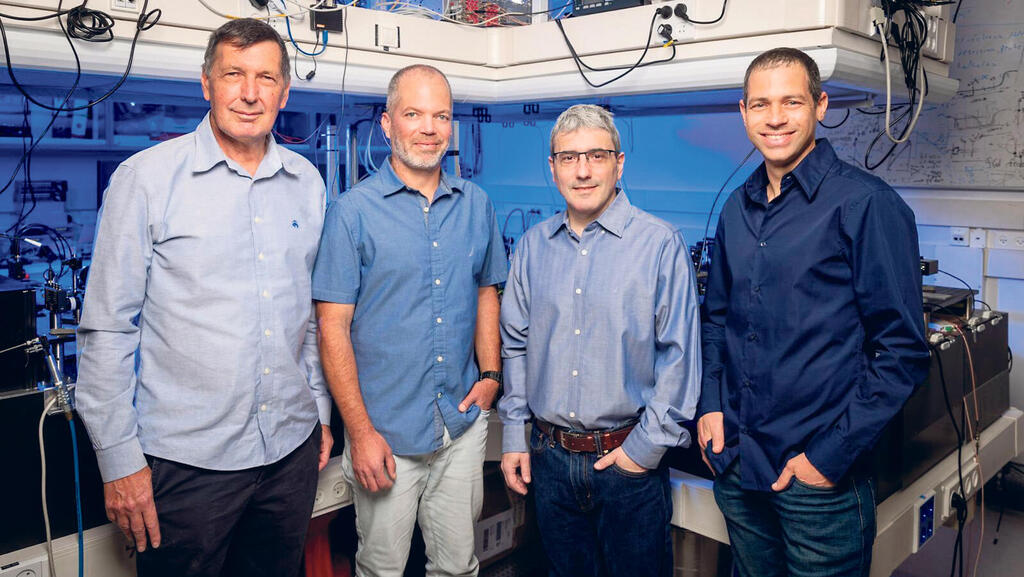
Q Factor is the youngest startup on the list, but also one of the most ambitious. The company was founded at the beginning of the year and, within a few months, completed a $24 million Seed round backed by several prominent venture capital funds, as well as Intel. Its goal is to build a full-stack quantum computer from end to end using cold-atom technology, which is considered one of the most advanced approaches in the field.
Just as in 1981 no one knew whether the video revolution would take shape around VHS or Betamax, it remains unclear today which method will dominate the development of quantum computing, although scientists expect a clear winner to eventually emerge. In Q Factor’s case, confidence in the atomic approach recently received significant validation from Google, which has chosen to adopt this technology for its own quantum computing efforts.
On the Israeli side of the competition stand leading experts. The company’s founders include Prof. Nir Davidson, a global authority on ultracold atoms and former dean of the Faculty of Physics at the Weizmann Institute; Prof. Ofer Firstenberg of the institute, who specializes in quantum optics; and Prof. Yoav Sagi from the Technion, one of the world’s leading researchers in the manipulation of neutral atoms. All three are actively involved in the company on a day-to-day basis during their sabbatical year. The company’s CEO is Dr. Guy Raz, a physicist with roughly two decades of experience in entrepreneurship and technological leadership across multiple startups.
Beyond the founding team, the company currently employs a small staff. However, following the completion of its funding round, it is entering an intensive hiring phase and plans to recruit dozens of employees over the coming year.
13. Factify
Sector: Infrastructure for development and document management | Established: 2023 | Founders: Prof. Matan Gavish | Employees: 40, of which 30 are in Israel | Funding: $70 million from Clutch Capital, Valley Capital Partners, John Giannandrea, Ken Moelis, Shai Wininger, and others
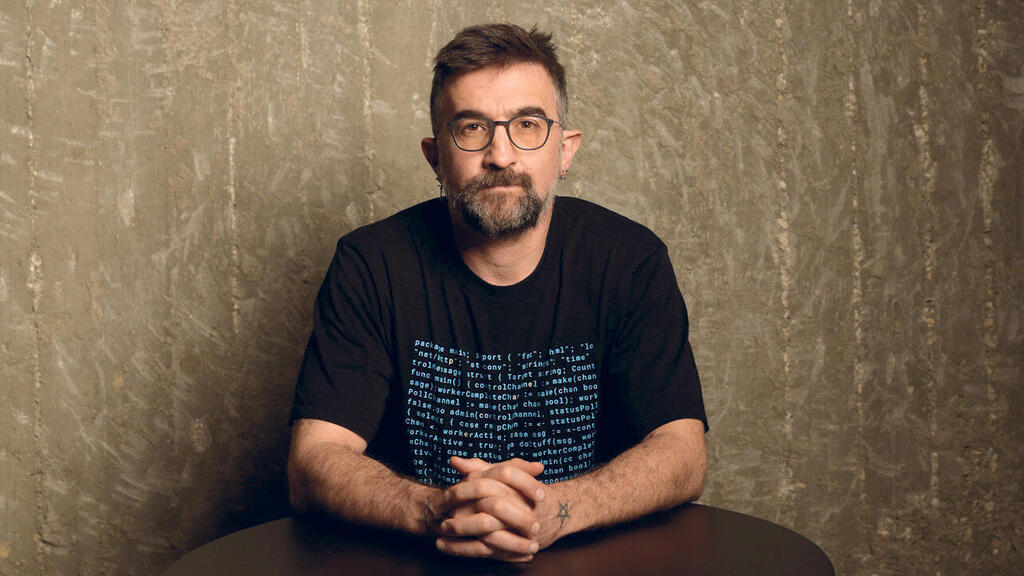
With an exceptional $73 million Seed round and backing from prominent tech leaders, Factify is embarking on an ambitious mission: to replace the PDF format that has dominated the digital world for decades with a smart document infrastructure designed for the age of artificial intelligence.
In a world where almost every aspect of technology has been transformed, PDFs have remained largely unchanged since the 1990s. While the format enables documents to be viewed consistently across devices, it has become, for the modern business environment, and especially for AI agents, a static, context-free, and difficult-to-manage “black box.” That is where Factify comes in.
The company, founded in late 2023 by Hebrew University professor Matan Gavish, recently announced the completion of one of the largest Seed rounds ever seen in Israel. The round was led by Valley Capital Partners and includes a roster of high-profile investors such as John Giannandrea (former head of AI at Google and Apple), Ken Moelis (founder of investment bank Moelis & Co.), and Shai Wininger (co-founder of Lemonade and Fiverr).
According to Gavish, a PDF file is essentially a digital replica of a printed page. The core problem is that once such a file is shared, the originating organization loses control over it. There is no reliable way to track who has viewed it, determine which version is the most up to date, or ensure that sensitive information remains secure. In the age of AI, where software is expected to read, analyze, and act on documents, this limitation becomes both an operational and regulatory risk.
Factify is developing a new kind of infrastructure in which a document is no longer a static file but a dynamic digital entity that exists on the network. Each document has its own identity, built-in version control, dynamic access permissions, and embedded business context. For example, a document can require users to sign a non-disclosure agreement (NDA) before accessing it or restrict the visibility of sensitive information based on user identity, all within the document itself, without relying on external software.
The company is currently running paid pilots with organizations operating in highly regulated sectors such as banking, insurance, and legal services, where the need for a verifiable and controlled digital source is particularly acute.
14. Majestic Labs
Sector: Chips | Established: 2023 | Founders: Ofer Shacham, Masumi Reynders, Sha Rabii | Employees: 50 | Funding: $100 million in two rounds from Grove, Hetz, Bow Wave Capital, Lux Capital, QP Ventures, and others

Majestic Labs has set itself an ambitious goal of developing a chip that could challenge Nvidia’s dominance in the field of AI hardware. The company is not targeting a 20% or 30% reduction in usage costs, but instead aims to build a processor capable of serving up to 10 times more clients on existing infrastructure. If successful, it could address one of the most pressing challenges of the AI revolution: the enormous energy consumption of data centers.
Since its founding in 2023, Majestic has focused on development and still does not have a product in market testing or commercial use. However, two funding rounds totaling $100 million completed in a short period, along with persistent reports of another large round in progress, suggest strong investor confidence in its direction.
Investors’ belief in Majestic is currently based largely on its founding team, three executives who initially left Google for Meta, and later departed Mark Zuckerberg’s company to launch their own startup: Israeli founder Ofer Shacham, and Americans Sha Rabii and Masumi Reynders.
The competition Majestic faces is significant, including from several Israeli companies, among them a startup founded by Avigdor Willenz, one of the most established figures in the chip industry. Nevertheless, the market is vast, driven primarily by a growing demand to challenge Nvidia’s dominance in AI computing.
15. Groundcover
Sector: Monitoring | Established: 2021 | Founders: Shahar Azulay ,Yechezkel Rabinovich | Employees: 100 | Funding: $60 million in three rounds from Zeev Ventures, Angular, Jibe Ventures, Heavybit, and others

The monitoring field may seem boring at first glance, and even more so at second glance, but for most organizations, spending on monitoring online activity to ensure that all applications are functioning properly is second only to cloud infrastructure costs. It is a large and growing market. The most prominent company in the space is the American Datadog, which is traded on Wall Street at a valuation of about $40 billion. However, competition in the sector is intense. Two notable competitors of Groundcover were recently acquired: Palo Alto Networks paid $3.35 billion for Chronosphere, and Snowflake spent $1 billion to acquire Observe.
Groundcover’s innovation, and what sets it apart from competitors, lies in its architecture. While most players in the field ingest and store customer data within their own systems, the Israeli startup accesses it remotely and uses that access to monitor the performance of corporate applications. On one hand, this model enables higher levels of security and lower costs; on the other, it requires customers to adopt a different operational approach.
Despite this, the model appears to be working: over the past year, the company has reached an annual revenue run rate of more than $10 million (four times the previous year’s figure), and its customer list includes major companies such as Apple and Akamai.
16. Brandlight
Sector: Platform for ensuring visibility in LLM engines | Established: 2024 | Founders: Imri Marcus, Uri Gafni, Didi Dvash | Employees: 35 | Funding: $36 million from Pelion, Cardumen, G20 and others
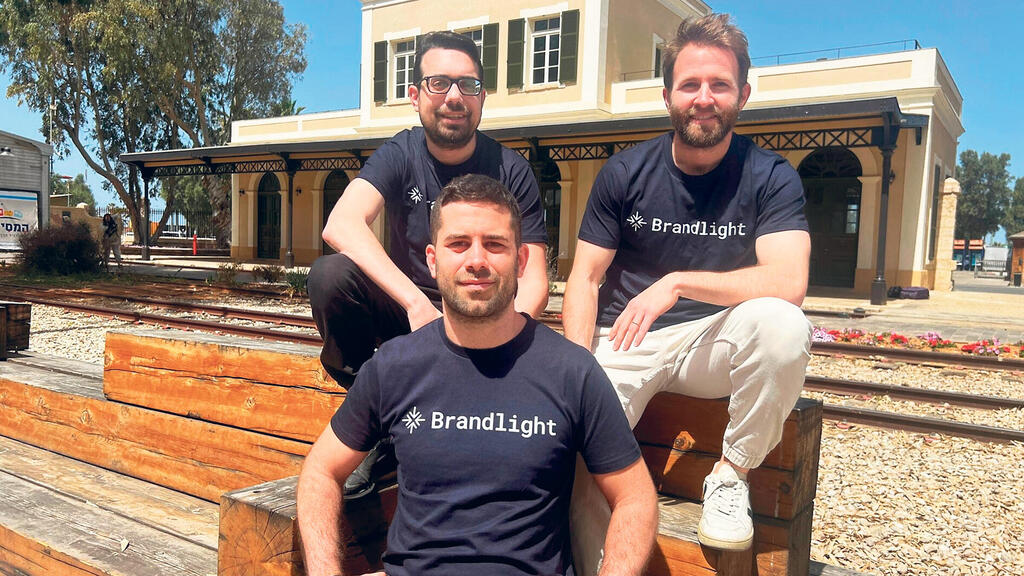
For the past few decades, the world of digital marketing has relied on one central pillar: SEO (search engine optimization). Brands have invested billions to appear at the top of Google search results. But in the era of large language models, where consumers ask ChatGPT, Gemini, or Claude questions such as “What face cream is recommended for me?”, the rules of the game are being rewritten. This is where Brandlight comes into the picture. The company recently completed an impressive $30 million Series A funding round, following $6 million raised in its Seed stage.
For marketing managers, AI engines often function as a “black box,” making it difficult to predict what results they will deliver. As a result, a brand image built over years on the traditional internet can appear very different when interpreted by a language model. Brandlight provides infrastructure to analyze and amplify AI presence, both in organic outputs and in emerging paid advertising channels within GenAI environments.
“We help brands maintain control over their visibility,” says Imri Marcus, CEO and co-founder. “We predict that $750 billion in purchases will flow through AI environments, and Brandlight is the platform that manages this channel. This is likely to become the largest marketing channel the world has ever seen.”
Brandlight plans to end the year with tens of millions of dollars in revenue, hire dozens of new employees, and aims to become a unicorn by early 2027, when its next funding round could push its valuation past the billion-dollar mark.
17. Vega
Sector: Cyber | Established: 2024 | Founders: Shay Sandler and Eli Rozen | Employees: 100, in Tel Aviv and New York | Funding: $185 million from Accel, Redpoint, CRV and Cyberstarts

In a world where the volume of corporate data is growing at a dizzying pace, traditional security systems are becoming a bottleneck. The requirement to centralize all information in a single database for investigation creates significant costs, technological inefficiencies, and critical delays in response time. Into this gap stepped Vega, founded in 2024 by Shay Sandler and Eli Rozen, graduates of Unit 8200 and among the first employees at Granulate, which was later acquired by Intel. The company recently completed a $120 million Series B round led by Accel, at a valuation of approximately $700 million, a significant jump from its previous round in September, when it was valued at $400 million. Since its inception, Vega has raised approximately $185 million, including $20 million in its Seed round and $40 million in its Series A round.
Vega’s key innovation lies in its ability to identify and investigate threats in real time directly within the organization’s storage environment. Instead of transferring vast amounts of data to an external system, a costly process that also introduces delays, the platform analyzes information where it resides. This approach reduces deployment time to just minutes within an organization, compared to months in traditional systems.
In addition, Vega addresses the shortage of cybersecurity expertise through an artificial intelligence-based interface that allows security teams to query and investigate incidents using natural language. This too leads to dramatically faster response times, significant operational savings, and improved prioritization of critical threats.
18. Noma Security
Sector: Cyber | Established: 2023 | Founders:Niv Braun, Alon Tron | Employees: 110. 70 of them in Israel | Funding: $131 million in three rounds from Glilot Capital, Ballistic Ventures, Evolution, Ofer Ben-Noon, Idan Tendler, and executives from Zscaler and Atlassian.

On the surface, it might appear that Noma Security lost the game of musical chairs, after almost all of its competitors in the field of AI application security were acquired one after another. Noma’s founders, Niv Braun and Alon Tron, also received attractive acquisition offers from major industry players, but after careful consideration decided to turn them down and pursue another fundraising round.
For now, it seems they made the right choice. The challenge of securing AI activity within organizations is becoming more complex as the number of AI agents grows. Market sources say that while Noma’s acquired competitors have become absorbed into integration processes with their buyers and have slowed down development efforts, Noma has opened a significant lead in the field.
Evidence that this strategy is working can be seen in the rapid expansion of the company’s sales team, which grew from three to 30 employees within a few months, as well as in the signing of agreements with numerous paying customers, ranging from banks to large retail companies in the United States. The company’s revenue this year is expected to exceed the $10 million mark.
19. Vetric
Sector: Cyber Intelligence | Established: 2022 | Founders: Yoav Maman, Omer Bachar, Tamir Cherniak | Employees: 45 | Funding: None
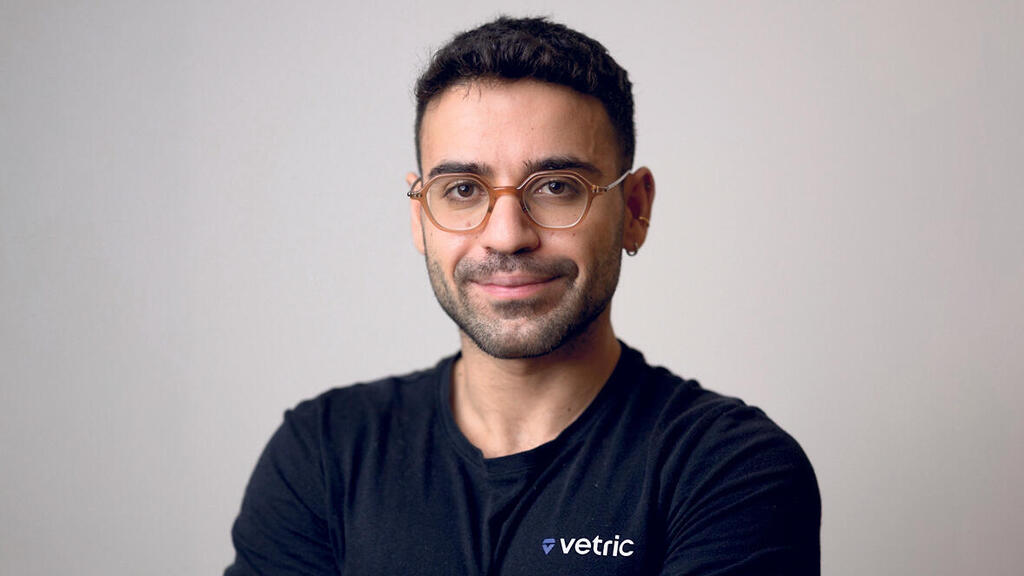
For years, the mythology of Israeli high-tech has been written in the corridors of Unit 8200, but Omer Bachar, CEO and young founder of Vetric, demonstrates that innovation can also emerge from less traditional military units, such as the military police. After not being accepted into intelligence service due to a lack of suitability for its educational frameworks, Bachar (24) established a technological unit within the military police that transformed investigative work in the IDF. Now, with a civilian version of that military initiative, he leads one of the most promising companies in the Open-Source Intelligence (OSINT) market. So far, the company has not raised external capital, but reports already indicate strong revenues.
Vetric began its journey with a one-way ticket to Thailand. The founders, Bachar, Yoav Maman, and Tamir Cherniak, chose to work from a rented villa, effectively self-exiling themselves until they secured their first paying customer. They identified a critical gap in the market: while large companies have raised hundreds of millions of dollars, they still struggle with the basic task of collecting public information from the digital space. The environment has become increasingly dynamic and complex, and existing tools often fail to adapt to frequent changes, breaking down as a result.
Vetric’s solution is based on a fundamentally different technological approach. Its advantage lies in its development of a new and distinctive technology capable of collecting billions of pieces of public information from across the web, with a particular strength in organizing data even in challenging and rapidly changing environments. The company provides the infrastructure that enables cybersecurity firms and organizations to collect only publicly available information, without infringing on privacy and without storing the data itself, features that make it particularly relevant in a world of increasingly strict data regulation.
Vetric’s growth has been rapid by any measure: from $250,000 in revenue in 2022, the company reached $15.5 million by the end of 2025, and aims to double its revenue to $30 million in the current year.
Although Vetric operates in a sensitive domain, its founders maintain clear ethical boundaries: the company does not work directly with governments, refuses to operate in sanctioned countries such as Russia and China, and focuses instead on use cases they define as socially beneficial, including locating pedophiles, identifying terrorist networks, and combating trafficking in women and weapons.
20. Novee
Sector: Science: Cyber AI | Established: 2025 | Founders: Ido Geffen, Omer Ninburg, Gon Chalamish | Employees: 50. Of which 35 are in Israel | Funding: $50 million in two rounds from Canaan, Zeev Ventures, YL Ventures and others
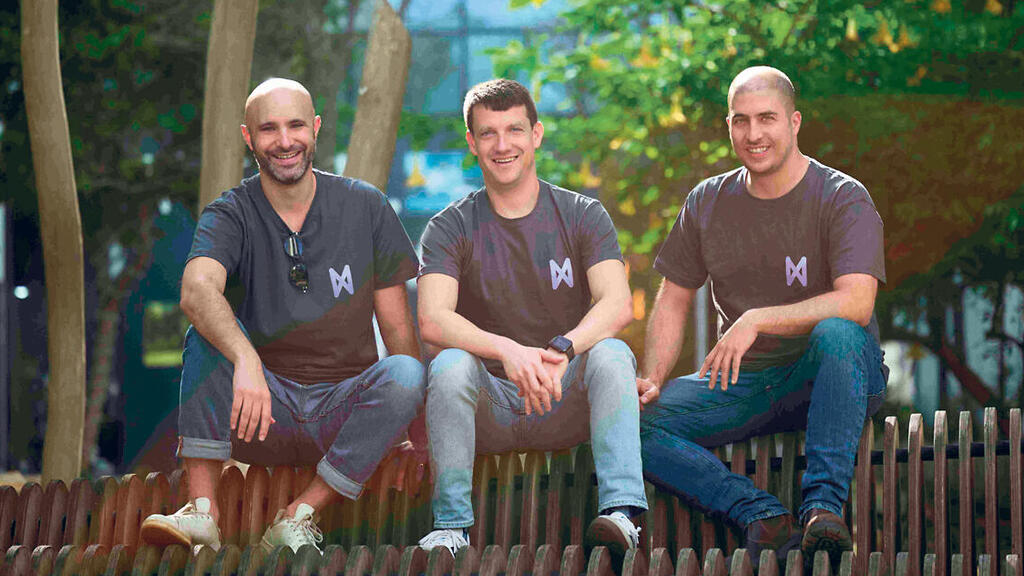
Novee is a strong representation of the AI era on this list. Founded last year, the company has already completed two funding rounds, reached millions of dollars in revenue from dozens of paying customers, and even received an acquisition offer, which it ultimately rejected, at a respectable triple-digit valuation. Novee operates in a long-established segment of the cyber market: managing penetration tests and sensitivity assessments of organizational software and information systems. Although this space also includes well-known Israeli unicorns such as Pentera and CYE, Novee’s technology is based on AI inference models and is therefore capable of running far more complex testing processes than those currently available on the market, without human intervention.
As artificial intelligence increasingly becomes an attacker as well as a defender, organizations are being forced to contend with automated adversaries that can rapidly adapt to changing environments and exploit them. Novee addresses this gap by applying techniques and tools from the offensive cyber domain to deliver continuous, AI-driven penetration testing that simulates sophisticated real-world hacking tactics.
The company was founded by a team with extensive experience in the field. Ido Geffen, Omer Ninburg, and Gon Chalamish met while working together in the Prime Minister’s Office, where they held senior cyber roles. Geffen, the CEO, is a recipient of the Israel Security Award and previously participated in the founding teams of three different startups. Novee is the first startup he has founded as a standalone entrepreneur.
21. Line5
Sector: Defense Tech | Established: 2025 | Founders: Yiftach Shoolman, Sari Brosh Rechav, Matan Melamed, Gigi Levy-Weiss | Employees: 35 | Funding: $20 million in seed from NFX, Kinetica, Iron Nation
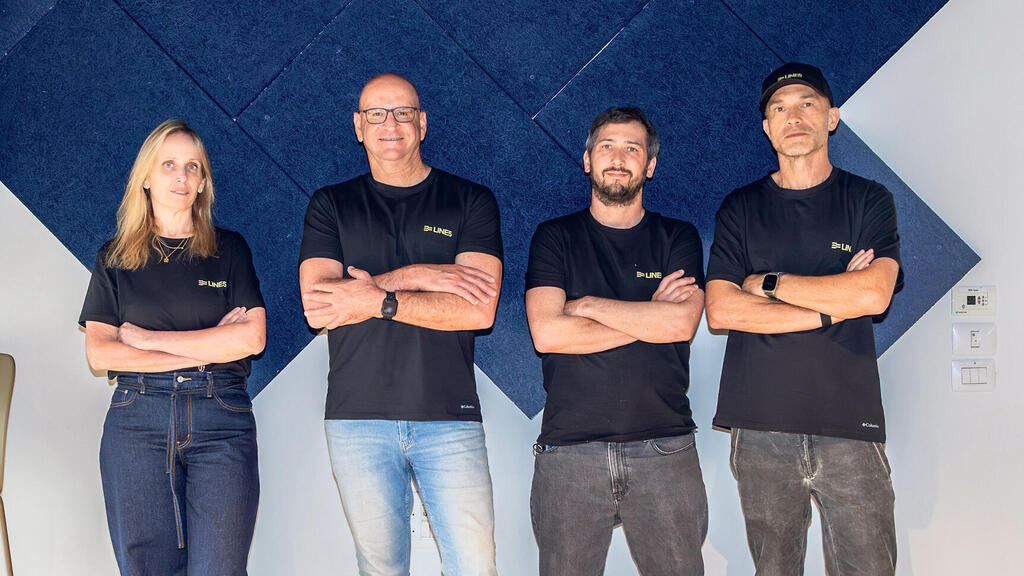
The phrase “quietly building what’s next” is all that appears on Line5’s website. As is customary with defense-tech companies, a thick veil of secrecy surrounds its activities, but some details have nonetheless emerged about the new venture founded by Yiftach Shoolman, the founder of the software unicorn Redis. In 2025, Shoolman co-founded the company with Sari Brosh Rechav, Matan Melamed, and Gigi Levy-Weiss of NFX. The company aims to replace soldiers operating on the battlefield with robotic systems.
A few days before the outbreak of the latest war in Iran, IDF Chief of Staff Lt. Gen. Eyal Zamir announced the establishment of a robotic corps intended to complement the AI and autonomy division within the Directorate of Defense Research & Development. The IDF is not alone in attempting to reduce battlefield casualties through robotics. In China, for example, the military already deploys robots that patrol national borders. More broadly, military robotics includes a wide range of autonomous and semi-autonomous systems, from armored personnel carriers and remotely operated bulldozers to drones, which have become a central combat tool since the war between Ukraine and Russia.
The company’s founders bring extensive experience in defense and high-tech. Shoolman served in the IDF’s General Staff Reconnaissance Unit; Sari Brosh Rechav served as VP of Operations in the SpaceIL project, which attempted to land an Israeli spacecraft on the Moon; Matan Melamed was involved in the development of the Iron Drone system; and Gigi Levy-Weiss, who comes from the gaming industry, together with Kinetica and several angel investors, led an exceptional $20 million Seed round immediately after the company’s founding.
Members of Line5’s advisory board include Mike Pompeo, former CIA director, and Nitzan Alon, who headed the IDF’s Hostages and Missing Persons Directorate after October 7.
22. Converge Bio
Sector: Healthcare | Established: 2024 | Founders: Dov Gertz, Oded Kalev, Dr. IddoWiener | Employees: 45 | Funding: $33 million across two rounds from TLV Partners, Bessemer, Vintage, Saras Capital, and senior figures from Wiz, Meta, and OpenAI
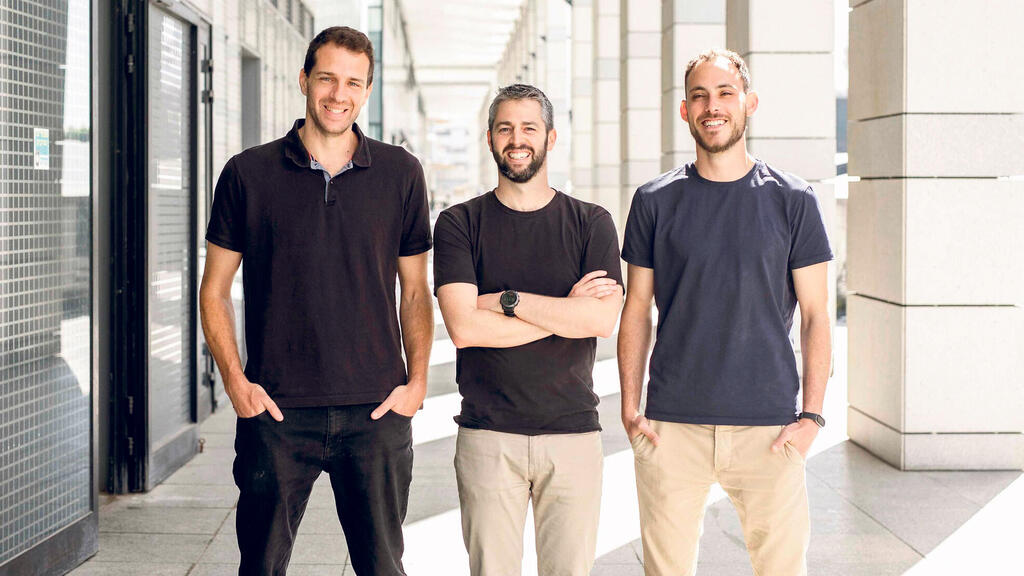
Dov Gertz (35) made his first exit while still a student, when he sold a patent he had registered in the field of bioinformatics to a U.S. tech company. Since then, he completed degrees in computer science and bioinformatics within four years and co-authored a paper with 2020 Nobel Prize laureate in Chemistry, Jennifer Doudna.
Gertz met his two partners, Iddo Wiener and Oded Kalev, during their studies in the honors program at Tel Aviv University, and the three decided to establish a startup in a field that is still relatively uncommon for Israeli entrepreneurs: using artificial intelligence for drug development. The trio built an AI agent specializing in molecular analysis, designed to provide pharmaceutical companies with the data needed to select the most suitable molecules for development, thereby shortening and reducing the cost of the process.
Developing innovative drugs is extremely long and expensive: around ten years and an average investment of approximately $2 billion from initial development to market approval. Moreover, only about 10% of drugs in development pass the approval threshold of the U.S. Food and Drug Administration (FDA), with the rest failing along the way, sometimes due to the selection of a suboptimal molecule. Converge Bio offers an application that helps drug developers identify the molecule with the highest likelihood of success, sometimes within just a few hours.
Although the company was founded only two years ago, it is already working with 12 pharmaceutical companies that use its software on a subscription (SaaS) basis, and it is involved in the development of 40 drugs. Recently, Converge Bio received one of the more significant validations in the field after winning a $2.5 million grant from the Bill & Melinda Gates Foundation, which supports innovations that advance global health. Converge Bio is not the only company operating in this space, and it has a more established Israeli competitor, Immunai, but as a player that began operating in the AI era and is targeting a $5 trillion industry only now beginning to undergo deep technological disruption, its prospects are considerable.
23. BlinkOps
Sector: Cybersecurity | Established: 2021 | Founders: Gil Barak, Zion Zatlavi | Employees: Approximately 100 | Funding: Approximately $100 million from Vertex, Entrée Capital, O.G Venture Partners, Lightspeed, Hetz Ventures, and others
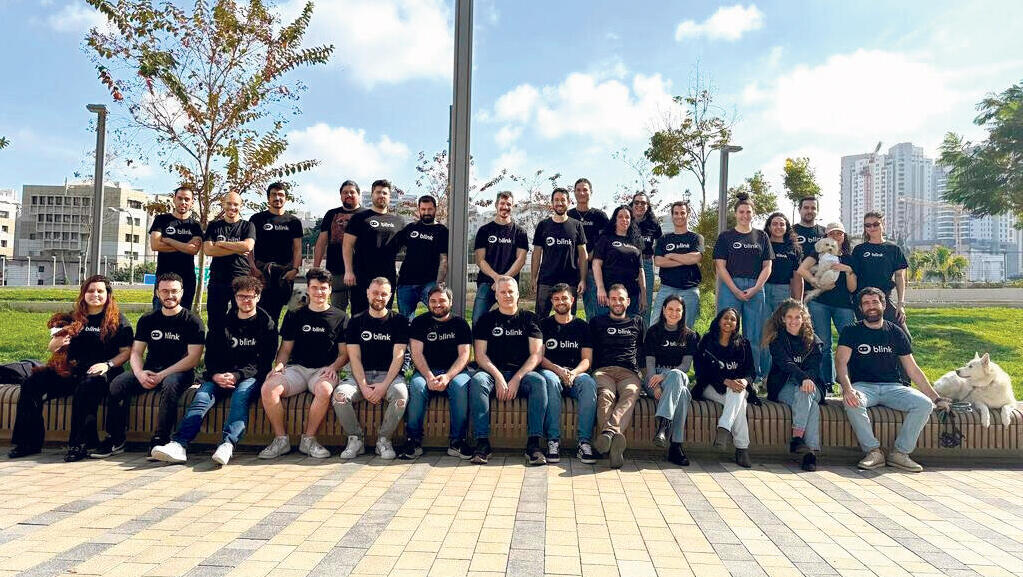
In a world where cyber threats are becoming more sophisticated and autonomous by the day, information security teams in large organizations find themselves in an asymmetric battle. They are required to manage dozens of different tools and perform endless manual actions that erode their most valuable resource: time. BlinkOps, founded in 2021, believes it has cracked the code to solving this problem by defining a new technological category: security micro-agents.
BlinkOps’ vision is based on the understanding that traditional automation is too rigid and difficult to maintain. Instead, the company offers a platform that allows security professionals to build and operate hundreds of “micro-agents.” Each agent is programmed to perform a specific task, from investigating suspicious alerts and remediating vulnerabilities to managing permissions and cleaning up exposed cloud assets. This creates a flexible digital workforce that adapts to organizational needs in real time.
Behind the company are Gil Barak and Zion Zatlavi, entrepreneurs who previously demonstrated their ability to reshape a market when they sold Secdo to Palo Alto Networks in 2018 for approximately $100 million. This experience is reflected in BlinkOps’ adoption rate: within a short time after launching its platform, the company is already serving dozens of Fortune 500 companies. This rapid growth recently led to the completion of a $50 million Series B funding round, bringing total funding to $90 million. The round was brought forward significantly to meet growing demand and support the expansion of the platform’s AI agent capabilities.
With a team of around 100 employees, BlinkOps is already seeing its platform expand beyond security into IT and operations, where the need for automation and orchestration is equally critical.
24. April
Sector: Fintech | Established: 2021 | Founders: Ben Borodach, Daniel Marcous | Employees: 70, about 35 of whom are in Israel | Funding: $78 million across three rounds from Team8, iAngels, QED, NYCA, Atento Ventures, Euclidean Ventures, and Shai Wininger
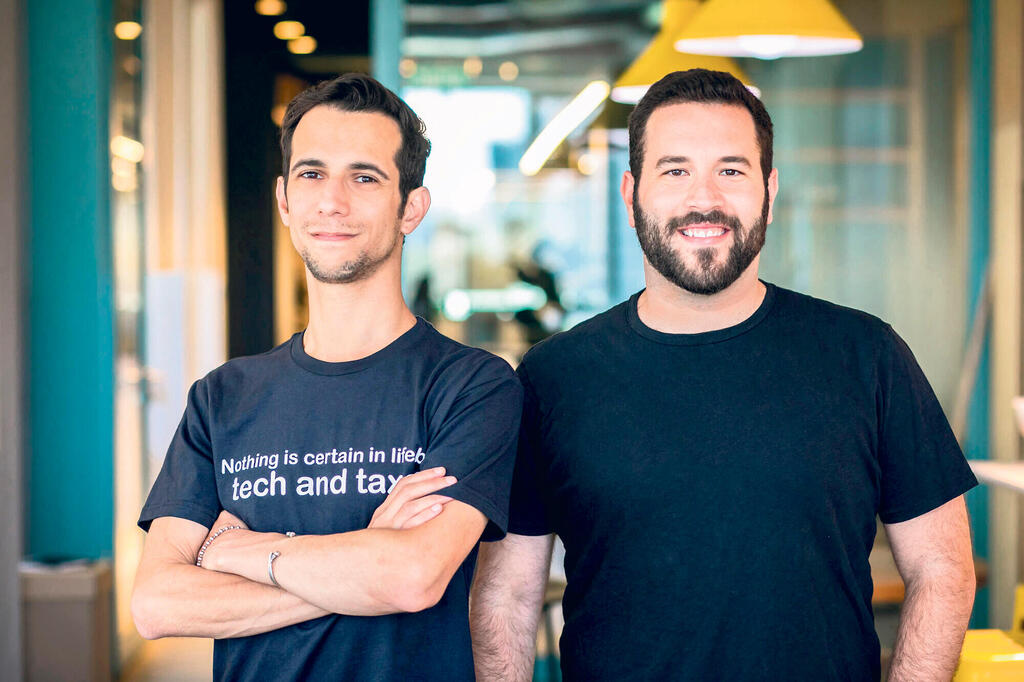
April operates in one of the most overlooked sectors that has remained largely untouched by technological disruption: accounting. The founders, Ben Borodach, who spent years working at Deloitte, and Daniel Marcous, former CTO of Waze, decided to tackle what many Americans consider their most disliked task, filing annual tax returns. It took the company considerable time to obtain the regulatory approvals needed to simplify and streamline the process, but since receiving them, it has experienced rapid growth. Last year, only 100,000 Americans used its software; in the current tax year, that number has surpassed one million, approximately 2.5% of Americans who file tax returns. This surge has naturally been reflected in a significant increase in the company’s revenue.
One of the keys to April’s success lies in its business model. Rather than selling its software directly to end users, the company distributes it through business partners. To do so, April has signed partnership agreements with major fintech players such as PayPal, the payments platform; Robinhood, the stock trading company; and Chime, one of the largest digital banks in the United States. These platforms direct their customers to complete tax filings through April, with the Israeli company receiving payment from the partners rather than from the end users.
April’s second track involves working with wealth management firms, to which it provides paid access to its software. For these firms, the main advantage is the simplification and acceleration of the process. According to April, while filing a tax return previously required around nine hours of work, the Israeli startup reduces the process to an average of 20 minutes. In this way, April targets two strategic segments: younger users of fintech applications and affluent individuals who rely on wealth management services.
25. Cylake
Sector: Cybersecurity | Established: 2026 | Founders: Nir Zuk, Wilson Xu, Ehud Shamir | Employees: Several dozen | Funding: $45 million from Greylock and private investors

Twenty years after founding cybersecurity giant Palo Alto Networks and reshaping the industry, Nir Zuk is moving on to his next target with Cylake, a new startup that, at an early stage, has already secured an impressive $45 million Seed round led by Greylock.
Zuk is not acting alone. Alongside him at Cylake are longtime collaborators: Wilson Xu, a key engineering figure at Palo Alto Networks, and Ehud (Udi) Shamir, a co-founder of SentinelOne. Together, the three bring decades of accumulated experience built at the forefront of major technological battles in cybersecurity.
While much of the tech world is moving toward cloud-native development, Cylake has identified a significant market segment that has been left behind: large enterprises, governments, and regulated organizations that, due to regulatory or data sovereignty constraints, cannot rely on public cloud infrastructure. Cylake’s platform is based on artificial intelligence but is designed to operate entirely in on-premises environments or private clouds.
Cylake’s approach breaks from the paradigm of separate, off-the-shelf products. Zuk argues that data fragmentation creates security gaps, and accordingly the company offers a holistic platform that provides visibility across all layers of an organization’s infrastructure in one place. The goal is to enable sensitive entities to benefit from advanced AI capabilities and autonomous threat detection without relinquishing control over their data sovereignty.
26. Utila
Sector: Crypto | Established: 2022 | Founders: Bentzi Rabi and Shmuel Eiderman | Employees: 75, of whom 55 are in Israel | Funding: $52 million across three rounds from NFX, Cerca, NYCA, and Red Dot
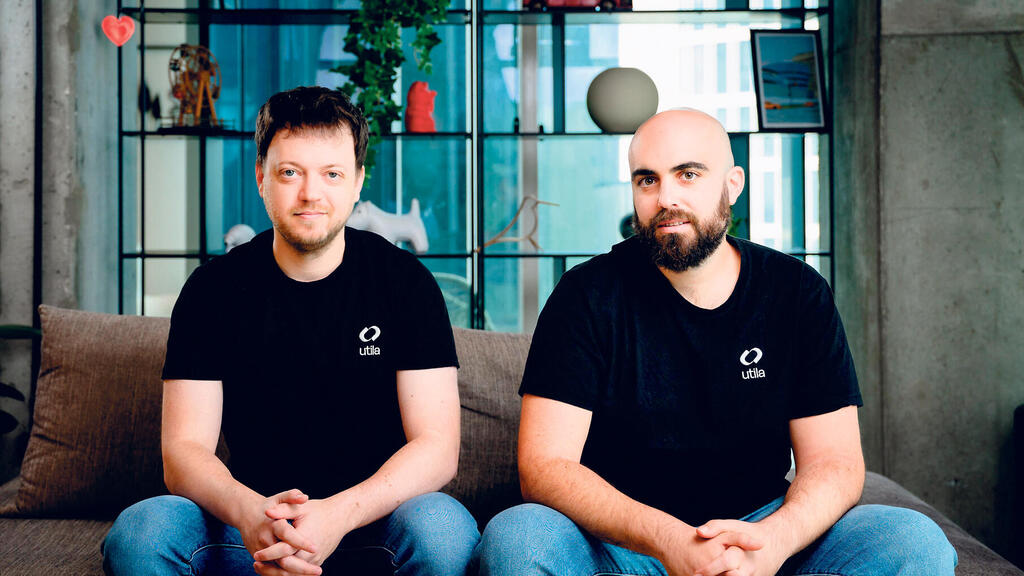
Bentzi Rabi and Shmuel Eiderman met while serving together in the IDF’s technological Unit 81, which they joined as academic officers after completing degrees in computer science. In 2022, a few years after their discharge and following stints at high-tech companies, the two realized that the blockchain sector was undergoing a shift: from trading speculative assets to building genuine technological infrastructure deeply embedded in banking and finance.
The company dislikes being identified solely as a “crypto company,” preferring instead to be described as a payments infrastructure provider that enables fast, encrypted transfers on the blockchain. When Stripe acquired a company similar to Utila for $1.1 billion in 2025, the sector received a significant boost, alongside U.S. regulations that helped standardize the blockchain and payments space.
Since then, more and more players have been seeking solutions for large-scale fund transfers on the blockchain, but not all established players, including the major Israeli competitor Fireblocks, can fully meet the market’s new demands.
Utila entered the market at an opportune moment. Its solution works at scale, and less than a year after its product launch, it reached $1 million in annualized revenue. Today, it already has 300 paying customers, with revenues significantly higher. Consequently, it is no surprise that in 2025 the company raised millions of dollars in two rapid funding rounds, which tripled its valuation. Given that Mastercard recently acquired a British competitor of the company for $1.8 billion, it seems Utila’s exit may arrive sooner than expected.
27. Tastewise
Sector: Food | Established: 2018 | Founders: Alon Chen, Eyal Gaon | Employees: 100 | Funding: $72 million from TELUS Global Ventures, Disruptive AI, Peakbridge Capital, Duo Partners, PICO Venture Partners
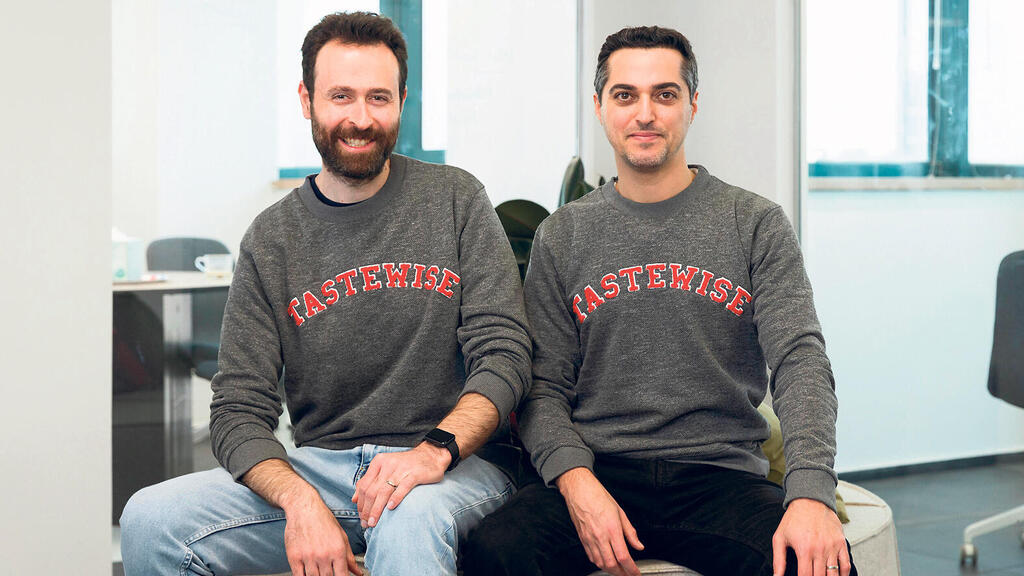
For decades, the food and beverage industry operated largely blind. Giant manufacturers sent products to supermarkets but lost direct contact with consumers. Without real-time data on what was being purchased, their ability to innovate or respond to shifts in taste was limited, relying instead on outdated market surveys.
In 2017, Alon Chen and Eyal Gaon recognized that this gap represented a major technological opportunity, and a year later they founded the company. They built a massive consumer intelligence platform based on billions of “digital signals.” from restaurant menus and social media posts to recipe sites and delivery orders. Analyzing this data using artificial intelligence generates a real-time picture of consumer behavior that is used by approximately 80% of the world’s largest food companies. In this way, marketing and sales teams can predict not only which new flavors will succeed, but also how global trends will shape consumer purchasing behavior.
A prominent example is the impact of weight-loss drugs such as Ozempic. Tastewise’s data shows that their use is associated with a preference for bolder flavors and an increased demand for smaller packaging. These insights allow brands to adapt their production and marketing strategies in real time to both biological and cultural shifts.
To date, Tastewise has raised $72 million and reports revenues in the tens of millions of dollars, with a high double-digit growth rate.
28. Sett
Sector: Gaming | Established: 2023 | Founders: Amit Karmi and Yoni Blumenfeld | Employees: Approximately 50 | Funding: $57 million from Greenfield Partners, F2, Bessemer, Tirta, and Ben Feder
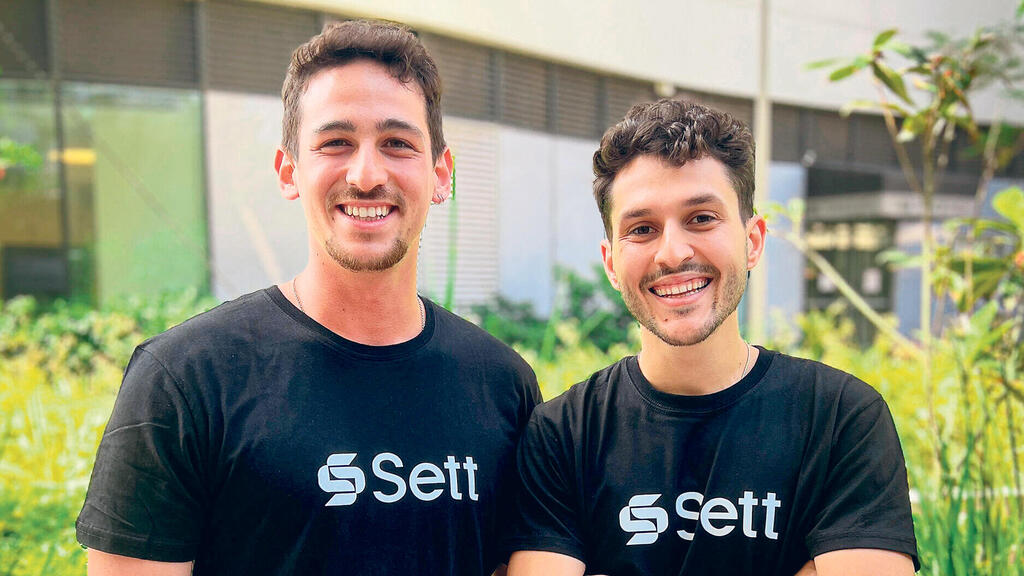
When the world was just beginning to digest the generative AI revolution in 2023, Amit Karmi and Yoni Blumenfeld identified a critical bottleneck in one of the most competitive industries in the world: gaming. The world’s largest gaming companies spent billions of dollars on user acquisition but relied on manual, slow, and expensive production processes to generate the thousands of advertisements and videos required to remain relevant.
Sett was founded with the bold vision to turn a human marketing department into an autonomous system powered by AI. This is not just a tool for writing text or creating images, but a system of “agents” that understand data, make decisions, and execute marketing activities end to end.
The journey began by tackling the creative challenge. Sett developed a system that shortens the production process for advertisements and interactive content from weeks to just a few hours. The solution quickly became the standard for giants such as Zynga, Playtika, and Papaya, which discovered they could save tens of millions of dollars a year while dramatically improving content quality and the precision of audience targeting.
Success in the field quickly translated into numbers: in less than three years, Sett transformed from a young startup into an organization employing about 50 people, generating tens of millions of dollars in revenue. Its business model demonstrated that artificial intelligence is not just a promise for the future, but an immediate force multiplier that creates tangible economic value.
Confidence in Sett’s trajectory reached a new peak in its latest Series B funding round, in which it raised $30 million. The round, led by Greenfield Partners with the participation of existing investors F2 and Bessemer, along with figures such as Ben Feder (former CEO of Take-Two Interactive), signals the beginning of the company’s next phase of growth.
Today, equipped with its developed technology and fresh capital, Sett is expanding beyond the gaming industry and preparing for global expansion into other sectors driven by performance-based marketing, from fintech to e-commerce, marking a shift from the era of digital tools to the era of autonomous agents, where a company’s growth is limited only by the imagination of its algorithms.
29. Orca AI
Sector: AI for maritime vessels | Established: 2018 | Founders: Yarden Gross, Dor Raviv | Employees: 150 | Funding: $111 million from Brighton Park Capital, Mizmaa Ventures, Playfair Capital, and the Innovation Authority

Orca AI was established to provide ships with a navigation system that will eventually enable autonomous sailing capabilities. Its solutions connect vessels to the cloud to reduce the risk of accidents, prevent hazardous situations caused by stormy weather, and lower fuel consumption. These capabilities have already led insurance companies, after testing the effectiveness of Orca’s systems, to reduce insurance premiums, following a reported 50% decrease in “near-miss” incidents on ships using the system.
In line with broader industry trends, Orca is also expanding into the defense-tech sector, offering navies solutions for detecting unmanned surface vessels and drones, countering GPS jamming, warning against approaching dangerous areas, and optimizing sailing speed, thereby saving fuel and reducing waiting times at port entrances.
To date, Orca has raised over $100 million and generates a strong revenue run rate, counting MSC and Maersk, two of the world’s largest shipping companies, among its clients. In the past year, it became the first company in the world to receive approval from Japanese regulators for autonomous maritime navigation systems. However, despite these achievements, the company’s vision of fully autonomous ships has yet to be realized.
30. Notch
Sector: AI | Established: 2021 | Founders: Rafael Broshi, Elool Jacoby, Yuval Peled | Employees: 50 | Funding: $45 million from Headline, Illuminate, Jibe Ventures, Lightspeed Venture Partners, and the investment arm of Phoenix Insurance

The startup Notch marks the next stage in the evolution of enterprise artificial intelligence, moving from basic chatbots to autonomous AI agents capable of managing full workflows from start to finish. Founded in 2021 by Rafael Broshi, Elool Jacoby, and Yuval Peled, the company recently completed a $30 million Series A round to embed its technology at the heart of some of the most complex and conservative industries, including insurance, finance, and telecom. Now, with total funding of $45 million and a significant foothold in the U.S. market, Notch is leveraging the experience it gained as an insurance company to build AI agents that deeply understand the professional language and operational needs of the world’s largest financial institutions.
Notch’s uniqueness lies in the ability of its AI agents to operate within highly regulated fields, where they do not merely answer questions but perform active operations across multiple communication channels, from phone calls and WhatsApp messages to complex emails. These agents manage ongoing dialogue with brokers and policyholders, handle document collection and claims data processing, and even perform updates directly in an organization’s core systems without human intervention.
In addition, the platform offers a comprehensive two-layer solution: it engages with external customers by automating underwriting and service processes, while also streamlining internal operations, where agents help employees analyze long claims files in natural language and extract structured data from complex documents.
31. Remepy
Sector: Medicine | Founders: Dr. Michal Tsur, Or Shoval, Prof. Amir Amedi, Eran Etam, Dr. Nira Saporta-Rivner | Funding: $15 million | Investors: NFX, Vine Ventures, Psymed Ventures, Tech Aviv, Samsung Next, Fresh Fund, 97212
Remepy is pioneering hybrid drugs by combining traditional pharmaceuticals with its "digital molecules." These therapeutic interventions trigger physiological effects in the brain, known as Mechanisms of Action (MOAs), which have been known to enhance the effectiveness of traditional medication.
32. Matia
Sector: Data Management | Founders: Benjamin Segal, Geva Segal | Funding: $31 million | Investors: Red Dot, Cerca, Secret chord, VelocityX, Amiram Shachar, Udi Mokady
As companies increasingly rely on AI and smart systems, the collection, storage, and updating of information has become critical to business operations. Matia is developing a platform that enables organizations to manage data in an organized, clear, and scalable manner, even when handling vast amounts of data from multiple sources.
33. Above Security
Sector: Cyber | Founders: Aviv Nahum, Amir Boldo | Funding: $50 million | Investors: Ballistic Ventures Norwest Venture Partners, Jump Capital, Merlin, QP ventures
Above Security has developed a platform designed to identify and respond to insider threats within organizations, betting that AI-driven automation can finally crack rising internal risks. Founded in 2025, the company completed both a $7 million Seed round, led by Merlin Ventures and Norwest, and a Series A within its first six months.
34. A
Sector: Cyber | Founders: N/A | Funding: $40 million | Investors: Lightspeed, Cyberstarts
N/A
35. Voltify
Sector: Transport | Founders: Daphna Langer, Alon Kessel | Funding: $30 million | Investors: Aleph, Fortescue, Menomadin, Jimpact, The Dock, Yasmin Lukatz, Chemi Peres
Voltify is designing a comprehensive solution enabling railway companies to transition from diesel to electric power without requiring massive infrastructure investments. By combining battery-powered locomotives, dynamic fast-charging technology, and a microgrid network designed to supply energy to trains, Voltify's system aims to reduce energy costs by around 20% while significantly lowering emissions.
36. Sawmills
Sector: Enterprise Software | Founders: Ronit Belson, Amir Jakoby, Erez Rusovsky | Funding: $10 million | Investors: Team8, Mayfield, Alumni Ventures
Sawmills has created a management platform for telemetry, a technology that enables the remote measurement and automatic reporting of information. The AI-powered platform allows enterprises to manage the data flowing from engineering teams to their observability tools, identifying opportunities for cost reduction while enhancing critical monitoring capabilities.
37. Memcyco
Sector: Cyber | Founders: Israel Mazin, Gideon Hazam, Ori Mazin, Eli Mashiah | Funding: $47 million | Investors: NAventures, E. León Jimenes, Pags Group, Capri Ventures, Venture Guides
Cybersecurity startup Memcyco provides real-time protection against phishing scams and account-takeover (ATO) attacks. Its founding team has previously built and exited several companies, most notably Memco Software, which sold for more than $500 million in 1999.
38. Clover
Sector: Cyber | Founders: Alon Kollmann, Or Chen | Funding: $40 million | Investors: ServiceNow, Notable Capital, Team8, Wiz founders, Shlomo Kramer
Clover integrates AI agents into everyday developer tools such as Confluence, Jira, GitHub, Cursor, and Slack, enabling teams to identify design flaws early and build securely from the outset. By replicating the mindset of experienced security professionals, its AI agents relieve security teams of repetitive work and provide developers with real-time security guidance inside their existing workflows.
39. Lumana
Sector: AI | Founders: Sagi Ben Moshe, Ofir Mulla | Funding: $64 million | Investors: S capital, Norwest, Wing venture capital,
Lumana develops AI-based video security solutions, offering a video intelligence platform that transforms ordinary camera feeds into real-time monitoring, detection, and response tools using vision language models (VLMs) and agentic AI.
40. Loora
Sector: AI | Founders: Roy Mor, Yonti Levina | Funding: $12 million | Investors: QP Ventures, Hearst, Emerge,Two Lanterns Venture Capital
Loora offers an app-based platform for English language learners that harnesses AI specifically built, trained, and optimized to help users gain practical fluency through personalized learning.
41. Tenzai
Sector: Cyber | Founders: Pavel Gurvich, Ariel Zeitlin, Ofri Ziv, Itamar Tal, Aner Mazur | Funding: $75 million | Investors: battery Ventures, lux capital, greylock partners, swish Ventures, jive Ventures
Founded by veterans of Guardicore, cybersecurity startup Tenzai operates on the core insight that hacking can now be replicated and scaled through AI. The company is developing an AI platform that simulates a hacker, proactively identifying and attacking vulnerabilities in organizational systems before they can be exploited.
42. Accomplish
Sector: AI | Founders: Amit Avner, Guy Zipori, Or Hiltch | Funding: $20 million | Investors: Lightspeed, 8VC
Accomplish is building an open-source AI coworker that operates directly on a user's PC. As AI transitions from copilots to autonomous operators, this desktop agent executes user instructions to read files, create documents, and automate repetitive knowledge work, all while providing enterprises with the agentic infrastructure needed for control, visibility, and scale.
43. Lumia
Sector: Cyber | Founders: Omri Iluz, Bobi Gilburd | Funding: $18 million | Investors: Team8, New Era
Lumia is a startup focused on securing the rapidly expanding world of autonomous AI. Its platform monitors and interprets the “content, context, intent, and action” of every AI interaction, whether performed by an employee or an autonomous agent, enforcing dynamic policies while providing continuous visibility into agent behavior and permissions.
44. Act
Sector: Cyber | Founders: Jonathan Langer, Itay Kirshenbaum, Stephen Goldberg, Ilai Fallach | Funding: $60 million | Investors: Notable Capital, Startpoint Capital, Team8, Bessemer Ventures, Hetz Ventures, Brightmind Access Industries
Founded by the team behind Medigate, Act Security is engineering a platform to protect cloud infrastructure and data centers. The cyber startup secured $60 million in funding within months of its 2025 launch.
45. Opti
Sector: Cyber | Founders: Barak Perelman, Mille Gandelsman, Ido Trivizki | Funding: $20 million | Investors: YL Ventures, Mayfield, Hetz Ventures, Maple Capital, Shlomo Kramer
Founded by a team of serial entrepreneurs, Opti is an AI-native identity security startup. Its platform centers on an operating model where AI interprets identity risk, recommends least-privilege access decisions, and orchestrates clean, safe permissions across an organization.
46. Newcore
Sector: Cyber | Founders: Zohar Alon, Amihai Neiderman | Funding: $66 million | Investors: Cyberstarts, index Ventures, evolution
Newcore Identity is a B2B cybersecurity startup in the Identity and Access Management (IAM) sector, building enterprise tools to secure user identification and manage access rights across corporate networks.
47. Echo
Sector: Cyber | Founders: Eilon Elhadad, Eylam Milner | Funding: $50 million | Investors: N47, Notable Capital, Sentinalone, Hyperwise Ventures
Serial entrepreneurs and veterans of Israel’s Unit 8200 and the Ofek intelligence unit launched Echo to build secure AI-based software infrastructure. The startup aims to replace standard cloud infrastructure with a streamlined, secure AI-native operating system.
48. Daylight
Sector: Cyber | Founders: Hagai Shapira, Eldad Rodich | Funding: $40 million | Investors: Craft Ventures, Bain Capital, Maple
Daylight is building an AI-native managed detection and response (MDR) platform to autonomously identify and contain cyber threats. The company already serves dozens of enterprises across the U.S. and Europe, including The Motley Fool, Cresta, and McKinsey Investment Office.
49. Onyx Security
Sector: Cyber | Founders: Maxim Bar Kogan, Gil Elbaz | Funding: $40 million | Investors: Cyberstarts, Conviction
Onyx Security offers a security and control platform for AI agents in enterprises. The company's solution manages and secures AI systems as they become integral to business operations, providing real-time oversight for increasingly autonomous agents.
50. Blocks DIY
Sector: AI| Founders: Michal Lupu, Tal Haramati | Funding: $10 million | Investors: Qumra Capital, Entree Capital
Established by former Monday.com executives who were inspired by the success of no-code platforms, Blocks DIY is developing an AI platform for creating smart tools and agents. By combining application building and AI agents with advanced logic under one roof, the startup enables any user to build smart applications for managing work.
This is the 17th year that Calcalist has ranked the top 50 private technology companies in Israel. For this purpose, we turned to a number of prominent investors, consultants, and entrepreneurs in the Israeli market. We asked the participants to pinpoint the startup companies that are growing, making money, that have the greatest momentum, and the highest chance of making a substantial business step in the coming year, while emphasizing companies that are not in their portfolios. After weighing the data and the variety of opinions collected from the best experts, the reporters and high-tech editors of Calcalist, who are well acquainted with the behind-the-scenes of these fields, compiled the list of the 50 most promising private technology companies in Israel.
This year’s ranking contributors are:
Accel | Amiti Ventures | Angular Ventures | Bessemer Venture Partners | Blumberg Capital | BRM | Cardumen Capital | Claltech | Clutch | Cyberstarts |Deep 33 | Dell Ventures | DTCP | Earth and Beyond | Elements | Entrée Capital | F2 | Fusion VC | Glenrock Capital | Glilot Capital | Greenfield Partners | Grove | Ibex Investors | IL Ventures | Index Ventures | Insight Partners | Intel Capital | IPV | Iron Nation | J-Ventures | JAL | KEY1 | Kinetica | LeumiTech | lool | Lumir | Merlin Ventures | Meron Capital | New Era | Next 47 | NFX | Norwest | Notable Capital | OG | Pitango | Poalim Tech | Qualcomm | Qumra | R2VC | Red Dot Capital | Rhodium | SOMV | Square Peg | StageOne | SYMBOL | Syn Ventures | TAU Ventures | Team8 | ThirdPoint | TLV Partners | TPV | Union Tech Ventures | UpWest | Vertex | Viola | YL Vemtires | Mickey Boodaei | Oren Zeev | Shlomo Kramer | Assaf Rappaport



