










The Israeli safe room goes global as Gulf states face Iran's missile threats
Missile attacks push Gulf real estate firms to adopt Israel’s home defense model.
In recent years, the protected room has become the most sought-after space in the Israeli real estate market, but it turns out it is not the only one. In the current campaign against Iran, the Gulf states have found themselves in the line of fire, without adequate air defense or civilian protection. Unlike Israel, they do not have protected rooms or public shelters, and new construction is not required to include them.
However, in recent weeks, the perception of security in these countries has changed dramatically. Since the outbreak of Operation Roaring Lion, Israeli engineering companies have begun receiving requests from real estate firms in Dubai to install in-home protected rooms similar to those common in Israel. At the same time, while Israeli protection expertise is being exported to the Gulf, the Israeli protected room itself is undergoing changes: the Home Front Command is expected to introduce updated standards, including thicker windows, improved locking systems, and sliding doors.
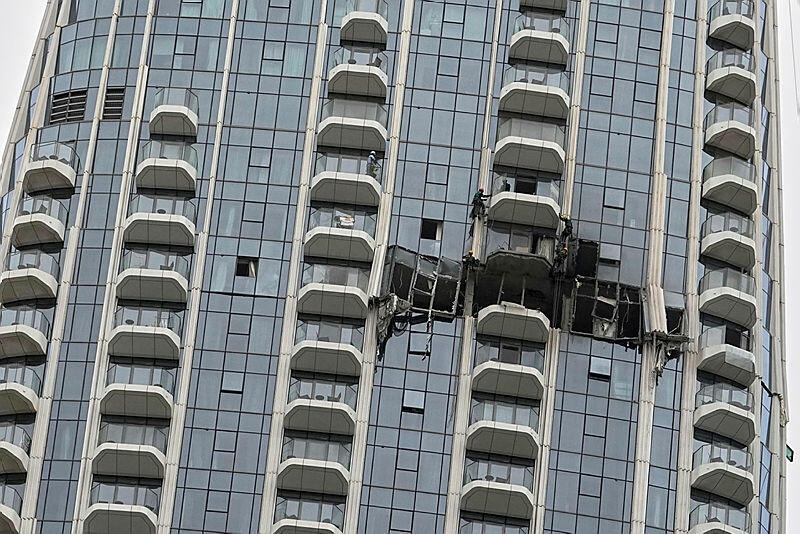
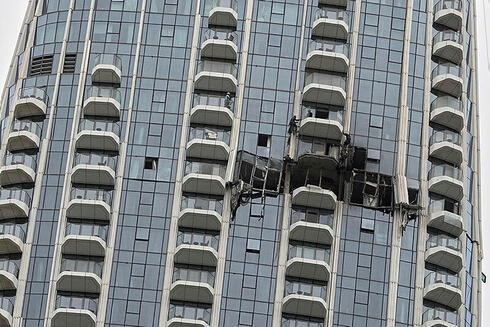
In Israel, an apartment with a protected room is highly desirable, especially in areas frequently exposed to rocket fire. It allows residents to maintain a relatively normal routine, unlike those without such protection who must run to external shelters and endure disrupted nights. While home protection has long been part of Israeli planning policy, countries in the Gulf largely neglected the issue, assuming they would not face similar threats. That assumption is now being tested, as direct attacks strike residential buildings in major cities.
In recent weeks, and even earlier during Operation Rising Lion, Israelis with business and government connections in the United Arab Emirates began mediating between Gulf officials and Israeli defense-related companies. These contacts intensified with the start of Operation Roaring Lion. Israel David, Vice Chairman of the Israeli Union of Engineers in Construction and Infrastructure, says he is currently assisting efforts in Dubai to protect existing buildings.
“I am being contacted urgently by the Emirates,” says David. “Our protected rooms have proven themselves over the years, but they didn’t think about protection before. Now a problem has emerged that must be solved. It is clear they will not build full protected rooms in existing towers, it is not practical, but there are approved solutions. These involve reinforcing an existing room with lighter materials that provide a high level of protection, similar to a standard protected room.”
David estimates that adapting a standard-sized room to this level of protection would cost approximately 150,000 shekels (approximately $48,000). While not inexpensive, it may be attractive for wealthy Gulf states because it avoids demolition and reconstruction. “This is a fast solution that can be implemented within a week,” he says, adding that similar approaches should also be subsidized in Israel for older buildings.
Ran Naor, CEO of Ortech, one of Israel’s largest protection companies, confirms growing interest from the Gulf. “The need existed before, but like any bureaucracy, action only comes after a crisis,” he says. “Now they understand the urgency and are turning to Israel because we have the experience.”
According to Naor, the solution being offered, already approved by the Home Front Command, is used in Israel for protecting data centers, private homes, and buildings where adding a traditional protected room is not feasible. It involves reinforcing walls, replacing doors and windows, and sealing the space using composite materials. The process takes approximately eight days per room. He notes that during a previous operation, a person inside such a reinforced room survived a direct missile strike on a nearby structure.
On the regulatory front, Gulf states still face significant challenges. Ido Sabag, CEO of DIMS Technologies, says his company is helping formulate initial standards. “There is currently interest in protecting institutional spaces and densely populated areas,” he explains. “But regulation is critical, it defines materials, thickness, sealing standards, and ventilation systems. We are still waiting for formal definitions before submitting detailed proposals.”
At the same time, Israel itself is reassessing its protected room standards. The events of October 7 and subsequent missile attacks exposed limitations in existing designs. For example, doors were originally designed without internal locking mechanisms to allow emergency access, but real-world incidents demonstrated the need for secure internal locking. Similarly, door thickness proved insufficient against certain types of gunfire.
Missile threats have also evolved. While older threats like Qassam and Grad rockets carried relatively small explosive payloads, newer weapons, such as Hezbollah’s Burkan missiles and Iranian ballistic missiles, carry significantly larger warheads, sometimes up to a ton. Existing standards were not designed for such scenarios, prompting a reassessment of protection requirements.
The requirement to include protected rooms in all new construction in Israel was introduced after the Gulf War in 1992, primarily to reduce response times and eliminate the need for gas masks. However, in the more than three decades since, standards have evolved only gradually.
Now, more significant changes are underway. One major update, already approved, allows the expansion of protected rooms from 9 to 15 square meters, enabling the inclusion of a shower, toilet, and kitchenette, reflecting the reality of longer stays.
Door standards are also being upgraded. Previously, steel thickness ranged from 1.5 mm to 4 mm depending on location. Under new requirements from the Home Front Command, doors will need to be significantly thicker, up to 10 mm with a protective wall and 22 mm without, capable of withstanding stronger blasts and small-arms fire. New designs include both sliding and hinged doors, along with improved locking mechanisms.
Manufacturers are already developing new models. Some designs feature concealed sliding doors embedded in reinforced walls, combining functionality with improved aesthetics. However, these advanced doors are expected to cost significantly more, up to 15,000-20,000 shekels, compared with around 1,000 shekels for current standard doors.
Windows are also being upgraded. Historically considered a weak point, they have undergone several iterations, including stronger seals and improved structural integration. Following fatal incidents caused by shrapnel penetration, standards were tightened further. New requirements will increase steel thickness and improve locking systems, although recent testing has shown that many current designs still fail to meet stricter criteria.
As a result, manufacturers are now conducting more rigorous blast tests to ensure compliance with the new standards.



