










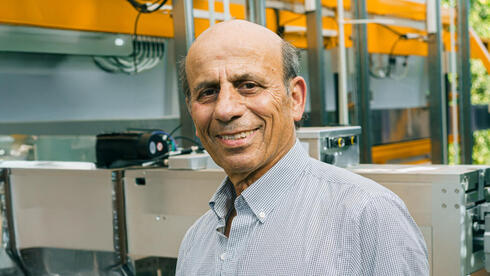
Israeli agtech startup Nanovel wins €2.5 million EU grant for AI harvesting robots
The company is also eligible for a €4.3 million equity investment as it develops autonomous robots to tackle the global shortage of agricultural workers.
Israeli agtech startup Nanovel, based in the Mevo Carmel Industrial Park, has been awarded a €2.5 million ($2.85 million) non-dilutive grant from the European Innovation Council (EIC) Accelerator program to support the commercialization of its autonomous AI-powered citrus harvesting robots. In addition, the EIC selected Nanovel as a candidate for an equity investment of up to €4.3 million ($4.9 million), which is intended to serve as an anchor investment for the company's planned €8 million ($9.1 million) funding round.
The EIC said the award reflects its assessment of Nanovel's technological innovation, the commercial potential of its product and the company's execution capabilities.
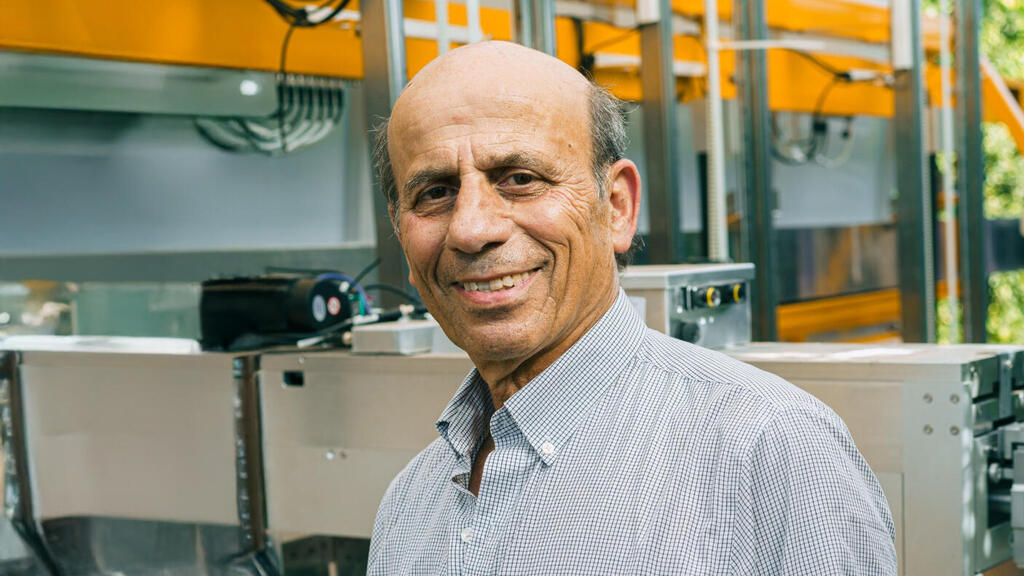
Fresh fruit growers around the world are facing mounting economic pressure due to their reliance on seasonal manual labor for harvesting, which accounts for roughly 50% of production costs. At the same time, a growing shortage of agricultural workers is making it increasingly difficult to harvest crops efficiently. Nanovel will use the grant to reach key development milestones on its path toward launching a commercially ready autonomous robot for harvesting oranges and lemons in 2028.
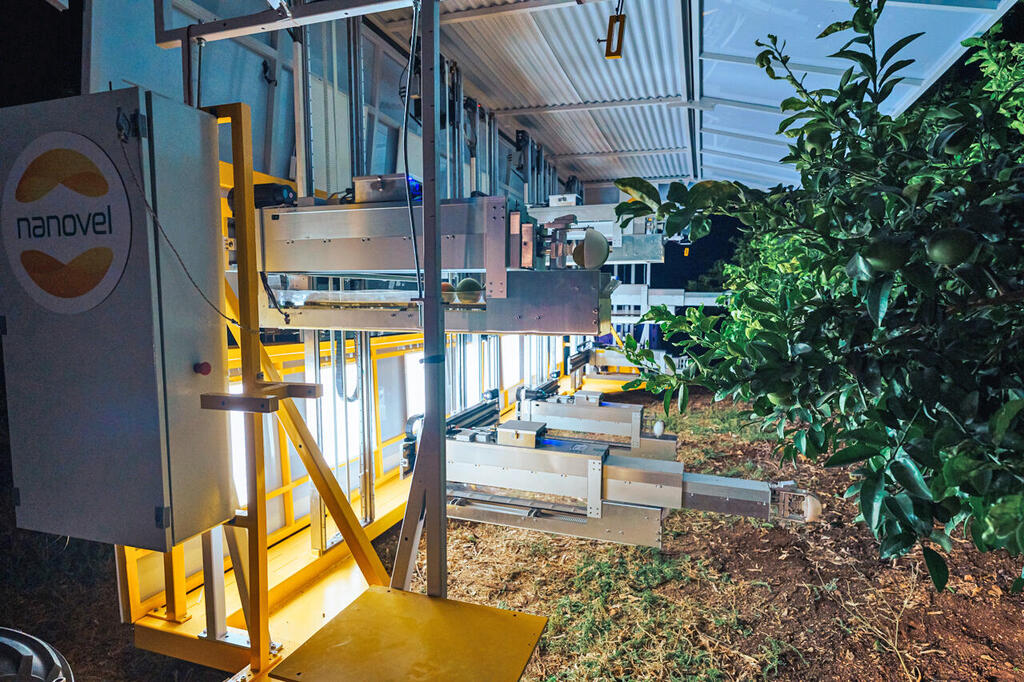
To achieve that goal, the company is expanding its operations in Europe while conducting extensive field trials with leading growers in major citrus-producing countries, including Spain and Italy. At the same time, it is completing development of its multi-arm robotic harvesting platform, designed to operate in dense tree canopies where conventional automation has struggled.
Nanovel estimates that the global market for harvesting oranges and lemons alone represents an annual opportunity of approximately $1 billion, translating into a potential business opportunity of around $10 billion over the coming decade.
"Our mission is to ensure the global availability of fresh fruit for consumers while improving the economic viability of fruit growers by automating the most labor-intensive stage of production," said Itzik Mazor, founder and CEO of Nanovel. "This grant supports our expansion into Europe as a strategic market and firmly positions us on the path to a commercial launch in 2028."
Nanovel's robotic harvesting platform was developed to meet the demanding standards of the fresh citrus industry. The system combines advanced computer vision with deep-learning artificial intelligence to identify fruit hidden deep within tree canopies. It then guides the company's patented "Grip & Trim" robotic end-effector, mounted on a telescopic arm, to gently grasp each fruit and precisely cut its stem without causing damage. To maximize productivity, the platform operates multiple robotic arms simultaneously under the control of an onboard computer, while a remote management system enables operators to monitor and manage fleets of robots across multiple orchards.
Related articles:
The company has already conducted field trials in Israel, Europe and the United States. Following successful validation trials in California in partnership with the Citrus Research Board (CRB) in late 2025, Nanovel is currently focused on harvesting oranges and lemons. Its product roadmap includes expanding the technology to additional citrus varieties as well as mangoes, peaches and nectarines.
Founded in 2018 by serial entrepreneur Itzik Mazor, the former founder and CEO of Jordan Valley Semiconductors, which was acquired by Bruker Corporation, Nanovel develops precision harvesting systems that combine robotics, artificial intelligence and computer vision to help growers overcome labor shortages while preserving fruit quality.



