





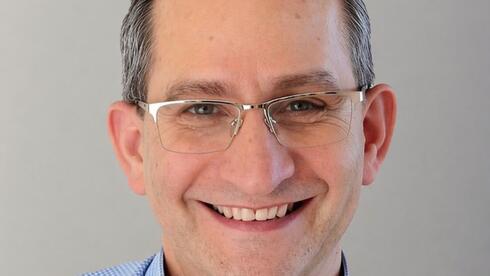




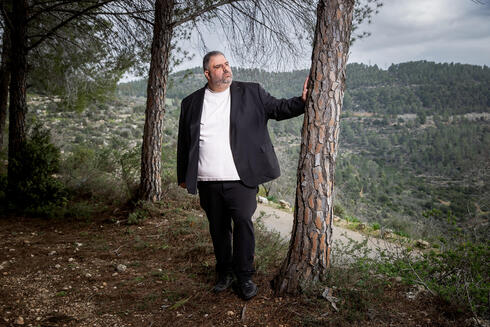
KKL-JNF’s power shift: New chairman vows to end years of political turmoil
Eyal Ostrinsky takes charge after a controversial appointment battle, promising reform inside one of Israel’s most powerful yet opaque institutions.
A tour of the National Institutions on KKL Street in Jerusalem offers a rare opportunity to step back in time and encounter remnants of the state’s founding era and the iconic figures who once walked its halls. Israel’s first government's original meeting room remains preserved as it was, the corridors display fascinating documents and sculptures, and the walls are adorned with images of leaders of the Zionist Movement throughout the generations.
All of this stands in stark contrast to how the World Zionist Organization (WZO) and Keren Kayemeth LeIsrel-Jewish National Fund (KKL-JNF) have been perceived in recent years, inefficient and corrupt. endless political battles over handing out jobs to associates, many of them hard to justify and have replaced any real sense of direction or vision.
The situation reached a low point in October 2025, when Israel's Minister of Culture and Sports, Miki Zohar, who leads one of the Likud factions in the Zionist Congress, announced his intention to appoint Yair Netanyahu as head of a department with a minister-level salary. The move triggered a chain reaction that ultimately led to Eyal Ostrinsky’s surprising appointment as Chairman of KKL-JNF. Now, Ostrinsky declares, he is determined to fix the organization.
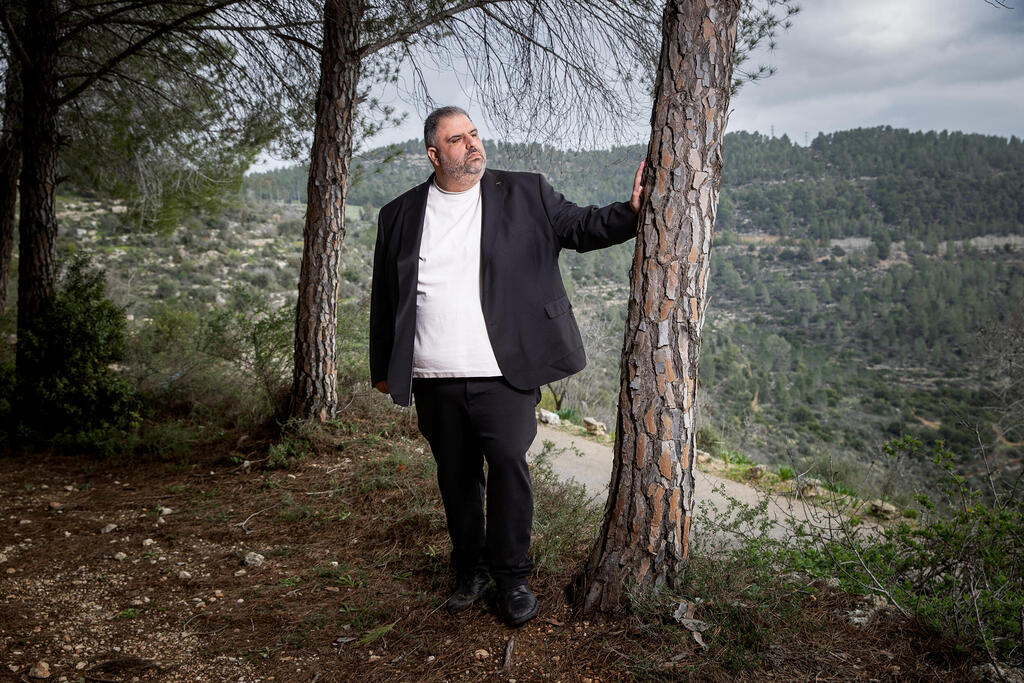
Some background: Behind the historic brand of KKL-JNF stands an organization managing an annual budget of billions of shekels. There are government offices with smaller budgets, however as opposed to them KKL-JNF is not supervised by the Ministry of Finance. As a public-benefit company, it is overseen by the Registrar of Trusts and the Corporations Authority.
This structure grants the organization flexibility that government ministries lack, including the ability to redirect budgets across diverse purposes. Here lies significant political power, as KKL-JNF's decisions can determine whether projects move forward or are delayed. Which is why nearly every local authority in Israel receives funding from KKL-JNF for projects such as developing open spaces, forests, public institutions, and education.
KKL-JNF owns 2.35 million dunams of land. About 940,000 dunams were purchased with donations from Jews who contributed to the well-known blue tzedakah box. The rest consists of absentee property (Arabs who remained in enemy territory following the UN decision to end the British Mandate on November 29, 1947), which were transferred to the Fund upon the establishment of the state.
In 1961, under a covenant between the State of Israel and KKL-JNF, the organization was assigned responsibility for land development and forest management. Millions of dunams were transferred to the management of the Israel Land Authority (formerly the Israel Lands Administration), and each year the Fund receives from the ILA the proceeds from the marketing of land it owns. This is the Fund’s main source of income.
In 2022, when there was a surge in real estate prices, KKL-JNF received 6.4 billion NIS. By 2025, with the real estate market slowing, the organization settled for 2.5 billion NIS.
“KKL-JNF’s board of directors is political, with seats allocated among the factions in the World Zionist Congress according to their size. This includes well-known parties such as Likud and Labor, as well as movements that are not represented in Israel’s parliament, such as the Conservative and Reform movements.
“To ensure all groups are represented, the board includes 37 directors. KKL-JNF cooperates with all the relevant authorities and institutions, but control of the Fund is done through the chairmanship and the heads of its committees which allows budgets to be directed according to political priorities."
For example, Ostrinsky, affiliated with the Labor Party, promises to prevent land purchases in Judea and Samaria, while the fund can allocate budgets toward kibbutzim, moshavim, liberal organizations, youth movements, and pre-military academies. A right-wing chairman, could lead to excessive investment in isolated farms and outposts, or in local authorities favored by the Likud.
“It's better for Lapid that we don't talk about nepotism”
The shift in location between the two meetings for this interview reflects the change that Ostrinsky has undergone since the 39th Zionist Congress concluded in November. We first met in a cramped side room while he was serving as chief of staff to Yizhar Hess, then deputy chairman of the World Zionist Organization. Three weeks later, we were already sitting in a spacious office befitting his new position. Meir Cohen of Yesh Atid was supposed to sit in this office, but Zohar’s announcement regarding Yair Netanyahu’s appointment sparked an outrage.
The national institutions have become the subject of reports on corruption and political appointments, prompting Yair Lapid to announce that Yesh Atid would withdraw from the agreement on the allocation of positions in the institutions.
The announcement upended the political landscape and forced all sides back to the negotiating table. Ostrinsky, a Labor Party member who knows these institutions inside out after seven years in various positions, led the negotiations on behalf of the liberal bloc. By the end of the process, he emerged as the leading candidate for chairman of KKL-JNF.
Were you surprised by Zohar’s plan to appoint Netanyahu's son as a head of department?
“Zohar told me about it half an hour before he suggested his name. I told him I thought it would create serious difficulties, but I didn’t believe the party I represent had grounds to block the appointment. If you ask me whether I would have made that appointment, the answer is no. I told him it was problematic and would likely spark an uproar, but in the end, there was no real reason to block it professionally.”
But Yesh Atid blocked the appointment.
“People in Yesh Atid like to claim they were the ones who stopped it, but that’s not what happened. About 50 people were in the room, the members of the committee meant to approve Yair Netanyahu’s appointment to the board and all of them opposed it. There was an outcry that made it impossible. That’s what led to Yesh Atid’s cynical withdrawal.”
Why cynical?
“I’m disappointed with the way they’ve used this to their advantage (Ostrinsky’s point of view was that Lapid’s announcement that Yesh Atid would withdraw from the Zionist institutions was a PR move that serves the party, not the liberal camp).
“They’ve been partners in the national institutions by choice over the last few years. They were part of the negotiations throughout, and the issue of dividing up positions was the last thing that bothered them. They had already celebrated the appointment of Meir Cohen as chairman of KKL-JNF, you can’t say they have a problem with KKL-JNF. How is this fair?”
Maybe after Lapid realized that if someone like Yair Netanyahu can be appointed to a position like this, there’s no way to beat such a flawed from within?
"Let’s just say that for Yair Lapid, it’s better if we don’t talk about nepotism in the national institutions.’”
Appointing his sister-in-law as a director in 2021 may have been a mistake, but it’s an unpaid position. You cannot compare this to Yair Netanyahu. Not in salary and certainly not because Netanyahu is a divisive figure who incites hatred, hardly a figure associated with statesmanship.
"If you look, you’ll find plenty of nepotism just as significant, including paid positions. And to this day, Orna Barbivai sits on the board of the Jewish Colonial Trust on their behalf, in a seat appointed by the World Zionist Organization. Why hasn’t she resigned?!"
“Golan and Liberman gained from my appointment, and I gained from them”.
The appointment of Ostrinsky sparked enthusiasm within the Labor movement and the kibbutzim, as for the first time in years, someone from their ranks holds a position of influence within the organization. Something unexpected happened with my selection,” he says. “Suddenly, social media was flooded with people showing support and drawing inspiration from the fact that someone from the Labor movement had succeeded. I suddenly became someone that hundreds, maybe even thousands, see as a point of reference. An opportunity opened up that I never expected, and I went for it,” Ostrinsky says.
Is the opportunity Yesh Atid's resignment?
"The abandonment and neglect by Yesh Atid. That’s how I see it.”
Some would say you’re undermining your own side.
“They’re the ones undermining it. By contrast, I want to commend Yair Golan and Avigdor Liberman, who had the courage to make different decisions (unlike Yesh Atid, Labor, Meretz and Yisrael Beiteinu who took part in the negotiations over the new coalition agreement in the World Zionist Organization and pushed for specific Ministerial Portfolios and budgets despite public criticism). “They said: ‘We’re part of this, we have communities, we have education, we have something to build on.’ We won together, and I owe that to them.”
But in two and a half years, you are due to step down under the agreed rotation and hand over the role to ShaI Hajaj, head of the Regional Councils Center.
“I’m not going anywhere. I’ll remain in a senior position, either here at KKL-JNF or in the World Zionist Organization. And I’m saying this publicly: at the next Zionist Congress, I intend to run again for chairman of KKL-JNF.”
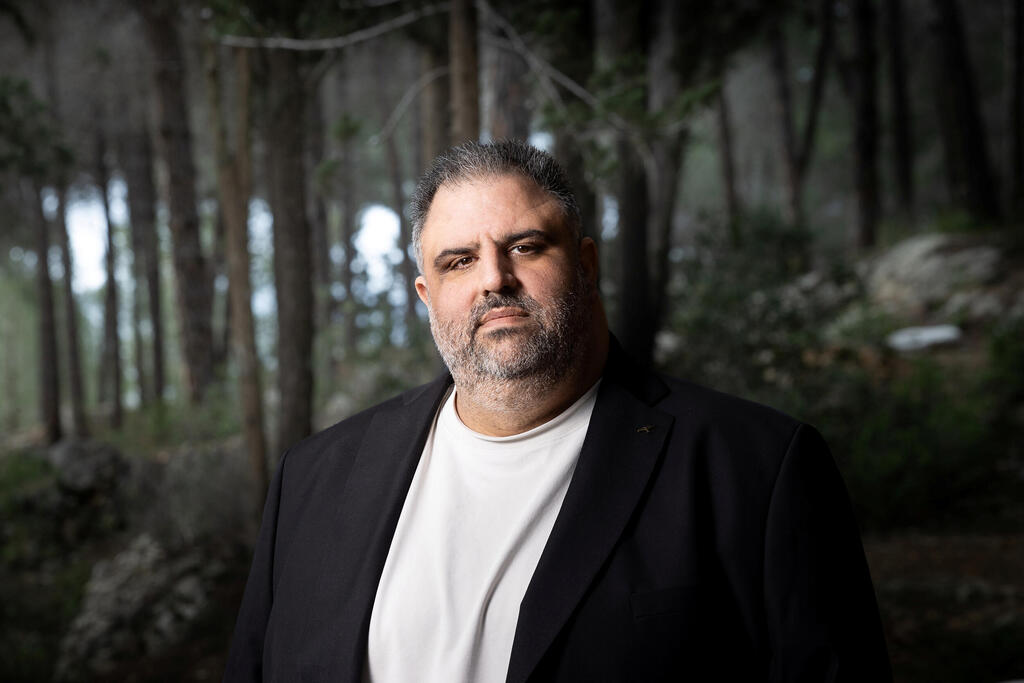
In the elections for the World Zionist Congress, Likud split and ran in three separate factions led by Yaakov Hagoel, Miki Zohar and David Bitan. Did that help you secure better terms in the coalition agreement?
“I work well with all my partners in Likud. Wherever Likud members are involved, there is personal ambition, and that’s legitimate in a party with primaries. That’s why people seek influence in national institutions.”
So they can hand out more jobs?
“That’s not accurate, it’s not just about jobs. In the World Zionist Organization, Likud holds key positions: it heads the Settlement Division and the Department for Zionist Activity in the Diaspora. Likud members want to be there because they have a constituency to represent. Most of the periphery, almost all of it, supports Likud, and ultimately 80% to 90% of local authority mayors in Israel are from Likud. It’s legitimate that they want to be here and have influence.”
The agreement worked because you gave them enough jobs.
“Honestly, agreements come with a price. Anyone who has formed a government in Israel has promised a cabinet of 18 ministers and ended up with 32, including those who now criticize the national institutions and the number of positions handed out there. I don’t recall that, in the 'Bennett-Lapid Government’ the number of ministers was 18, or close to it.”
And yet, you increased the number of department heads in the World Zionist Organization to 21, whereas a decade ago there were only six.
“We in the liberal bloc will lead a constitutional amendment to cap the number of departments at 14, as it was in the previous term. The increase reflects the fact that more parties have entered the organization. Israel’s political system keeps adding more and more parties, all of which demand a seat at the table. The increase in positions compared with the previous term was due, in part, to Yesh Atid asking for three roles instead of one. It grew from 32 delegates to 48, about a 50% increase but asked for three times as many positions. I’ll be honest: I’m not comfortable with that.”
Who needs all these new departments you’ve created?
“I invite you to go to Kiryat Shmona, to Nir Oz, and places like that, and ask whether what we’re doing is needed or not. You’ll get a clear answer, not just there, but from pre-military programs, youth movements, educational kibbutzim and community-based initiatives. So I’m satisfied with the need for this expansion.
“Without us, Kibbutz Nir Oz might not have received 75 million shekels, and its rehabilitation agreement with the state might not have been signed.”
What do you think of Lapid’s proposal to nationalize KKL-JNF and transfer its budgets to the state? It would eliminate many unnecessary positions and make the funds more transparent.
“There are no political appointments at KKL-JNF. There is only one political position that is paid - the chairman. No other political figure receives a salary. All the positions are within the World Zionist Organization, so the call to nationalize KKL-JNF is somewhat puzzling. I heard this from Yair Lapid, and it seems to me he may be confusing things he’s calling to nationalize KKL-JNF over paid positions that actually exist in the World Zionist Organization.”
KKL-JNF funds the World Zionist Organization. Without KKL-JNF’s money, there is no World Zionist Organization.
“The national institutions don’t belong to the State of Israel. They don’t even belong to the Israeli society, and they certainly don’t belong to the government. They belong to the Jewish people, in Israel and in the diaspora.
“The Jewish people are far more diverse than what is reflected within Israel alone. If you dismantle the national institutions, you erase the representation of liberal movements and their ability to influence what happens in Israel, as well as the relationship between Israel and the Jewish communities abroad. “On the one hand, you’re abandoning them. On the other hand, you’re leaving yourself at the mercy of shifting political considerations governments that prioritize one group one day and another the next, unlike the national institutions.”
“My parents were active in labor unions and went on strike often. I identified with social struggles.”
The second part of the interview with Ostrinsky, the youngest chairman of KKL-JNF in decades took place just days after his wife unexpectedly went into early labor, and he was still wearing a hospital wristband.
Today, the couple lives in the affluent town of Mevaseret Zion, but he says his childhood in the 1980s, in the immigrant neighborhood of Azorim in Netanya, shaped his social outlook. “I saw firsthand why equal opportunity and closing gaps matter. I saw how good kids can end up going down the wrong path,” he says.
In the army, he served in a unit for unit for capturing deserters after being rejected for combat service due to him having cancer in his childhood. He recounts that extensive activity in impoverished neighborhoods made him notice the link between crime and social weakening, and when he was discharged in 2005, he joined the Labor Party (Haavoda). “Something happened in Israel in those years. Netanyahu was appointed Finance Minister, and Amir Peretz stood opposite him as chairman of the Histadrut. Both my parents were members of a labor organization and went on strike frequently at that time. I found myself identifying with the social struggles led by Peretz against the government, at the time” he explains.
He began his political activity during law studies at the Hebrew University. He joined the Ofek faction of the Labor Party, where he met Yair (Yaya) Fink. They joined a faction of the Hitorerut in Jerusalem movement founded by Ofer Berkovich and Knesset member Merav Cohen and won elections for the Student Union.
About that period, he says: “One of the skills I became very proficient in during those years was the ability to find what connects people, and to some extent push away what drives them apart. I learned to try to understand how to create agreements in a complex space.”
After finishing his studies, he worked briefly with Amram Mitzna, who returned to politics after serving as chairman of the temporary committee in Yeruham. “I thought there was something noble in this Zionist act in Yeruham, and unfortunately it didn’t succeed (in national politics — A.G.).”
After Mitzna, he worked with Knesset members Daniel Ben-Simon, Eitan Cabel, and Minister Amir Peretz. “I always worked with those representing the social line in the Labor Party. Perhaps my reason for going in this direction is also linked to my historical background and identification with the social socialist line and with disadvantaged populations.”
He first joined KKL-JNF in 2015 as senior advisor to Chairman Danny Atar, and together they implemented a series of reforms in the fund. “Danny took this organization, that until then had norms from the 1960s, and set it to today’s standards. He introduced mandatory transparency and publication of protocols for the first time, and today all protocols can be found on KKL-JNF’s website. He introduced conflict-of-interest rules for directors and senior officeholders, appointed an internal auditor, and a legal advisor to the board.”
Precisely regarding transparency, Danny Atar clashed with the State Comptroller.
“The State Comptroller examined KKL-JNF between 2014-2015, and Danny accepted the report as it was and appointed a project manager to fix the deficiencies. Within a year, much of the shortcomings were corrected.”
“We will invest in population dispersal to the Negev and the Galilee”
Ostrinsky feels he is entering the role prepared. “I know what this organization can and needs to do, and what its advantages and disadvantages are,” he says.
What plans will you advance in KKL-JNF?
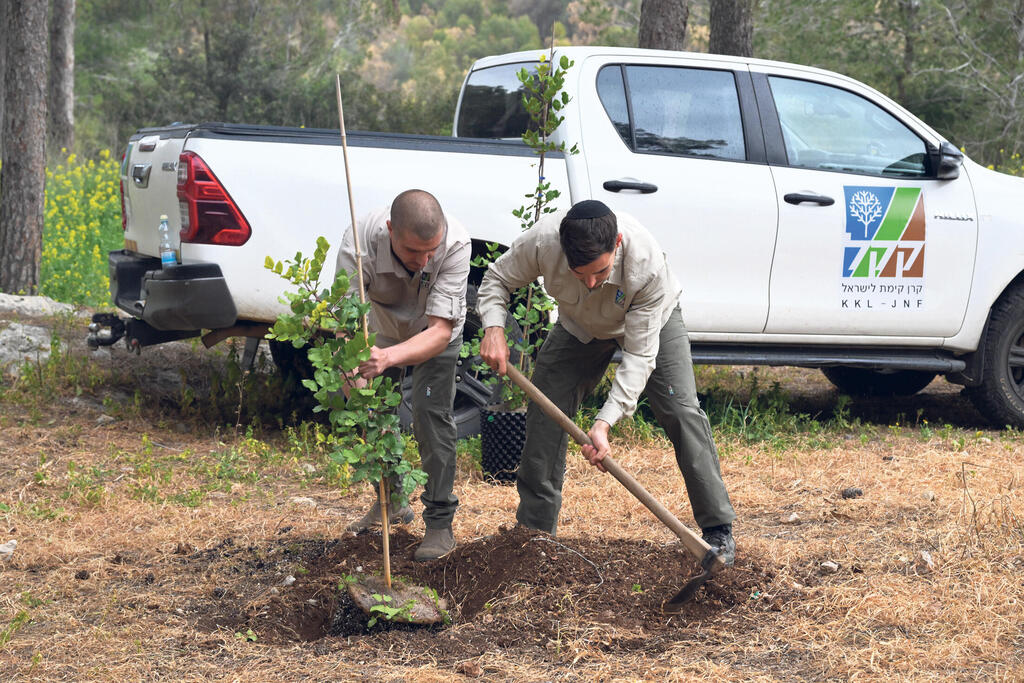
“I have a very clear vision: to stick to the core. Blue water, green forest, and brown earth. The forests will be at the top of the organization’s priorities because they are important for dealing with the climate crisis. More trees absorb more carbon.”
How will this be reflected in KKL-JNF’s work plan?
“We will act to increase the forested areas in the State of Israel. We will reduce processes of subtracting forest areas. Many times, expansion is sought for the benefit of real estate development at the expense of open spaces.”
Will you give up land improvement that is worth a lot of money to you?
“Land improvement brings in more money, but it is less good in the environmental sense. We need to add as many forest areas as possible, and KKL-JNF is currently working on this. I intend to establish a public committee in which experts will sit, and it will formulate forest land management policy: how much to plant, where to plant, what to plant. In addition, we want to make forest areas more attractive, double the length of bicycle paths, open parking areas and parks, and turn the forest into a place the public wants to come to.”
That’s the green chapter, what will you do in the water field?
“KKL-JNF needs to be part of the field of water reservoirs and water infrastructure for agriculture. I want KKL-JNF to invest over the next ten years one billion shekels, 100 million per year, in developing the water sector and water infrastructure for agriculture in Israel. In addition, I would like KKL-JNF, together with the drainage and river authorities, to create a strategic plan for river rehabilitation.”
And in the area you called brown, land?
“We will invest in population dispersal to the Negev and the Galilee. We do not replace government ministries, but we can develop land. In areas north of Hadera and south of Gedera, we will be able to assist in development for new communities, such as Mevo’ot Arad in the south or Shibolet in the north, and in expanding infrastructure in existing communities. I aspire that over the next five years we will produce 3-4 regional plans each year. Together with people on the ground, we will create an infrastructure package tailored to their needs. The first strategic plans I want to implement are an additional phase of support for the Gaza envelope and the northern confrontation line, alongside the heart of the Galilee and the deep Negev, Yeruham, Dimona, Arad, and their surroundings.”
When will you approve these development budgets?
“Most of the strategic plans will be advanced at the end of the year, toward the beginning of 2027. We may approve urgent matters along the year, such as an additional phase of assistance to the Gaza envelope and the northern confrontation line.”
Will you also assist settlements in Judea and Samaria?
“This issue is challenging for me, because I do not believe in it. On the other hand, I am not alone. I am in a world where I need to respect the legitimate worldviews of my colleagues. We are in dialogue to define what yes and what no in this space.”
What are your boundaries?
“I think the settlement blocs are a legitimate place to operate in. Outside the blocs it is more complex for me. But environmental development or development of public buildings in existing communities can be done, because in the end, a child in Elon Moreh does not deserve less than a child in Ramat Gan or Givatayim. However, in this term there will be no purchase of land in Judea and Samaria.”
There hasn’t been a permanent CEO for KKL - JNF for two years, when will a new one be selected?
“We established a search committee, we have 26 candidates. We are in the ranking process, we will finish it in a few weeks, and a suitable CEO will be chosen.”
About six months ago, a group of residents from the Rehavia and Talbiya neighborhoods in Jerusalem petitioned the High Court of Justice, demanding that you announce an extension of the lease on 500 dunams of land that were previously owned by the Greek Church and sold to a group of developers led by Gary Barnett. The residents fear that if KKL-JNF does not renew the leases, the developers will impose less favorable terms and the value of their apartments will decline. What is your position on the matter?
“I’ve spent some time looking into the issue. The issue of the church-owned land is complex, and it’s very easy to just leave things as they are and do nothing."
So you won’t act?
“I am not there right now. Within six months from now we will be after a foundational decision on this issue.”
Could you clarify the direction of the decision?
“I won’t go into details just yet, it's still in discussions. What I can say is that, unlike my predecessors, I have no hesitation when it comes to making decisions. We need to do what is right for the public, for the leaseholders, and for the development of public lands.”
"I will not operate behind the scenes again. I am fully comfortable in the policymaker’s seat.”
Ostrinsky enters his role at a particularly sensitive time in relations between the workers’ committee and KKL-JNF’s management. The fact that the committee’s chairman, Israel Goldstein, was under investigation in the Histadrut affair certainly did not help. “A workers’ committee needs to care for employees’ rights and welfare, but it should not be involved in the management of the organization—and certainly not in its internal politics,” says Eyal Ostrinsky. “It would also be preferable for committee members to be less involved in national politics, as this does little to strengthen KKL-JNF’s position.”
Won’t this policy lead to a conflict with the committee chairman?
"I hope not, there is no reason for confrontation. I want to lead a comprehensive recovery plan at KKL-JNF, focused on improving efficiency and restoring financial balance.”
What does that mean?
“We need to reduce participation in media conferences, sponsorships, oversea travel, and excessive spending. In recent years, management’s status in the organization has weakened compared to the workers’ committee., and that balance needs to be restored. If we are required to examine steps taken in the past that overly inflated the KKL - JNF bureaucracy, we will confront them courageously. We will try to do so through dialogue with the workers’ committee.”
What do you mean by “inflating the organizational bureaucracy”?
“One of the things I discovered at KKL-JNF is that in recent years the number of employees has grown far too much. In the 2026 budget, I was asked to allocate funding for 1,400 positions, while there are currently 1,250 employees, and even that number raises questions. In recent years, there has been a significant increase in the workforce that was not brought to the attention of the board.”
Who are you referring to?
“That’s a very serious question as to who approved these decisions, and we will look into. There will not be 1,400 positions this year. I will approve only 1,275. We will not go beyond that. For the first time at KKL-JNF, we are set to approve a fixed-cost budget lower than the previous year. Over the past five years, fixed costs have risen, and this will not continue. Fixed costs will reflect our level of activity, and the operational budget will always be higher.
“Some actions do not serve the interests of the public as a whole. for example, staff training, seminars and professional development programs. That is why I requested a detailed breakdown of the operations budget, to understand how much is allocated to internal functions and how much is directed for the public. I also plan to direct more of our spending to public interest each year, and less to internal costs. I was also told there has been a significant increase in the number of company vehicles, and I’ve asked for it to be reviewed. Steps will be taken to address this.”
Will you cut positions or company vehicles?
“I want to take a closer look before making any decisions. In any case, there will be no layoffs. I haven’t said I’m making cuts, I haven’t said anything like that.”
So what do you mean when you say you’ll examine these issues in depth?
“We will examine them thoroughly, and it is possible that those responsible for the increase in positions will be held accountable. But laying off employees affects people, and I won’t rush into such a step unless it’s necessary."
Do you have the courage to carry out such drastic measures?
“Yesterday I met with the organization’s audit committee. It was one of the few meetings I didn’t cancel this week following the birth of my child. I told them that my feeling is that those responsible for oversight in the organization are not dealing with these issues."
Why?
"Because it involves 'moving the cheese', and there are people who have tried to intimidate those looking into certain issues. But I intend to require those responsible to carry out these reviews as thoroughly as possible."
Who are you referring to?
“The internal auditor, the legal department, and the finance division. They will be expected to carry out their work without fear. I will back them and make sure that, during my tenure, no one threatens them. That will not happen.”
In two and a half years, Shi Hajaj will replace you in the role. Who guarantees that the policy you are shaping will continue?
"I sat down with Hajaj, and we agreed to continue collaborating. He is a very serious and highly respectable person. It seems to me that he and I see eye to eye on KKL – JNF's challenges in the coming years. We had a very long and serious conversation because it was important to me that we have a shared vision. We agreed that he would be a partner in formulating the strategic plan."
Can the liberal bloc replicate its success in the Zionist Organization in the national elections as well?
"First of all, KKL - JNF will not be involved in anything controversial on the national arena. It will not intervene in politics, not in its budgets, its resources, or its activities. But I am a political figure, and I will consider very carefully where and how it is appropriate to get involved."
After KKL - JNF, do you see yourself in national politics?
"I don’t rule out any positions of national influence. I won’t go back behind the scenes. I think that today I naturally sit in a policymaking seat, in the sense of being the one who shapes the discourse and speaks the words, not just the one who suggests what to say. This position feels natural to me."



