









Saudi OpenAI engineer charged with planting hidden recording device in executive conference room
Federal prosecutors allege that Abdulrahman Alfozan, a Saudi national who joined OpenAI in July 2025, planted a concealed recording device at the company’s San Francisco offices. OpenAI says it found no evidence that he improperly accessed or removed model weights, source code or customer data.
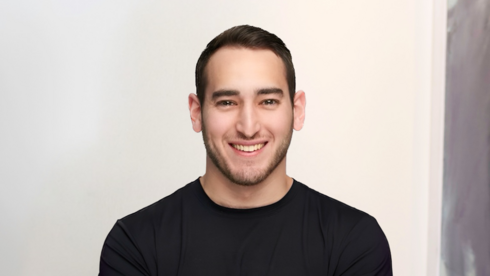
U.S. federal agents have arrested a Saudi national who worked as an engineer at OpenAI and charged him with allegedly installing a concealed audio-recording device in an executive conference room at the AI company, the Justice Department said on Tuesday.
The case highlights growing security concerns surrounding sensitive AI research as companies and governments compete for talent and technology that could confer significant economic and strategic advantages.
Abdulrahman Alfozan, 35, had worked as an engineer at OpenAI since July 2025, the Justice Department said in a statement. An email sent to an address associated with Alfozan did not elicit a response, and it was not immediately clear who was representing him.
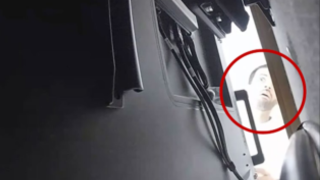
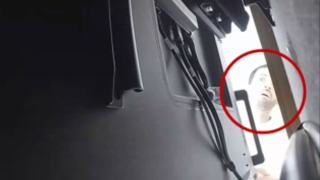
OpenAI discovered the recording device, which was plugged into a USB port on the back of a television in an executive conference room at one of its San Francisco offices, on September 30, according to the Justice Department.
The thumb-sized device contained a microphone and could connect to a camera, according to an FBI complaint. It was concealed in toilet paper and allegedly installed on or around September 28. Its stored data was encrypted and inaccessible, the complaint said. Investigators later found a similar customized device in Alfozan’s personal bag.
OpenAI said in a post on X that it used its internal AI models to identify the person responsible for planting the device and trace its origins. The company said it had evidence that the employee intended to install additional recording devices in sensitive areas of its offices to secretly record meetings.
“At this time, we have no indications of this individual inappropriately accessing or exfiltrating model weights, source code, or customer data. The employee was terminated,” OpenAI said.
The company referred the matter to the FBI, which is continuing to investigate. The Saudi Embassy in the United States did not immediately respond to a request for comment from Reuters.
“Abdulrahman Alfozan allegedly concealed a covert recording device inside his employer’s executive conference room to secretly capture sensitive communications about the company’s superintelligence technology,” FBI Director Kash Patel said in a statement.
According to the FBI complaint, Alfozan also used an AI productivity agent for about a month, through September 16, to seek information about meeting-room calendars and capabilities. He has been a U.S. lawful permanent resident since September 2020.
If convicted, Alfozan faces up to five years in prison, a $250,000 fine and three years of supervised release.
A LinkedIn profile indicated that Alfozan studied at the Massachusetts Institute of Technology and the University of California, Berkeley, and previously worked at Meta and Microsoft. Reuters could not independently verify the details in the profile.
Separately, The Information reported that OpenAI was in early talks to acquire Trail of Bits, a startup that identifies and fixes vulnerabilities in open-source software. The talks were ongoing and could fall apart, the report said, citing people familiar with the matter. OpenAI and Trail of Bits did not immediately respond to requests for comment from Reuters.
OpenAI also said on Friday that it had fired three researchers after an investigation found they had violated company policies on handling sensitive information.
The researchers, Jasmine Wang, Tomek Korbak and Mikita Balesni, published a letter describing the circumstances of their dismissals. They argued that the abrupt firings could create uncertainty among employees and undermine a culture in which researchers feel able to raise safety concerns.



