










OpenAI is solving decades-old math problems. An Israeli startup is taking a different route
OpenAI has unveiled solutions to 377 previously unsolved problems, while doubleAI is building AI systems designed to operate as mathematical experts.
Artificial intelligence is making increasingly ambitious incursions into mathematics, but not all of the companies pursuing that goal are taking the same path.
OpenAI has unveiled solutions to 377 mathematical problems that had remained unsolved, spanning areas including algebra, number theory, computer science, mathematical logic and topology. Some of the results involve three of the seven Millennium Prize Problems, while one of the problems apparently cracked is the Riemann hypothesis, a famous question concerning the distribution of prime numbers.
The scale of the effort is striking. But perhaps more interesting is what comes next.
While OpenAI is demonstrating what a powerful general-purpose AI model can accomplish across hundreds of difficult mathematical problems, Israeli startup doubleAI is pursuing a more specialized approach. Its goal is to build AI systems that can operate as experts in mathematics and other technical fields rather than simply answer questions posed to them.
That approach was put to the test this week when doubleAI announced that one of its systems had made what it describes as the first improvement in 38 years on a central problem in extremal graph theory.
The company's Double Agent system produced an explicit construction of regular graphs that improves the so-called girth coefficient from 4/3 to 8/5, moving it closer to the theoretical maximum of 2.
The underlying question had remained open since 1988. doubleAI says the system found a new algebraic construction and proved the improved bound for infinitely many degrees. The resulting proof was also formalized in Lean, a system used to verify mathematical proofs.
And the company says the work cost less than $2,000 in computing.
That is a very different proposition from simply asking an AI model to solve a difficult mathematical problem. The claim is that the system independently searched for a new construction, established the result and produced a formalized proof that can be checked.
If the result withstands scrutiny, it could offer an early example of the type of AI that doubleAI believes will ultimately matter most: systems capable of carrying out expert-level scientific reasoning rather than merely generating plausible answers.
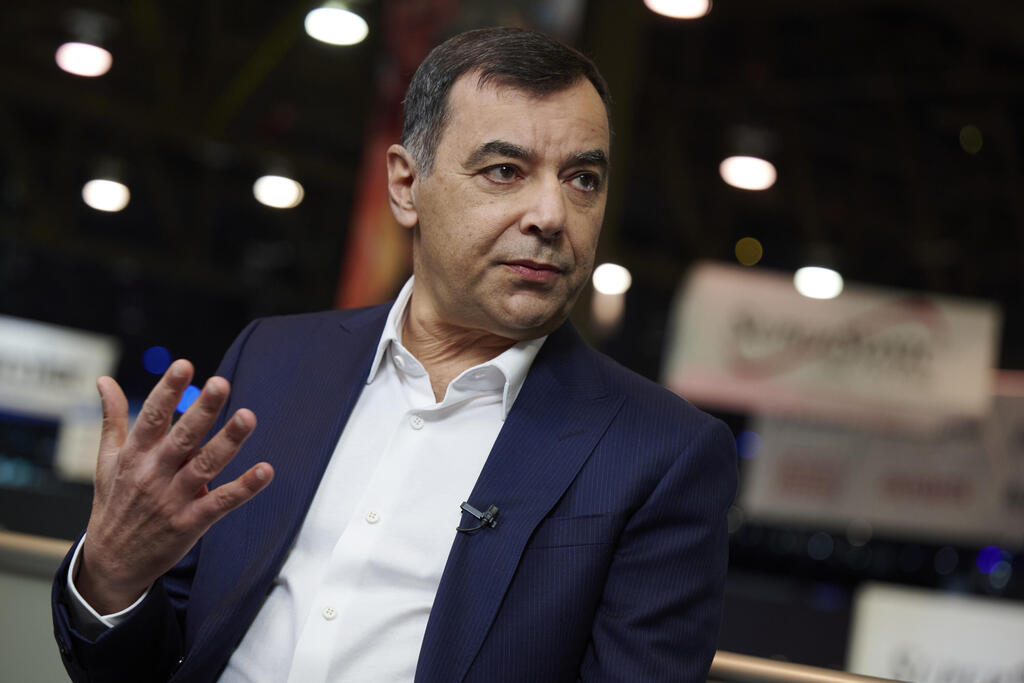
The company was founded by Amnon Shashua, the Mobileye co-founder, and has adopted the term artificial expert intelligence, or AEI, to describe its approach.
The idea is different from the conventional pursuit of artificial general intelligence. Rather than attempting to build one system capable of performing every intellectual task a human can perform, doubleAI is focused on creating systems with deep expertise in demanding fields such as mathematics, computer science, hardware engineering and the exact sciences.
DoubleAI was founded in 2024 and has been developing AI systems aimed at solving complex scientific and engineering problems through reasoning, trial and error and optimization. The company has also worked on AI systems for optimizing GPU code, reflecting its broader focus on problems that require long chains of reasoning and where verifying the answer can be almost as difficult as finding it.
The extremal graph theory result provides a particularly clear test of that philosophy.
The problem was not created as an AI benchmark. It was a longstanding mathematical question on which the best known result had remained unchanged for nearly four decades.
OpenAI's latest work represents a different way of demonstrating progress.
The company released more than 700 papers describing solutions to 377 previously unsolved problems. For 10 of those solutions, OpenAI provided detailed accounts of how its model arrived at the results. Each solution required an average of about three hours of computation.
The results cover a broad range of mathematics, and some involve the Millennium Prize Problems, seven famously difficult questions for which the Clay Mathematics Institute offers $1 million for each solution.
The latest material also follows OpenAI's recent claim that it solved the Navier-Stokes equations, another Millennium Prize Problem. The advanced model responsible for the latest results has not been released publicly.
Controversy has already emerged around AI-generated mathematical results. An academic who worked with Anthropic researchers on the Navier-Stokes problem claimed that an OpenAI model had relied on his unpublished work. OpenAI denied the allegation.
Tristan Buckmaster, a mathematician at New York University who worked on the Navier-Stokes problem, has argued that some AI results may involve taking existing human work and carrying it to completion.
More than 24 recipients of the Fields Medal have also signed an open letter titled “The Severe Misalignment of AI With Mathematics,” warning that the rapid push to solve difficult mathematical problems could undermine the purpose of mathematics itself.
The concern is not that AI should stay out of mathematics. It is that the standards for demonstrating and understanding a discovery become harder to establish when the system producing it is proprietary and its reasoning cannot be fully examined.



