










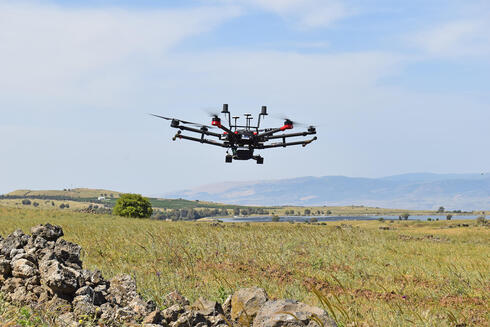
Defense-tech startup Tenna raises $13.5 million Seed to map the invisible battlefield
The Israeli firm turns existing sensors into a real-time shield against jamming and spoofing.
Tenna Systems, a defense-technology company developing software to monitor the electromagnetic spectrum, said it has raised $13.5 million in a Seed round led by Costanoa Ventures, with participation from Viola Ventures, Fresh Fund, 202 Ventures and existing backers. The funding will be used to expand in the U.S. defense market, where the company says it is already working with government agencies and prime contractors. As part of the expansion, Tenna plans to more than double its workforce over the next year.
The company, formerly named Tip & Cue Inc, is targeting a problem that has grown acute as militaries and civilian infrastructure become ever more dependent on wireless connectivity: the vulnerability of aircraft, drones, satellites and navigation systems to radio-frequency interference, jamming and spoofing. Rather than building new hardware, Tenna’s approach is to convert the sensors already embedded in these platforms into a shared, real-time map of the invisible spectrum in which they operate.
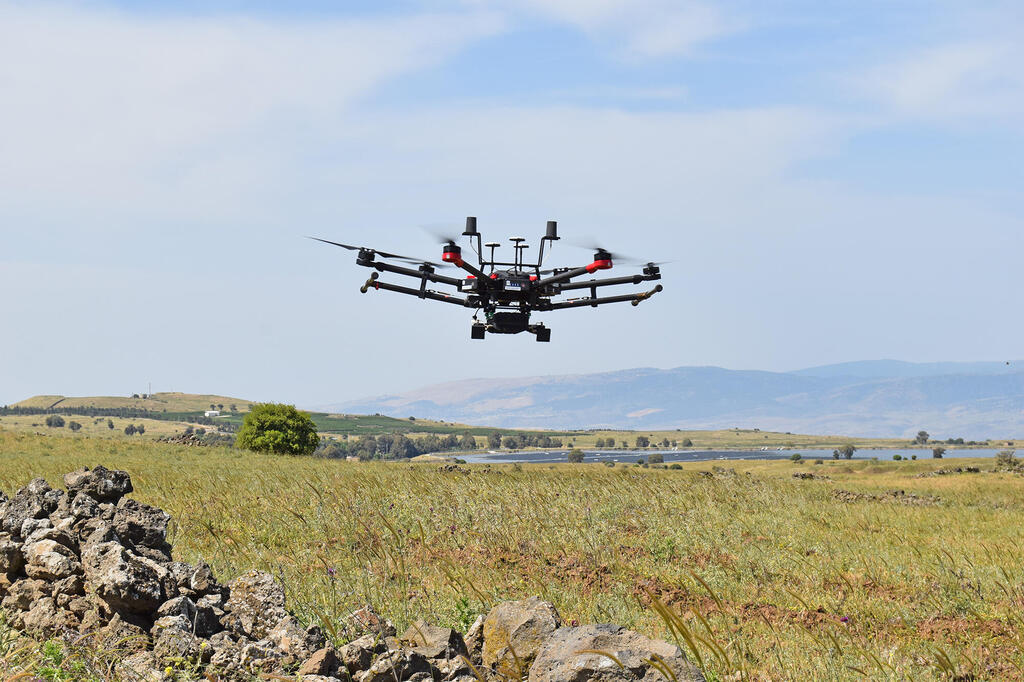
By treating every connected device as a potential sensor, the platform aims to identify interference within 50 to 200 meters, offering warnings without requiring additional equipment. The promise is a lower-cost alternative to traditional electronic-warfare systems, which typically rely on bespoke sensors and long infrastructure rollouts.
“Much like AccuWeather but for electronic warfare, our software transforms the blizzard of sensor data into a real-time map of radio-frequency domains,” said Avner Bendheim, Tenna’s co-founder and CEO, who previously served as the Space Program Director, Operational Requirements Department, at The Israeli Air Force.
“While traditional solutions demand costly infrastructure, we provide a hardware-free solution that is as essential as any other mission-critical tool.”
Tenna was founded in 2023 by Avner and Gabriel Bendheim, twin brothers who previously led signals-intelligence and electronic-warfare programs. They concluded that existing, hardware-heavy systems were ill-suited to a battlefield in which wireless conditions shift by the minute and adversaries can disrupt connectivity at low cost. Their answer was a scalable software layer designed to ride on top of the emitters and receivers already in service.
The company has organized its technology into three products. Arena monitors coverage gaps and interference in real time; Tracer seeks to locate the source of disruption to enable mitigation; and Halo acts as embedded software “armor,” intended to preserve operational continuity when networks are contested.
Tenna said it is actively engaged with the U.S. Army, U.S. Air Force and other federal agencies, as well as with electronic-warfare and SIGINT units in allied militaries. The company did not disclose contract values but described ongoing operational deployments in “contested environments,” where interference can threaten navigation, autonomous systems and communications.



