










Mind the Tech NY
"AI will save the humane aspects of medicine, not replace it."
Prof. Ran Balicer, Chief Innovation Officer at Clalit Health Services, was speaking at the Calcalist and Bank Leumi Mind the Tech New York 2026 conference. "We made a strategic decision at Clalit: to make our data accessible to Israeli startups - and give them a competitive advantage in the global arena."
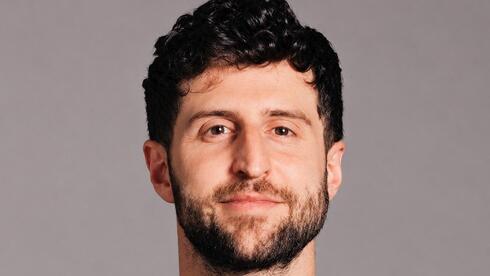
Prof. Ran Balicer (right) with Roee Bergman
(Alex Kolomoisky, Tomerico)


"Most people in this room are unaware that Israel is probably the world leader in the implementation of AI and the implementation of "prescriptive" artificial intelligence (AI) by doctors, which changes the course of the disease in real time and on a large scale," said Prof. Ran Balicer, Chief Innovation Officer at Clalit Health Services, in a conversation with Roee Bergman from Calcalist as part of the Calcalist and Bank Leumi New York 2026 Mind the Tech conference.
According to him, "While in the world most of the money goes to the healthcare industry as a 'money-making machine,' in Israel the incentives are aligned differently. Every month, 200,000 AI-based recommendations are adopted by general practitioners and translated into closing treatment gaps. For example, if you had a blood test that indicated a problem with kidney function, and our AI system detects at night that you are taking diabetes medications that are no longer appropriate for your new kidney condition, it sends a proactive recommendation to the doctor to invite you to change treatment. This is the future - preventive and proactive treatment for the masses."
Models are getting better, but they are still prone to delusions and errors. How does this fit into the healthcare world?
“Delusions are a serious problem in LLM, and in healthcare it is a matter of life and death. But there is a less talked about problem: the alignment problem. If you say to an LLM, ‘I am a doctor for an insurance company, should I perform a CT scan?’, it may say ‘no.’ If you say ‘I am a treating physician,’ it may say ‘yes.’ Models are not objective judges but ‘code-embedded opinions.’ If we do not control the hidden values, they will control our fate. In general, we developed the Optica system, an AI governance system published in the New England Journal of Medicine, which allows us to test whether AI tools are safe, unbiased, and aligned with our values.”
How do we turn this into an engine of economic growth?
"Clalit has one of the largest medical databases in the world. We work with Israeli startups and allow them to use our data and experts as leverage against global competitors. I invite any startup that wants an advantage to come work with us."
Predictive medicine could save trillions, but most countries are stuck with volume-based budgets. What is the barrier to moving to a value-based model?
“There are too many people who make $6 trillion from leaving the system as it is, even if it is not in the patient’s best interest. The key is to move to an economy similar to the Israeli system – capitation, where the medical institution is rewarded for patient outcomes and health, not just for performing procedures. When incentives are aligned in the patient’s best interest, AI becomes a tool for preventive care rather than exploitation of the system.”
Medicine is a profession of empathy, isn't there a danger of losing human touch?
"I believe it's exactly the opposite. The biggest threat to human medicine today is bureaucracy and the burden on doctors. AI will remove the technical and exhausting parts of our work, take the screens away from our eyes and free up time for us to look the patient in the eye, talk to them, and restore compassion and humanity to the doctor-patient relationship. AI will save the humanity in medicine, not take it away."
Watch the full interview in the video above.



