










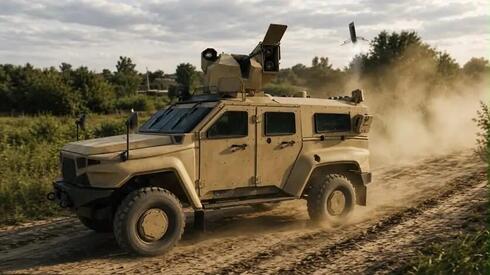
Iron Dome and Iron Beam maker Rafael unveils new weapon against the drone threat
Partnering with SpearUAV, the Israeli defense company is developing Iron Wasp, a vehicle-mounted interceptor aimed at one of the fastest-growing challenges on modern battlefields.
Israeli defense giant Rafael is adding another weapon to its growing arsenal against aerial threats.
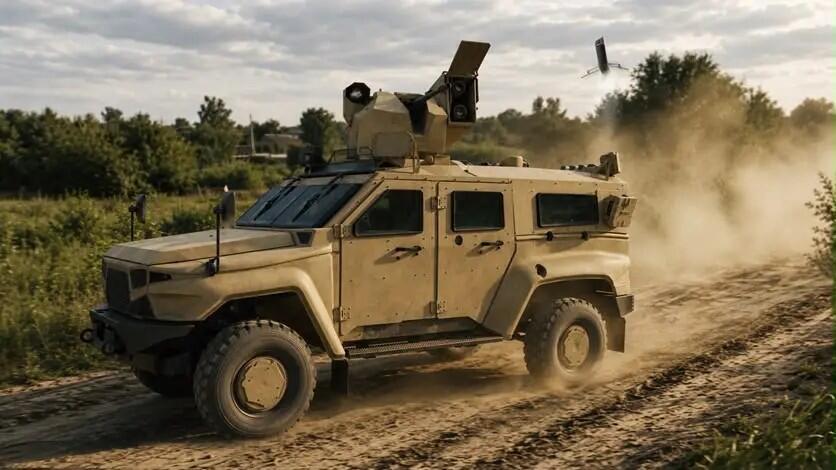
Rafael announced on Wednesday a partnership with Israeli startup SpearUAV to develop Iron Wasp, a compact drone interceptor designed to provide armored vehicles and ground forces with the ability to shoot down hostile unmanned aircraft directly from the battlefield.
The move reflects a growing reality confronting militaries worldwide. While missile defense systems such as Iron Dome were designed to intercept rockets and larger threats, recent conflicts have demonstrated how inexpensive drones, loitering munitions and other unmanned systems can challenge even the most advanced armed forces.
Iron Wasp is intended to address that problem.
The system is based on SpearUAV's Viper interceptor technology and is designed to be launched from a compact multi-canister launcher mounted directly on combat vehicles. According to the companies, it can be deployed on demand against fast-moving, maneuvering or loitering aerial threats without requiring advance preparation or adding significant operational burden to vehicle crews.
The project expands Rafael's layered approach to force protection. Over the years, the company has built a portfolio that includes the Trophy active protection system for armored vehicles, Drone Dome counter-drone systems, the SAMSON family of remote weapon stations, and the Lite Beam laser system. Iron Dome, which has become one of Israel's most recognizable defense technologies, remains the centerpiece of the country's rocket defense architecture, while Iron Beam is expected to introduce laser-based interception capabilities.
The addition of Iron Wasp extends Rafael's defenses closer to the battlefield itself.
Rather than relying solely on larger air-defense systems operating at higher echelons, the new interceptor is designed to give individual combat platforms their own aerial protection capability. The companies say the system can be integrated with Rafael's existing sensors and command-and-control systems and adapted for a variety of armored and tactical vehicles.
The announcement comes during a period of strong growth for Rafael. The company reported quarterly sales of NIS 5 billion last month, up 7% from a year earlier, while net profit rose 23% to NIS 334 million. New orders reached NIS 8.2 billion, pushing Rafael's backlog to a record NIS 76.4 billion.
At the same time, Israel's Government Companies Authority is advancing plans for a partial privatization of Rafael that could value the company at between NIS 60 billion and NIS 70 billion.



