










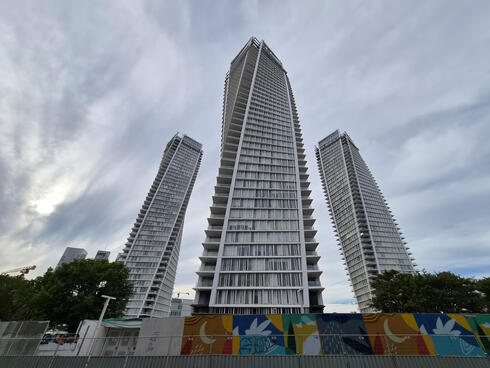
Tel Aviv’s biggest new luxury project faces its first real test
After decades of planning and construction, Kikar HaMedina Towers are expected to receive an occupancy permit by the end of 2026. The bigger question may be what happens when its 250 landowners decide whether to sell, rent or keep their apartments.
The Kikar HaMedina Towers, one of the largest and most complex projects built in Tel Aviv in recent years, is entering its final stretch, more than 70 years after the landowners began acquiring rights to the site. According to estimates provided to the apartment owners by the construction companies, the project is expected to receive an occupancy permit toward the end of 2026. Apartment handovers are expected to begin immediately afterward and continue through most of the first quarter of 2027.
The project is being developed for approximately 250 landowners, who effectively serve as the project's developers, and comprises 453 apartments across three 40-story towers. The total construction area is approximately 180,000 square meters, while the entire site covers about 78 dunams. Of that area, approximately 50 dunams are designated for the residential project, a park and public spaces, while about 15 dunams have been allocated to the Tel Aviv Municipality.
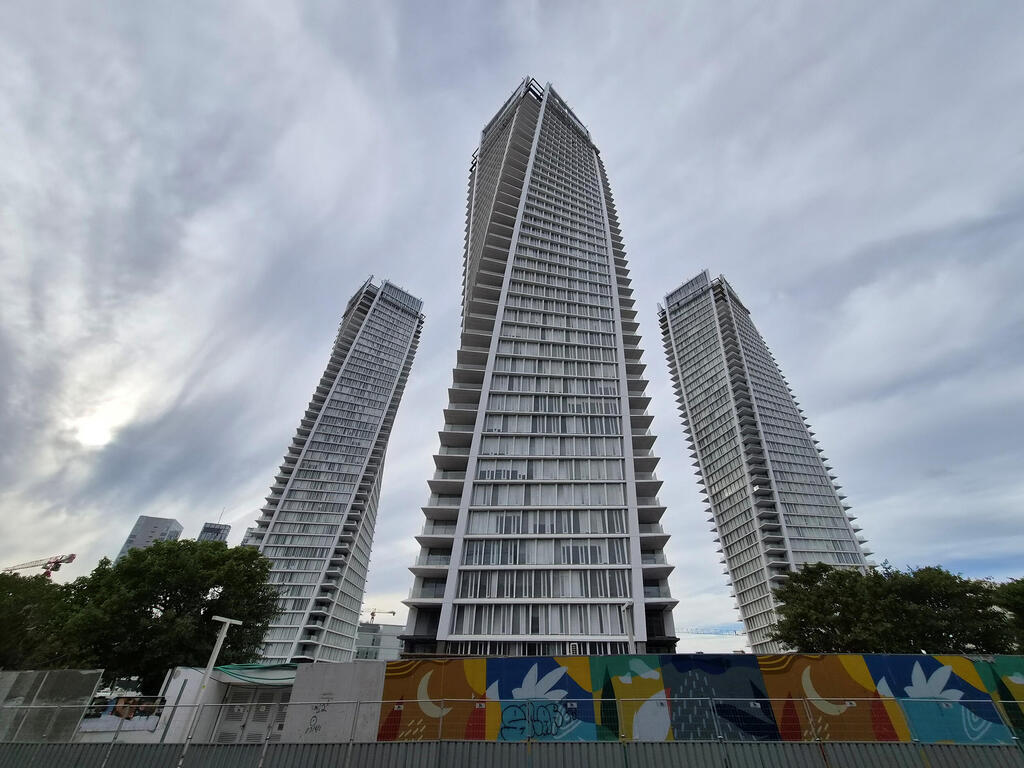
The complex includes a 10-story community center, a school and three kiosks situated on the open private land. Beneath the three towers is a three-level basement structure and a large parking facility with more than 1,600 spaces.
The project was initiated by the landowners, who selected Electra and Ashtrom through a tender process to lead the construction. When the contract was awarded, the construction work was valued at NIS 1.4 billion, or approximately NIS 700 million for each company.
The excavation and foundation work required the removal of approximately 300,000 cubic meters of earth, reaching a rate of about 1,800 cubic meters per day. Shoring operations were carried out to depths ranging from 24 to 38 meters. During construction of the towers, the pace reached approximately seven floors per month, with the structural framework of each tower completed in less than a year.
The total cost of the project is estimated at NIS 4.3 billion. A credit facility of approximately NIS 2.05 billion was provided by Bareket to finance construction, of which approximately NIS 1.7 billion was provided to Bareket by Clal and Migdal.
The financing agreements are with the rights holders, who number approximately 250 in total. The principal and interest on the loan between the rights holders and Bareket are due one year after the occupancy permit is issued, or 64 months from the date the second tranche of the loan was made available.
The Kikar HaMedina Towers project is exceptional both because of its location in the heart of Tel Aviv and because of the substantial volume of construction it is adding to the area. The quality of the square's design is expected to enhance the value of the surrounding area over time. But as the project nears completion, another question is emerging: What will happen if a large number of apartment owners try to sell their units at the same time?
To date, an estimated 10 to 15 apartments, or rights to apartments, have been sold in the project, depending on the stage at which the transactions took place. The sales reflected an average price of approximately NIS 65,000 per square meter, with some transactions exceeding NIS 80,000 per square meter.
For example, a 140-square-meter apartment on the 38th floor sold for approximately NIS 10.63 million, or about NIS 76,000 per square meter. Other apartments of similar size on the 38th and 39th floors sold for around NIS 9.6 million.
And since a luxury project is rarely complete without celebrity buyers, sales to well-known figures have also been publicized. Singer Omer Adam reportedly paid around NIS 15 million for an apartment of approximately 200 square meters, while footballer Sergi Roberto and his wife, Coral Simanovich, reportedly purchased an apartment for about NIS 13 million.
If a large number of apartment owners do decide to sell, they could face a frozen market. Developers operating in Quarter 4 of Tel Aviv in which the towers are located are struggling to make sales, transactions are taking longer to complete, and prices have reportedly fallen by 10% to 15% from the peak levels previously recorded in the neighborhood.
A local real estate agent said: "In Quarter 4, prices have generally fallen and continue to decline, and there is a massive supply of unsold apartments across all stages of construction."
Real estate appraiser Asaf Gastfreund has closely analyzed trends in Quarter 4 and estimates that prices in the neighborhood have fallen by approximately 11% from their peak.
"Prices in Quarter 4 have fallen, but less than people think. Quarter 4 holds a significant portion of Tel Aviv's housing supply, yet the prices of premium apartments have barely budged," Gastfreund said. "In my opinion, the reason is that there are people interested in moving there who are willing to pay these prices."
Related articles:
Gastfreund added: "I believe that even if all the project's apartments were to go on sale at once, though I don't think that will happen, it wouldn't cause the local market to collapse. In fact, it would eventually boost the area."
Waiting expected due to capital gains tax
The expectation that there will not be many sellers in the project, at least during the first year after occupancy, is not coincidental. First, many of the landowners are wealthy individuals who are likely to want the apartments for their own use, while others may hold onto them as investments or for their children.
Beyond that, however, there is also a tax-related reason to delay a sale. Most of the landowners are "historical owners," and it is therefore advisable for them to wait for a certain period after occupancy in order to reduce their capital gains tax liability.
Delaying a sale for an estimated six months to two years, during which the apartment is either rented out or occupied by the owner, can virtually eliminate exposure to business taxation, allowing the owners to be taxed simply as apartment owners.



