







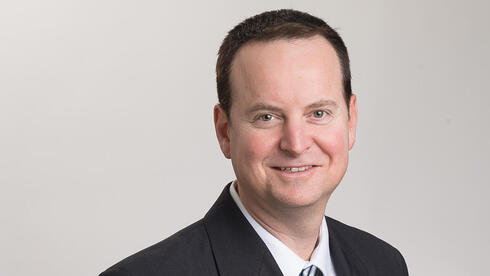


“Investing in Israel is not charity, and it's not because people are Jewish. It's because it's good business”
Jefferies CEO Rich Handler says foreign investors are drawn to Israel by its companies, talent and business opportunities, not by sentiment or political loyalty. He discusses the country's global standing, the sectors attracting capital and the importance of greater market liquidity.
The recent sell-off in technology stocks may be doing the market a favor by cooling an overheated AI trade, according to Rich Handler, CEO of American investment bank Jefferies. In an interview with Calcalist, Handler argued that investors should resist the temptation to time the market and focus instead on identifying high-quality companies they can hold for the long term. He also discussed the record-breaking Anthropic IPO, the uncertainty surrounding Nvidia and why international investors continue to see opportunities in Israel.
“If we kept going exclusively at the pace we were going, a bubble would have been likely to happen,” Handler said. “All this money was disproportionately going into AI. I think this pause and reassessment will probably allow us to avoid a bubble and have more sustainable growth going forward.”
Handler made the remarks during an exclusive interview with Calcalist, as a market correction was already underway but before the latest “Black Friday” sell-off, which wiped another 5.3% off the Nasdaq and 3.7% off the S&P 500, erasing their year-to-date gains.
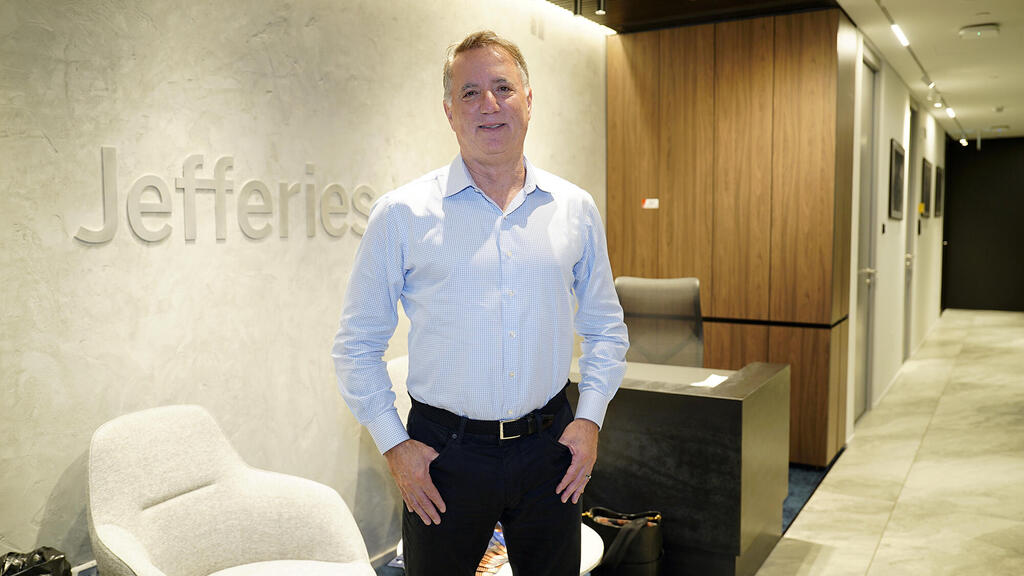
Handler was in Israel for a brief visit, in a market where Jefferies has become increasingly active. Since 2024, the bank has ranked as the most active investment bank in Israel by deal count, with nearly 70 transactions worth a combined $43 billion. Although significantly smaller than giants such as Goldman Sachs and Morgan Stanley, Jefferies competes directly with them in the local market for IPO and M&A mandates, under the leadership of Natti Ginor.
Throughout the interview, Handler occasionally glanced at the time, anticipating the ringing of the Nasdaq opening bell and the start of trading in Anthropic, the AI company whose IPO Jefferies helped underwrite, although it was not the lead coordinator. Immediately after the interview, trading began and the company's shares surged by 30%. By the end of the day, the gain had moderated to 15%, and by Friday the stock had fallen by approximately 9%.
The Anthropic IPO is nevertheless expected to go down in history as the largest to date, with a valuation exceeding $1.5 trillion and approximately $100 billion raised. Jefferies, one of the smaller participants in the large underwriting syndicate, is estimated to have earned approximately $7 million from the deal, which generated around half a billion dollars in fees for the underwriters collectively.
The entire market was anticipating the Anthropic IPO. There was talk of investors taking proactive measures to secure liquidity so they wouldn't miss out, and demand far exceeded the available supply, leaving many investors unable to buy as many shares as they wanted. What was your impression of the offering, and was it easy?
"We were very proud to participate in it, although we were not the lead coordinator. I wouldn't say any IPO is easy. Behind the scenes, there are always decisions that have to be made. But if you look at the end result, I think it was a remarkable outcome, and the company is set up for success."
What makes Anthropic so exceptional?
"It's safe to say that in my career, I've never seen a company quite as unique as Anthropic. That's because of its growth, its margin profitability, the size of its total addressable market, and because it literally touches just about every company throughout the world. There are other tremendous AI companies that may come down the road, but this is a very unique one."
However, the valuation was lower than the $2 trillion the company had reportedly aimed for.
"When you're dealing with these kinds of numbers, you can't say $1.4 trillion is bad and $1.6 trillion is good. I don't think even the smartest investors can really tell the difference between two numbers like that, since they are both so large and there are a lot of assumptions that must be made. If the deal had not got done, it would have been a huge problem. Just getting it done is an accomplishment, and getting it done the way it did is a validation of the quality of the company. I think it's very positive for the markets."
Can you compare Anthropic with another landmark IPO you've worked on during your career? Perhaps Google's?
"There have always been remarkable IPOs in different industries. Each one is different. Google's IPO was quite special at the time, but it's safe to say that in my career, I've never seen an IPO quite as unique as Anthropic's, although SpaceX is certainly in the same ballpark."
Do you think OpenAI made a mistake by postponing its IPO?
"Companies have to decide when the right time is for them. I don't know all the developments. It's a great company as well. I think there's room for a handful of great competitors here, and I think they will be quite successful as well."
Could Anthropic's IPO help revive the IPO market after the recent slowdown, during which companies, particularly in the technology sector, avoided going public?
"I think Anthropic was a unique company in itself. There aren't a lot of companies as special as that company in the broader market. I think it's a good sign for the market. I don't think it in itself will change the demand for midsize companies, but I think it's a good sign that there's almost endless demand for the highest-quality companies.
"I've been at Jefferies for 36 years. The window for IPOs changes all the time throughout my career. I've seen it open, I've seen it close. Good companies are able to navigate being private, and when the windows open, they wind up accessing capital. It's just a natural cycle. There's no way to anticipate it. It feels like it opens and closes almost every other year, and you just get used to it."
The recent turbulence in technology stocks, alongside the Anthropic IPO, has led some investors to speculate about a possible December rally. Is there still a chance for one? What do you think about Nvidia, and could its troubles prevent a rally?
"I understand why people say that, but I think that's overly simplistic. They're both very unique situations. The Anthropic IPO is an incredibly unique company that has potential profitability and growth measures that you almost never see in history.
"Nvidia, meanwhile, is a world-class, super-important company that's going to go through a transition. But there are a lot of great people at Nvidia, and I think there'll probably be a reset and a bit of a re-evaluation or pause on strategy when the new CEO is selected. Their product is in huge demand. They're critically important around the globe. They help lift the GDP of every country, especially Israel, but also the United States.
"I am confident they're going to figure this out. It might be a pause, it might be a reset, but over the long term, this company will continue to thrive."
Do you think Nvidia's crisis could pose a risk to the entire AI industry? Should the board bring Jensen Huang back?
"I think the company is remarkable. They're going to figure it out, and there's a lot of quality people throughout the organization. From what I read, and I know nothing on the inside, the board will have a lot of great candidates who want this job. There's also a vast team of high-quality people throughout the organization to help them navigate this transition.
"As for Jensen, only the board knows all the facts, and the decision is rightfully theirs. The rest is speculation."
Israel's economy has become increasingly dependent on Nvidia's contribution to growth. Is that a risk?
"That's not necessarily unique to Israel. When there's a company as strong, powerful and successful as Nvidia, they help lift the GDP of all countries. It might be disproportionately higher in some countries than in others, but the world always adjusts.
"I'm a big believer in the human factor. I think Nvidia will continue to grow, and there will still be positive developments there. Perhaps other companies will have an opportunity to grow a little faster given the uncertainty right now. But at the end of the day, I believe the world keeps turning, people keep driving forward, and people figure it out."
There are also concerns that political changes in the United States following the midterm elections could slow data-center construction and investment in AI infrastructure. How do you see that risk?
"I think it's always better for any country to have a combination of right and left. When Democrats and Republicans both share power, there winds up being dialogue, debate, compromise and conclusions that share buy-in. When both sides get a chance to participate, generally you get a better, sustainable long-term answer.
"My guess is there'll be more conversations. I think both sides will recognize that the future of the world is going to have a large part of its reliance on AI, and that's a good thing. There will probably be more dialogue about that process. It might be a little bit slower, but I think at the end of the day the right conclusion is to keep advancing it."
What about companies that have taken on enormous amounts of debt to finance AI infrastructure? Could a slowdown create a serious problem for them?
"Some of those companies were having challenges before there were elections because the debt markets were widening out in terms of spreads. So I don't think it's necessarily just politics.
"I'm a big believer that you can't finance anything entirely with debt. There's got to be a balance of debt and equity, and I think most companies realize this. And if they did not, they do now. Perhaps they'll have to find some alternatives if Nvidia isn't the major global AI bank like they were before, but other sources of capital will pop up. And Nvidia will continue to invest."
So what are smart investors doing right now: buying or selling?
"Smart investors buy and hold for a long time, and generally you don't sell unless there's something really unique causing you to sell. There are also smart investors who make their living shorting and finding those opportunities.
"If you understand the globe and the geographies, but more importantly, understand the quality of the companies, and your shareholders or stakeholders allow you to invest for the long term, historically it's been a wonderful investment. Equities have outperformed bonds.
"Look at Warren Buffett's success. He identified smart companies, took stakes in them and, when they went lower or had some short-term issues, he bought more and let them compound to create an enormous amount of wealth. Those are the smart investors I appreciate and we all should emulate."
Let's turn to Israel. Jefferies has become increasingly active in the country, bringing foreign investors into Israeli companies. What explains that interest, particularly given Israel's international image during the war? Are you simply finding Jewish investors who feel a sense of loyalty to the country?
"First of all, we started well before the war. Our investors and the people we bring in don't come in because they're Jewish and want to support Israel. They come in because they believe Israel has a lot of value to add in terms of investment capabilities, partnerships and M&A flow.
"All we're doing is helping to showcase the special sauce of human capital that can be found throughout the Israeli community by sharing it with global investors. It's not charity, and it's not because people are Jewish. It's because it is good business."
What questions are foreign investors asking about Israel today? Are they concerned about the political situation and the country's international standing?
"For the most part, they're asking questions about specific companies. They want to understand their growth prospects, competitive position and defensible niches.
"Traveling around the world, everyone thinks they're unique in their political challenges. If you go around the entire world, everyone has their own unique set of issues. Investors want to understand the geopolitical environment in each area, not just Israel. They always want to see more continuity and stability rather than less, but they recognize that things go in phases.
"I think these investors are not looking short-term. They're looking long-term. And the fact of the matter is, if you look at the markets, despite all the volatility and uncertainty, the Israeli markets have held up as well as, if not better than, most global markets.
"That said, it is critically important to have a successful election to begin the steps forward to a more stable future for Israel. All investors prefer stability over uncertainty."
How significant has Jefferies' activity in bringing foreign capital to Israel been?
"In the recent past, we've brought in 148 different institutions into 16 different Tel Aviv-listed companies through transactions representing approximately $3.5 billion. That doesn't include all the other capital that we have brought in through trading."
Which sectors are attracting the most interest from foreign investors?
"There's a tremendous amount of interest in technology, financial services, including banks and insurance companies, defense companies, industrial businesses, real estate businesses, hospitality and energy companies. Literally everything."
Are foreign investors concerned about the liquidity of the Tel Aviv Stock Exchange?
"There could always be more liquidity. One of the things we're trying to do is bring Israeli companies to global markets as well to get additional liquidity.
"I think the Tel Aviv Stock Exchange has done a fantastic job over the course of the last several years of providing more liquidity. Changing the trading days to Monday through Friday has been a big improvement. There's no question that trading on Friday, even with an early-day close, is demonstrably better than trading on the weekend. It's also more attractive for foreign investors to pay attention to Israeli companies.
"Additional disclosures in English versus Hebrew have been a very positive development. More research can always help. But nothing is better than bringing investors here to meet companies in person. It's great to read about these companies, but there's nothing like seeing management and hearing the story, seeing the competence and passion of the entrepreneurs and CEOs and management teams inspire investors to participate."
What is the profile of the foreign investors looking at Israel?
"We are primarily an institutional organization. We deal with the largest global multi-manager, diversified companies that are looking to invest around the globe, including Israel. We work with hedge funds looking for unique opportunities, as well as sophisticated high-net-worth individuals and family offices. We don't deal with retail clients."
Is there enough global capital to support Israeli companies, or are they competing with other markets for a limited pool of money?
"There is a lot of money, and it's hard to find the companies that deserve the money. Portfolio managers are scouring the world trying to find companies that fit their criteria.
"Israel is a global player. Israeli companies compete with the United States, India, Europe and the rest of Asia. It's not a zero-sum game. People can invest in all of them."



