










Israeli startup raises $5 million to rethink one of surgery's most invasive procedures
Phantom GI is developing a device designed to create an ostomy under local anesthesia, potentially offering an option for bowel obstruction patients who cannot undergo conventional surgery.
For patients with severe bowel obstruction, creating an ostomy can be a way to relieve a blockage and allow them to resume eating and continue treatment. But for some of the sickest patients, the surgery itself is considered too risky.
An Israeli startup is now developing a device designed to create an ostomy without the conventional operation, using a needle puncture, local anesthesia and X-ray imaging instead of an abdominal incision and general anesthesia.
Tel Aviv-based Phantom GI has raised an initial $5 million seed round led by Pitango HealthTech, with participation from RAD Biomed and RUNI Ventures. The company plans to use the funding to develop its PercStoma device and begin the first phase of clinical studies in the U.S.
The company is targeting patients with bowel obstruction who are currently considered inoperable. According to Phantom GI, as many as 55,000 people in the U.S. die each year directly from malignant bowel obstruction, while the cost of care can reach $70,000 per surgical procedure.
The technology emerged from a single case rather than from an effort to simply make an existing operation more efficient.
In 2023, Dr. Eran Shlomovitz, Phantom GI's co-founder and chief medical officer, encountered a woman with malignant bowel obstruction who had been deemed inoperable. Instead of accepting that conventional surgery was her only option, Shlomovitz developed a method using commercially available interventional devices to reach and decompress her bowel under X-ray guidance.
With the patient's consent, he performed the procedure successfully. According to the company, she was subsequently able to return to a normal diet, go back to work and resume treatment for her cancer.
That experience became the starting point for PercStoma, which Phantom GI says is designed to achieve the same basic purpose as a surgical ostomy while avoiding major abdominal surgery.
A conventional ostomy involves making an incision in the abdomen and bringing a loop of bowel through the abdominal wall while the patient is under general anesthesia. The bowel is then connected to a stoma bag through which its contents can leave the body.
PercStoma is designed around a different approach. A physician would access the bowel through a single needle puncture while the patient is under local anesthesia and use X-ray imaging to guide the procedure. Once the bowel is accessed and secured, a proprietary stent would be positioned between the bowel and the skin, allowing bowel contents to pass into a standard stoma bag.
Phantom GI is targeting a procedure time of around 20 minutes.
The distinction matters most for patients who cannot tolerate conventional surgery. But the company argues that avoiding major surgery could also have implications for patients who are technically eligible for an operation, given the complications and costs associated with surgical ostomies.
Reversal is another part of the company's design. Surgical ostomies can require a second operation to restore the normal intestinal pathway, and Phantom GI says complications from reversal mean that as many as 50% of eligible patients ultimately cannot undergo the procedure.
The company is designing PercStoma so that the stoma could instead be reversed through a rapid, office-based procedure, rather than another major operation under general anesthesia.
Whether that approach can deliver the intended benefits safely is still an open question. Phantom GI was founded in 2025 and is preparing to enter its first phase of U.S. clinical studies, meaning the technology remains at an early stage of development.
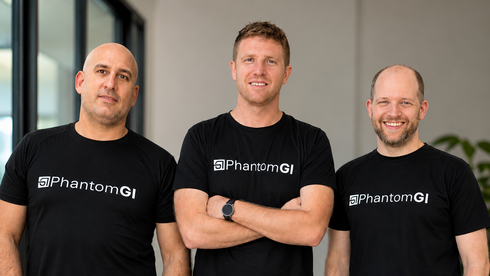
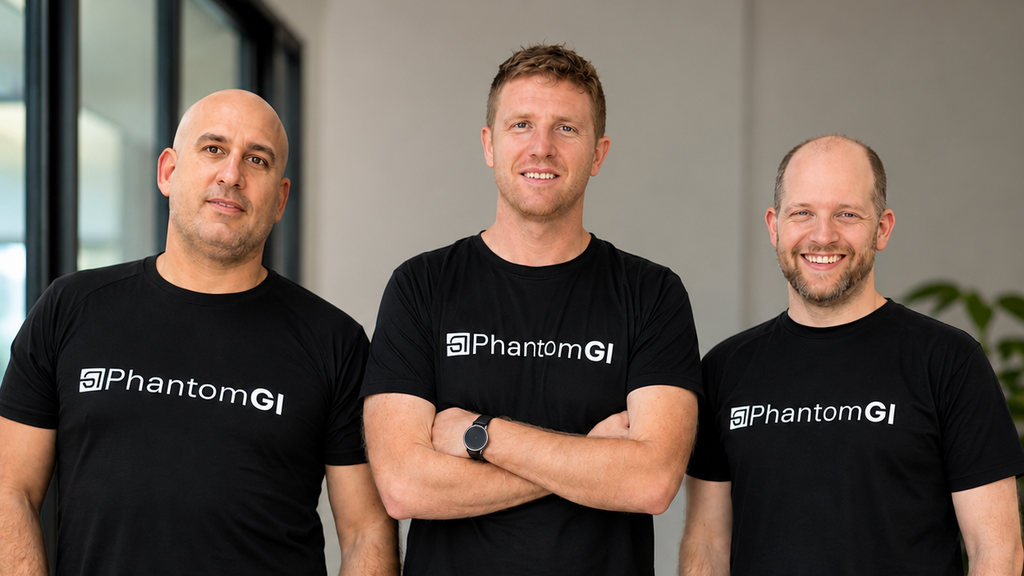
The company is co-founded by Shlomovitz and Dr. Eliahu Bekhor, who serves as chief scientific officer, alongside CEO Ido Sadan. Shlomovitz's clinical training spans general surgery, medical imaging and therapeutic endoscopy.
Bekhor estimates that more than 100,000 U.S. bowel obstruction patients could potentially benefit from a minimally invasive approach each year. The company's initial focus, however, is on the subset of patients for whom surgery is currently not considered an option.
“There is a group of patients today for whom the standard surgical option is simply too invasive, and in some cases, not an option at all,” Sadan said.
The broader ambition is to make minimally invasive intervention an alternative to surgery across additional ostomy indications. Phantom GI also describes PercStoma as a potential platform technology for other indications, although the immediate task is to establish whether the approach works safely in patients.



