










Former Nexar AI researchers raise $13 million Seed to bring autonomous-driving simulations to AI agents
Plurai's founders are applying techniques used to test self-driving systems to enterprise AI agents. The company's platform simulates thousands of scenarios, identifies failures and automatically improves agents before they reach customers.
Artificial intelligence company Plurai has emerged from stealth with a $13 million Seed funding round and the general availability of its platform. The company's technology is designed to automate the testing and improvement of AI agents, both before they are deployed and on an ongoing basis after they go live, with the aim of ensuring their reliability and performance. Plurai says its work with early customers has shortened agent development cycles from months to hours, reduced failures reaching real users by 82% and cut the cost of running reliable agents by 97%.
The round was led by Team8, with participation from Velocity, U&I and Mercer, alongside more than 20 angel investors and industry leaders. Plurai's backers include Udi Mokady, founder of CyberArk, and Reah Miyara, Senior Director of Google Models at Google Cloud, who previously led model evaluation at OpenAI. Dr. Eyal Carmi, CTO of Microsoft 365 Copilot, has joined the company's advisory board.
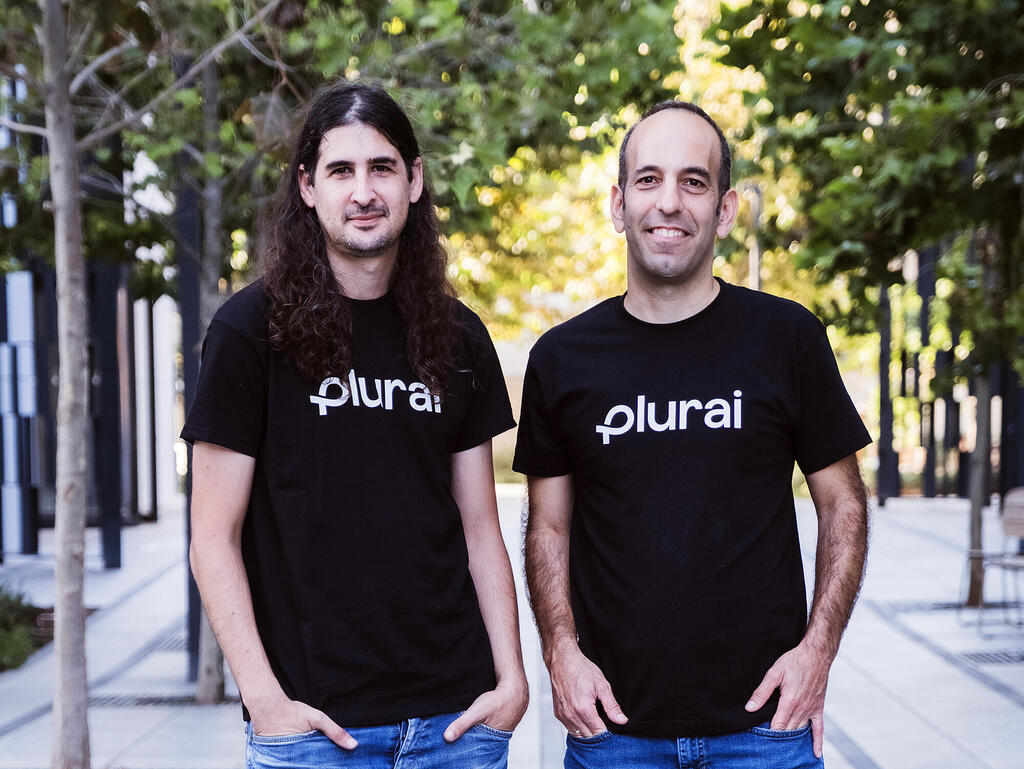
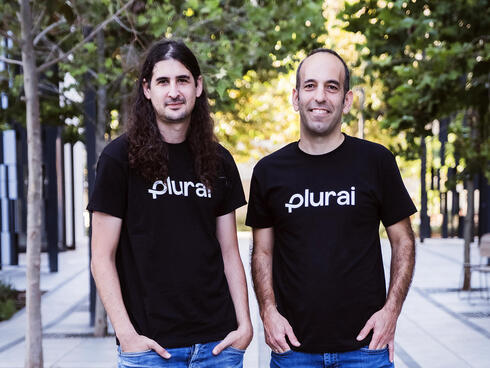
Plurai was founded in 2025 by Dr. Ilan Kadar, its CEO, and Dr. Elad Levi, its CTO. Kadar holds a PhD in computer science and machine learning, while Levi holds a PhD in mathematics. Both are AI researchers with more than a decade of experience developing and deploying large-scale AI systems for global organizations. They previously worked together at Nexar, where Kadar served as VP of AI and Levi as an AI architect. Their work included building systems for autonomous driving companies such as Waymo, which rely on simulations to test self-driving technology before it reaches the road.
The company recently announced joint work with Nvidia and Nebius, in which a model Plurai post-trained for a global enterprise customer outperformed leading models from OpenAI and Anthropic on accuracy at 40 and 44 times lower cost, respectively, according to the company. Plurai's technology enables developers to turn open AI models into specialized models for particular tasks in approximately 20 minutes.
Plurai currently employs approximately 12 people in Israel and the United States. It plans to double its workforce and expand its U.S. operations by the end of 2026. The new funding will be used to expand its research and development teams, deepen its presence in the enterprise market and accelerate its growth in the United States. The platform, previously available only to select partners and customers, is now open to developers, including through a free tier. It can be accessed through tools such as Claude Code, Codex, GitHub Copilot and Cursor, and can also be used to test agents built on enterprise platforms such as Salesforce Agentforce.
One of the main challenges facing companies developing AI agents is moving from a successful demonstration to deployment in a real-world production environment, while maintaining the reliability needed for large-scale adoption. Building an agent that works in a demo can now take just a few hours. The harder part comes when it must operate inside an enterprise, interacting with different users, internal systems, external tools and sensitive data while handling a wide range of scenarios and unexpected situations.
Unlike conventional software, AI agents make decisions autonomously and can respond differently to the same request. Even a relatively small change to a prompt, model or dataset can alter an agent's behavior. Existing testing methods often rely on manual work or predefined scenarios, making it difficult to anticipate the full range of situations an agent might encounter. As a result, some failures only become apparent after a system has reached end-users. A recent VentureBeat Pulse Research survey cited by Plurai found that half of enterprises had deployed an AI agent or large language model feature that passed internal evaluations but nevertheless caused a customer-facing failure in production.
Identifying a problem is only part of the challenge. Fixing it typically involves manually adjusting prompts and configurations through trial and error, with no guarantee that the changes will not cause problems elsewhere. At the same time, many agents rely on large, expensive language models, making it increasingly costly to evaluate every interaction as usage grows. This leaves companies investing heavily in AI agents that remain stuck in pilot programs rather than reaching full-scale deployment.
The solution developed by Kadar and Levi draws on a principle familiar from autonomous vehicles. Before self-driving systems encounter real-world conditions, they are tested and refined in simulations designed to replicate a wide range of situations, including unusual scenarios that may not emerge during conventional testing. That experience provided the foundation for Plurai. The company's platform creates a digital twin of an AI agent and the environment in which it is intended to operate, using the organization's own knowledge base, tools and policies. It then runs thousands of simulated users against the agent in an isolated sandbox, testing its responses to realistic and adversarial scenarios.
The process is designed to identify potential problems before deployment, including policy violations, inaccurate or fabricated responses, unsafe actions, mistakes in using external tools, failed tasks and leaks of sensitive data. Plurai's platform is also designed to go beyond identifying problems. It generates fixes for the failures it finds and runs the agent through the simulations again to check whether its performance has improved without introducing new problems elsewhere.
The simulation data is also used to create small language models (SLMs) tailored to each agent's specific tasks. These smaller models can act as continuous monitors in production, checking every interaction and enforcing company policies at a fraction of the cost of large frontier models. This is intended to allow companies to monitor all agent activity rather than relying on evaluations of only a small sample of interactions. Plurai says its research has shown that hundreds of such specialized models can be served in real time on a single GPU, making the approach economically viable at scale.
"AI systems fail when they hit challenges down the road, which no one predicted," said Dr. Ilan Kadar, co-founder and CEO of Plurai. "Waymo built trust by testing and training across more than 20 billion simulated miles, roughly 100 times its real-world driving. Plurai brings that same approach to AI agents: continuously challenging them with the hardest situations and rarest events before they reach users, learning from failures, and improving before those failures happen in the real world."