











The next financial crisis may start in your shopping cart
Wall Street’s fast-growing BNPL and private credit system connects everyday purchases to global capital markets, raising new concerns about hidden risks.
The 2008 global financial crisis was born in the mortgage market. The next crisis, if it comes, may look very different, not a collapse stemming from mortgage loans, but from purchases of groceries, cleaning supplies, or mobile phones; not a failure of big banks, but of fintech companies and private equity funds; not the result of mortgage-backed securities, but of billions of dollars in short-term loans changing hands almost immediately after they are issued.
Some on Wall Street are already wondering whether a new credit system, built almost under the radar over the past decade, could become a significant risk in the future. This emerging system reflects an increasingly tight connection between the private credit market and companies offering “Buy Now, Pay Later” (BNPL) services, creating a new financing mechanism for American consumers that has barely been tested in an economic slowdown.

In this system, instead of a bank making a loan and holding it on its balance sheet until repayment, fintech companies extend credit to consumers, while investment funds purchase those loans almost immediately afterward. The capital returned to the fintech firms is then recycled into issuing new loans. Behind the scenes, some of these investment funds are themselves financed by institutional investors and, in some cases, banks. This creates a new credit chain, one that connects a consumer buying toothpaste in installments to some of the world’s largest asset managers.
A $1.8 trillion market finds a new target
The private credit market (also known as direct lending) was a niche segment of global finance until two decades ago. After the 2008 crisis, when regulation constrained banks’ ability to extend certain types of credit, private funds stepped into the gap and gradually became one of the most important sources of corporate financing. Today, the industry manages about $1.8 trillion in assets, and it is increasingly under scrutiny due to its exposure to software companies whose business models may be affected by the artificial intelligence (AI) revolution.
Until recently, these funds focused mainly on corporate lending, leveraged buyouts, and real estate financing. However, according to Bloomberg, in recent years they have been directing a growing share of capital into consumer credit, particularly BNPL companies, now one of the fastest-growing payment methods in online commerce.
For the funds, this provides a new investment channel with attractive yields and rapid capital turnover. For fintech companies, it is a funding source that enables growth at a pace previously difficult to achieve.
The “forward flow” engine
At the center of this system are transactions known as “forward flow” agreements, advance commitments to purchase future loans.
The structure is relatively simple: an investment fund agrees in advance to buy loans that a fintech company will originate in the future. Once a consumer receives a loan, it is immediately sold to the fund under the pre-agreed terms. The fintech company then recycles the capital into issuing additional loans.
In practice, the lender does not need to wait for repayment to continue growing. The model resembles a conveyor belt: consumers enter to finance purchases in installments, loans are sold to institutional investors, and the recycled capital funds new credit issuance. The faster the conveyor belt moves, the greater the volume of lending.
This mechanism has become one of the key growth engines of the industry.
The scale of activity underscores the momentum. In March, Klarna expanded its forward flow agreement with Elliott Investment Management to $2 billion. According to Bloomberg, the arrangement is expected to support up to $17 billion in lending in the U.S. under Klarna’s “Fair Financing” product.
Klarna is not alone. Last year, Blue Owl and KKR signed similar agreements with PayPal, while Affirm secured a $3 billion arrangement with PGIM Credit. The company has also expanded its cooperation with the Canada Pension Plan Investment Board.
An Israeli player is also part of the ecosystem: fintech company Pagaya has signed multiple forward flow agreements covering consumer, personal, and auto loans, totaling up to $4.4 billion with Blue Owl and Castlelake.
2 View gallery
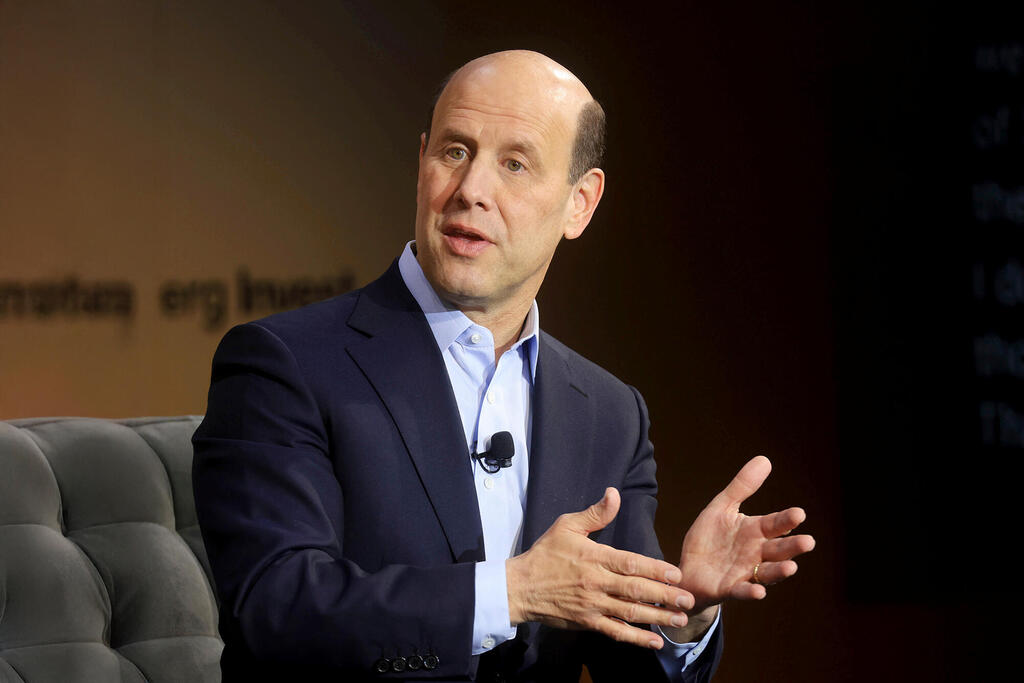
Mark Lipschultz, co-CEO of Blue Owl. Billions in deals with Pagaya
(Michael Nagle/Bloomberg)
The broader trend is clear: private credit funds are no longer financing only corporations, they are increasingly financing American consumers.
Familiar concerns from the past
Until recently, forward flow transactions were seen as a natural evolution of credit markets. They solved a mutual need: fintech companies gained near-continuous access to funding, while private credit funds obtained short-duration assets with attractive yields and diversified risk exposure.
But concerns are emerging. The faster fintech firms can sell loans, the more capital they can recycle, and the faster they can expand credit issuance.
Critics argue this could create incentives to scale lending faster than underwriting discipline allows, since much of the credit risk is transferred to investors purchasing the loans.
The concern is not new. It echoes the “originate-to-distribute” model that dominated U.S. mortgage lending before the subprime crisis. At the time, lenders originated loans with the intention of quickly selling them, potentially weakening incentives to rigorously assess borrower risk.
However, analysts and former regulators caution that the comparison is incomplete. Many forward flow agreements include “skin in the game” provisions, requiring fintech firms to retain a portion of the loans. Investors can also suspend purchases if default rates exceed predetermined thresholds. In some cases, loans are acquired at a discount that provides a buffer against losses.
Underwriting standards have also evolved significantly. According to Bloomberg, some agreements require minimum credit quality metrics, including FICO scores, and may include compensation mechanisms if portfolio performance underperforms expectations.
The unanswered question: what happens in a downturn?
Despite these safeguards, even proponents of the model acknowledge a key limitation: it has not yet been tested in a major recession.
“As long as the market is stable, everything functions smoothly,” said Mike Taiano, senior analyst at Moody’s, in comments to Bloomberg. “The question is how investors will respond if credit quality starts to deteriorate. We have not yet seen this market operate under real stress.”
In a downturn scenario, rising defaults could force funds to tighten purchasing terms or slow down transactions. That, in turn, would increase financing costs for fintech firms and constrain credit availability.
The central question on Wall Street is therefore not whether the system is innovative, but how it will behave when conditions are no longer benign.
The discussion begins in structured finance and ends in everyday consumption.
Buy Now, Pay Later services have become one of the fastest-growing payment methods in U.S. e-commerce. According to Adobe Analytics data cited by Bloomberg, BNPL-financed purchases reached $28.5 billion in the first four months of this year, up 2.3% year over year, accounting for 7.8% of all online commerce.
Broader estimates from Market Data Forecast suggest the U.S. BNPL market reached $189 billion in 2025, is projected to hit $220 billion in 2026, and could grow to $746 billion by 2034, implying a compound annual growth rate of about 16.5%.
But usage patterns are shifting. A LendingTree survey found that 54% of BNPL users rely on the service out of financial necessity rather than convenience, with an increasing share reporting difficulty meeting repayments.
One borrower interviewed by Bloomberg, Verdell Wright, said he used BNPL after losing his job to finance $168 worth of essential items, including hygiene products and household goods. “You can earn over $100,000 a year and still not have enough,” he said. “Spreading payments helped me avoid credit card debt while I was looking for work.”
Wright’s experience reflects a broader shift: BNPL is increasingly used not only for discretionary purchases like electronics or fashion, but also for everyday necessities.
For fintech companies, this signals deeper penetration into consumer behavior. For critics, it is a warning sign that short-term credit is becoming embedded in routine household spending, potentially increasing vulnerability during economic downturns.
U.S. regulators are also paying closer attention to what some call “phantom debt”, liabilities generated through BNPL services that are not always fully reflected in traditional credit reporting systems.
In many cases, BNPL loans are not consistently reported to credit bureaus. As a result, consumers’ total indebtedness may be underestimated when they apply for mortgages or other forms of credit.
This gap has prompted growing regulatory scrutiny and efforts to establish clearer reporting standards without stifling innovation.
At the same time, private credit funds face criticism over transparency. Unlike banks, they operate largely outside public markets and are subject to less stringent disclosure requirements, raising concerns as their role in consumer finance expands.
Not a subprime replay, but not risk-free either
Supporters of the system argue that comparisons to the 2008 crisis are overstated. Consumer credit portfolios are highly diversified across hundreds of thousands or even millions of small loans, reducing concentration risk.
They also point to advances in underwriting, including the use of large-scale data sets and machine learning models that were unavailable two decades ago.
Still, most observers agree on one point: the system has not yet been tested under severe economic stress.
The debate is no longer about whether the model is inherently flawed or entirely safe. It is about how it will behave when the cycle turns, and what that could mean for the broader financial system.



