










The day after the deal: Wiz founders reflect on their Google future
Messages from the company’s leadership highlight the team, technology and ambitions behind one of tech’s largest cybersecurity acquisitions.
When Wiz officially became part of Google following the completion of the company’s $32 billion acquisition on Wednesday, three of its founders turned to social media to reflect on what the moment meant, not only for the company but for the people who built it.
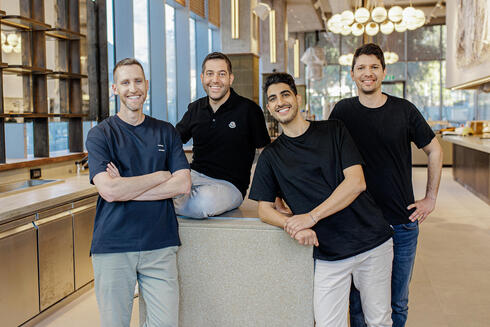
The posts by CEO Assaf Rappaport, VP of product Yinon Costica, and VP of R&D Roy Reznik (all the founders apart from CTO Ami Luttwak) offered a glimpse into how the leadership of one of the cybersecurity industry’s fastest-growing startups sees the transition from independent company to part of one of the world’s largest technology groups.
For Yinon Costica, the moment was framed as both historic and deeply personal.
Posting a photograph taken in Wiz’s first office on March 31, 2020, Costica described the acquisition as the start of “a new chapter,” while acknowledging the unusual circumstances in which the company was born.
“Wiz was born into a global pandemic and then a long war at home,” he wrote, reflecting on the company’s early days. Despite those conditions, he said the startup grew into what he called an “extraordinary team” operating at the center of the fast-moving cloud security market.
Costica described the company’s employees, known internally as “Wizards”, as the driving force behind its growth. Their “technical ingenuity and resourcefulness,” he wrote, allowed the company to pursue what he called an “unbelievable vision” in cloud security.
But the post also focused on the personal dimension of the journey. Costica described Wiz as the culmination of “25 years of relentless hard work,” saying the moment was the result of long-term persistence and “countless personal sacrifices.”
The partnership with Google, he added, would allow Wiz to pursue a broader mission: securing organizations and nations in what he described as the era of artificial intelligence.
2 View gallery

Costica selfie with Rappaport in the background in Wiz's first offices in March 2020.
(Photo: Yinon C / Linkedin)
CEO Assaf Rappaport’s message took a more strategic tone, focusing on how the company sees its future inside Google.
Nearly a year after Wiz first announced it would join Google, Rappaport said the company’s core mission had not changed. The challenge, he wrote, is that the technological environment around it has.
“Now, we must do this at the speed of AI,” he said, describing a world in which artificial intelligence is accelerating the pace at which software is built and deployed.
In his post, Rappaport argued that generative AI is moving rapidly from experimentation to becoming “a core part of how modern organizations build, ship, and scale.” That shift, he said, requires security systems that evolve at the same pace.
Over the past year, according to Rappaport, Wiz continued building products and expanding research even while the acquisition was underway. He highlighted discoveries by the company’s security research team, including vulnerabilities affecting widely used cloud infrastructure and open-source technologies.
The company also introduced new tools aimed at addressing emerging risks tied to AI development and cloud environments, including features designed to help organizations monitor AI usage and manage security risks across complex systems.
Despite joining Google, Rappaport emphasized that Wiz will remain a multi-cloud platform, continuing to support environments running on Amazon Web Services, Microsoft Azure, Google Cloud and Oracle Cloud.
“Trust is something we earn every day,” he wrote.
Roy Reznik, Wiz’s co-founder and head of research and development, used his post to reflect less on strategy and more on the relationships behind the company.
Reznik said the journey that led to Wiz began long before the company was founded six years ago. Many of the engineers who built the startup’s technology, he wrote, had been working together for nearly two decades.
“It has been the privilege of my career not only to work alongside one of the most talented engineering teams in the world,” he wrote, “but also to work with people I can genuinely call some of my best friends.”
Reznik described the company’s culture as one that avoided internal politics and encouraged open collaboration, a dynamic he credited for enabling the team to build products “at a speed and scale that once seemed impossible.”
Looking ahead, he framed the move to Google not as an ending but as an opportunity to “dream bigger, better, faster, and stronger.”
Despite the celebratory tone of the posts, the founders repeatedly framed the acquisition less as a conclusion and more as the start of a new phase.
Costica wrote that Wiz’s success should ultimately be measured not by the deal itself but by “the next generation of innovation that will break even more barriers.”
Rappaport struck a similar note, closing his message with a reminder that the company’s core mission remains unchanged: protecting everything organizations build and run.
“And we are still just getting started,” he wrote.



